“The blunt reality is that when there are no consequences, we humans are capable of immense depravity toward those we are taught to scorn as subhuman.”
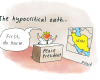
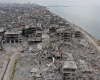
On March 21, Donald Trump threatened to obliterate parts of Iran if the Strait of Hormuz was not fully opened within 48 hours. Hours before that deadline, Trump delayed the bombing threat by three days because ‘productive’ talks were ongoing with Iran. He later extended the deadline to April 6, saying negotiations were going very well. On April 5, Trump made a profane announcement, threatening massive bombing on April 7 if the strait remained closed. The American president promised a ‘whole civilization will die.’ However, cooler heads in the USA and mediative efforts by Pakistan led Trump to postpone the bombing once again, this time for two weeks.
In January, Mark Carnie told the World Economic Forum conference in Davos, Switzerland, about a “rupture to the world order.” I was aware of the Prime Minister’s speech to the WEF, but George Froehlich caused me to refocus on Carney’s words.
The contrast with our language on Ukraine is stark. For four years, Canadian officials have rightly called Russia’s invasion an “unprovoked,” “unjustifiable,” “illegal” violation of the UN Charter and of Ukrainian sovereignty. Yet when the United States and Israel launch large scale strikes without UN authorization, Ottawa drops the legal vocabulary entirely. No talk of aggression, no warning about Charter erosion, no insistence on emergency debate in New York. The double standard is obvious: when Russia uses force without lawful grounds, it is condemned as an outlaw; when the U.S. does something legally analogous, we kowtow in an effort to curry favour.
This is a response from A. Reader to Mr Stewart’s comment at the post Middle powers must act together because if we’re not at the table, we’re on the menu.,,
One of the most articulate critics of Donald Trump and his warriors is Boston College historian Heather Cox Richardson. Below the separator is the text of her recent Substack post:
A friend who worked in the PMO years ago says Mark Carney was known in Ottawa as a straight-shooter who often wrote his own speeches and did so very quickly. He didn’t need speechwriters for this admirable address to important people in Davos.
I generally avoid spending money on American publications, but The Atlantic remains indispensable. Today, staff writer David A. Graham describes a deeply dangerous individual whose towering arrogance convinces him he understands the world better than anyone alive…
American companies own more than half of foreign-controlled corporate assets in Canada. How long before Donald Trump decides to “protect” his country’s interests and security? The Trump administration may blame Canada for allowing drugs and migrants into the USA. Parts of the USA have coveted Canada’s fresh water, and American companies dislike this country’s tax system and public spending, which favours climate action, environmental protection, public healthcare and other “leftist” schemes…
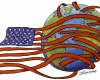
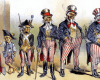
A century ago, an American advertising executive popularized the phrase, “A picture is worth a thousand words.” Toronto Star cartoonist Theo Moudakis proves that a few pictures are worth much more than a thousand words.
In fewer than 365 days after taking office Donald Trump would threaten to invade Panama and Greenland, launch a global trade war, bomb five countries, and invade South America — all while griping about being denied the Nobel Peace Prize.
“Most of the Americas have suffered from interference from their powerful northern neighbour – and are usually the worse off for it.”
The movie “Wag the Dog” takes the stance that American public policy may be founded on fraud in high places, and that there is no public outpouring too spontaneous-looking to be manipulated by political puppeteers.
On January 3, the United States launched a “large-scale strike” on Venezuela, captured President Nicolás Maduro, and flew him to a military base in New York. The American President says his country now runs Venezuela, holder of the world’s largest proven oil reserves.
Gordon Wilson should have been Premier of British Columbia. Instead, Vancouver power brokers of the 1990s wanted a more tractable person waiting to be Premier. Gordon Campbell replaced Wilson as Leader of the Official Opposition, David McLean and Jack Poole were among the money men who shaped the future of BC politics. Despite that setback, Wilson has lived an interesting life.
Jonathan Rauch, senior fellow at Brooking’s Center for Effective Public Managment wrote in the Atlantic about the USA’s regime change. Rauch says that even those who expected the worst from Trump’s reelection expected more rationality. Instead, they got an administration that operates like a crime family, “divvying up the spoils, sometimes quarreling, but helping each other when needed.”
It is clear that rich American plutocrats are willing to punish poor people and America’s best neighbours, but intend to leave programs untouched if those schemes put more money into the pockets of wealthy Americans…
Marsh Family, six people from the UK have messages for the world.
All politics is about real estate. Postmodern politics is essentially a matter of land grabs, on a local as well as a global scale. Whether you think of the question of Palestine, the settlements and the camps, or of the politics of raw materials and extraction; whether you think of ecology (and the rainforests) or the problems of federalism, citizenship, and immigration, or whether it is a question of gentrification in the great cities as well as in the shanty towns and the townships and of course the movement of the landless today everything is about land…
World Central Kitchen, founded by Spanish-American chef Jose Andres, is an example of humanitarianism at work. WCK has become one of the world’s leading relief organizations since its 2010 launch following a devastating earthquake in Haiti. Food is essential to life and is vitally important in a crisis. Access to healthy meals during a disaster is a reminder that someone cares. But, of course, not everyone cares. Pierre Poilievre said a Conservative government would cut foreign aid funding. That mimics Trump’s policy of eliminating almost all development and humanitarian help abroad.
In case you’ve been wondering - who supports huge Data Centres? Angus Reid has a poll. https://www.cbc.ca/news/business/bakx-york-ai-data-centres-alberta-solomon-9.7222388 Support 15% across…