


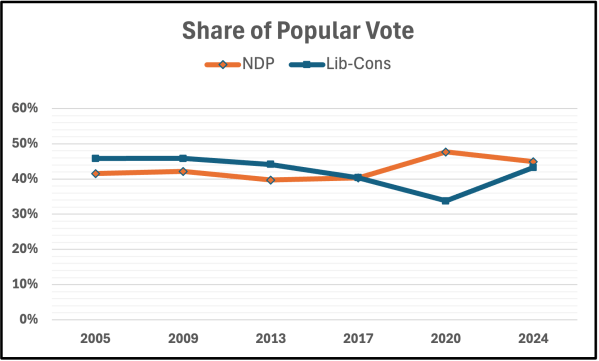
While BC voters moved to the right in October, the voting pattern was not substantially different than in earlier times.
The same cannot be said for the USA. More than half of American voters supported a misogynist, racist, criminal for President. The simplest explanations for the November result are a disdain for democracy and a willingness to embrace totalitarianism.
Few people were bothered when Trump told supporters:
I love you. You got to get out and vote. In four years, you don’t have to vote again. We’ll have it fixed so good, you’re not going to have to vote.
With the power now held by Republicans, elections won’t end. Votes will instead be like those in countries ruled by totalitarians. Elections will be managed to legitimize the existing rulers, not to enable free and fair contests of political ideas.
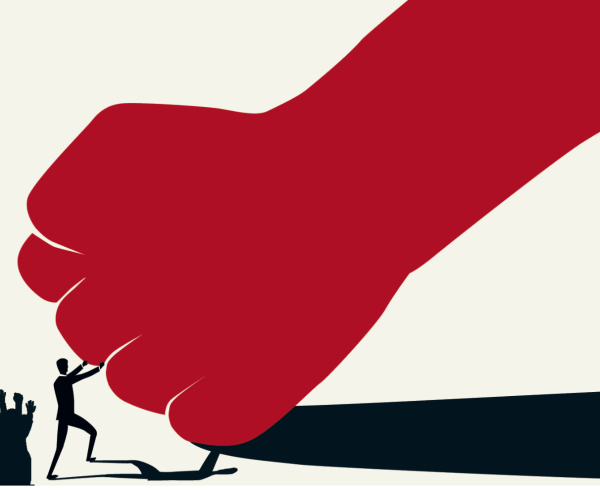
Canada is experiencing its own shift to a political far-right that is tolerant of fascism.
Today’s baby boomers matured when the defence of democracy was viewed as an admirable duty of individual citizens. That attitude gradually declined as subsequent generations reached adulthood. Democracy has been taken for granted and is less valued. Fear of despotism barely exists.
After the Second World War, progressive political movements worked to gradually improve most human lives. Progress occurred in these areas:
- Fair treatment of racialized groups,
- Recognition of Indigenous rights and history,
- Multiculturalism,
- Decolonization,
- Global institutions,
- Gender equality,
- Sexual diversity,
- Labour rights,
- Social safety nets,
- Access to healthcare,
- Access to public education,
- Public transportation.
However, progress has been uneven and groups advocate for regress. These include:
1. Conservatives and Libertarians
- Conservatives and libertarians often oppose progressive measures, preferring an unregulated economic system, minimal government activity, and the right of individuals to do as they choose.
2. Business and Corporate Interests
- Large corporations, business associations, and industry lobby groups oppose measures detrimental to their profitability and their stock values. They typically oppose antitrust measures, taxation, labour rights, environmental regulations, and universal social programs .
3. Wealthy Individuals and Elite Groups
- Wealthy individuals resist measures that challenge further concentration of wealth and power. They oppose public policies that aim to reduce financial inequality.
4. Cultural and Religious Groups
- Some groups resist changes and argue against policies that seem to conflict with their religious or moral values.
5. Media
- Media ownership has become increasingly concentrated in the hands of a few large corporations and wealthy individuals. Newspapers and broadcasting outlets often reflect the interests of the owners. Traditional journalism has been further displaced by social media where people can freely spread hate and misinformation.
6. Institutional Resistance
- Resistance to progressive policies also comes from bureaucratic institutions that are protective of established systems and structures. Senior bureaucrats and law enforcement officials, for example, typically resist reforms aimed at revising their practices.
7. Voters Who Feel Threatened by Change
- Segments of the population, particularly those who perceive progressive policies as threatening their economic, social, or cultural standing, oppose reforms. Rural voters resist progressive social policies if they feel alienated by urban residents who support those measures.
I am pessimistic about the future.
Today’s Seniors know their lives are better than what their grandparents experienced. Most know their grandchildren will say the opposite.
Categories: Democracy


 in-sights.ca
After trying to get a grip on the American electoral scene over the past decade, I can safely say there is no comparison with the Canadian electoral system and the American system.The United States operates what is largely an 18th Century autocracy, which constitution was designed for the 18th century, with no foresight for more modern times.
Canada has a Parliamentary democracy which though is 19th centruy in nature, it is far more flexible to deal with changing times.
Sadly, the Americans are enslaved by a documents that is near impossible to change, but is easily manipulated by those who have money to spend buying judges and politcans.
The so called “Land of the Free” ain’t so free as one would think.
Remember, lynchings (mostly black victims) were not uncommon until the 2nd world war.
To not waste any more time on word salad, the American system of government is deeply flawed, designed for the wealthy and elitists and largely unchangeable.There will be only one real solution and it happened in 1861 and i am afraid it will happen again in the very near future.
LikeLike