



The International Energy Agency (IEA) is an important information contributor for anyone concerned about how future generations will power the world.
Founded in response to the 1973-1974 oil crisis, the IEA remains laser-focused on energy security. At the same time, today’s IEA has a wider mandate to focus on a broad range of energy issues, including climate change and decarbonisation, energy access and efficiency, investment and innovation, and ensuring reliable, affordable and sustainable energy for all.
IEA says energy efficiency provides some of the quickest and most cost-effective CO2 mitigation options while lowering energy bills and strengthening energy security. Because the immediate benefits of efficiency go to individual consumers, vested interests that influence public policy discourage that approach. These groups know there are far more financial rewards gained from increasing energy supply than by conserving energy.
An example is the BC government’s recent decision to award 30-year contracts for the annual supply of about 5,000 gigawatt-hours of electricity. If the price of new wind power equals the unit prices paid to existing independent power producers (IPPs), this is a commitment to privatize over 24 billion public dollars.
BC Hydro paid IPPs an average of $101,046 per gigawatt-hour in fiscal year 2024. Ten years before, the average price was $74,830 per GWh. This indicates a price increase of 3.05 percent compounded annually. In year one, 5,000 GWh will cost $505 million. In year 30, the annual cost would be $1.2 billion. Over the entire length of the contracts, payments would total $24.2 billion.
While the province now requires material ownership positions by Indigenous groups, history indicates the private power industry is a huge exporter of BC dollars. Nineteen of BC Hydro’s top 20 private power producers are majority-owned outside the province.
Imagine if Premier W.A.C. Bennett had chosen the private sector to generate power on the Peace and Columbia rivers. Instead of enjoying low-cost electricity from publicly owned hydro dams, electricity consumers in BC would now be paying billions of dollars more to meet energy needs.
The NDP once promised to apply democratic socialist principles to government and the economy. That is not today’s NDP. The present government of British Columbia has prioritized private ownership of energy production. That policy change means that Revelstoke 6 remains unbuilt. It was expected to provide 500 MW capacity, which is 45 percent of the power expected from Site C. However, electricity from Revelstoke 6 would have cost a tiny fraction of that coming from Site C. Additionally, there would be no additional flooding that ruins prime farmland.
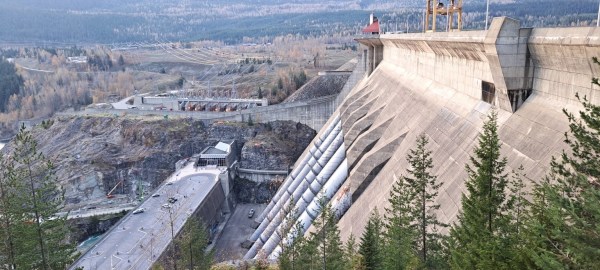
Revelstoke Magazine reported in 2024:
BC Hydro originally explored the option to add a generating unit in the sixth penstock at the Revelstoke Dam to match expected energy needs for 2026, but paused the project indefinitely stating they were not “forecasting a need for a sixth generating unit at Revelstoke Dam over the next 20 years.”
By the latest IPP contracts awarded, BC Hydro and the BC NDP government show a preference for expensive, privately produced energy over inexpensive electricity generated at publicly owned facilities.
Categories: BC Hydro


 in-sights.ca
No one has ever accused the NDP or B.C. Hydro of fiscal responsibility. Isn’t it about time they contracted out money wasting decisions to someone with a little economic credibility! Say, the average housewife, for example.
LikeLike
I fear this trend towards privatization will accelerate into healthcare.
LikeLike