


Pat McCutcheon authored the article below the separator line. Pat will be hosting a livestreamed panel discussion about Wealth and Inequality for The Canada West Forum Society. The event is scheduled on Zoom for February 4 and the outstanding panel members will be introduced later this week on the CWF website.
The first event of CWF will be followed later in February by a forum on Affordable Housing and Homelessness. This panel will also feature experts who have spent much of their careers addressing issues related to the chosen topics.
Please visit the Canada West Forum website and use this LINK for a $10 membership in the society. The nonprofit was incorporated in British Columbia in 2025, and will hold its first Annual General Meeting in February.
Wealth inequality is a lot like the climate crisis. Both are slow-moving train wrecks of immense proportions. Just as climate change is wreaking societal destruction around the globe, so is wealth inequality. Society tends to think they can ignore these problems, until they can’t anymore.
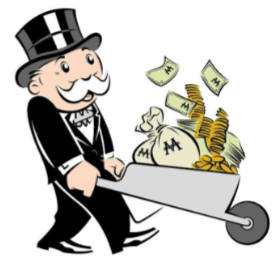
Runaway wealth inequality did not happen by accident. Its recent iteration began in the early 1980s with the implementation of unrestrained free market economics by President Reagan and Prime Minister Margaret Thatcher. Both leaders dramatically slashed regulations and tax rates and sold off public assets. They promised a strong economy and said the riches would trickle down through the population, except the riches did not trickle down.
Here in Canada, Statistics Canada recently reported that the wealthiest 20% of Canadians control 65% of the country’s wealth, while the poorest 40% control only 4%.
According to a 2024 study by Oxfam, “The richest 1 percent have more wealth than the bottom 95 percent of the world’s population put together.”
Like ignoring the climate crisis, ignoring the build-up in wealth inequality has severe consequences. We feel these throughout our economy, including social programs, housing, media, and educational and democratic institutions.
An economy will decay and sputter if wealth continues to concentrate in the hands of the few. If someone of lower or middle income has $1,000 of disposable income, they spend it quickly and stimulate the local economy. On the other hand, the rich use surplus funds to build their asset base, often acquiring foreign assets.
Demand destruction due to extreme wealth inequality will collapse the economy. Healthcare, education, and other social programs are threatened because government revenue streams are not adequate to fully fund these programs. In a wealthy country like Canada, it is not because the money is lacking. It is because politicians have rigged the tax code in favour of wealth accumulation.
Our society is built on the hard work of healthcare workers, carpenters, teachers, engineers, etc. One hundred percent of their employment income is taxed. On the other hand, capital gains resulting from real estate (non-primary residence), stock, crypto and derivative transactions benefit from a 50% inclusion rate for tax purposes.
It is the wealthy that gain from this upside-down tax structure. Our tax system should reward work done by everyday Canadians who build our society. Accumulators of wealth should not receive special treatment.
Our housing market has been commodified. People lucky enough to own a house have benefited tremendously, while younger generations know they may never own a house. We can identify several reasons for the decades-long rise in real estate prices. One of the big contributors is asset accumulation by the wealthy elite and Real Estate Investment Trusts (REIT).
Extreme inequality also threatens democracy. The wealthy and corporate interests have greater access to government members than ordinary citizens. While political donations are limited in Canada, the wealthy and corporate interests lean heavily on lobbyists to influence legislation in their favour. They have been very successful on this front.
Mainstream media and think tanks are concentrated, and funded by or controlled by large corporations, which are in turn controlled by wealthy individuals. They use these positions to control the public narrative in their favour. This unbalanced access to government and control over mainstream media results in a serious threat to democracy.
Wealth inequality is not a natural law. Through proper legislation, an equitable distribution of wealth is possible. Solutions that governments across the country need to be looking seriously at include:
- Shifting tax policy away from income and more towards wealth.
- Close the capital gains loophole by increasing the inclusion rate to 100%. A buck is a buck is a buck.
- Raise the highest marginal income tax rates.
- Implement a wealth tax.
- Introduce a super-profits tax on corporate net-income over $1 billion.
- Interestingly, taxing the super wealthy is strongly supported by the public. A recent Economist / YouGov poll found:
- ✅ 80% of Americans say the rich have too much political power.
- ✅ 62% of Americans say billionaires are taxed too little.
- ✅ 59% of Americans want the federal government to reduce the wealth gap.
So why isn’t the government acting on what the people want? We need to raise the volume.
Categories: Inequality


 in-sights.ca
Mr Farrell,
The Canada West Forum will hold talks on Wealth and Inequality then on Affordable Housing and Homelessness? This second panel will feature experts who have spent much of their careers addressing issues related to the chosen topics.
Could you include Ellen Brown in the experts? Before her 2012 article appeared I witnessed the period when Canada’s Central Bank did more for Canadians than ever before in history. Until 2012 I understood nothing of how or why what happened happened.
On the subject of too much.
Though it only took a few hours you may want to reschedule some of these offerings.
=======================================================================
IN BRIEF 2
The Narwahl sues the RCMP
https://thetyee.ca/News/2026/01/13/Narwhal-Suing-RCMP-Stakes-High-Journalism/
Photojournalist Amber Bracken and Canadian non-profit news organization The Narwhal have sued the RCMP and Canada’s attorney general, alleging the RCMP breached Bracken’s rights as a journalist when officers arrested her in November 2021 while she was covering police efforts to evict protesters from a camp on Wet’suwet’en territory in northern B.C.
The Narwhal had notified police the preceding day that Bracken was present at the camp and working as a journalist. But when the police arrived to evict and arrest those who had remained at the camp, they also arrested Bracken and seized her camera and computer gear. Bracken was held in custody for three days and transported to Prince George before being released without charge.
=======================================================================
What was so great about the perspectives provided by “Statespersons”?
=======================================================================
NOEM to be Impeached?
=======================================================================
The Miraculous Republican $3 food fantasy
=======================================================================
How long does “Canadian Owned” remain Canadian owned?
=======================================================================
$700 mth for an apartment? In Canada?
=======================================================================
Mr Hegseth and Perfidy
=======================================================================
Why China succeeded. You mean carefully regulated Capitalism works?
=======================================================================
How the Soviets screwed themselves
=======================================================================
Minnesota is just too Canadian. So there.
=======================================================================
Canada’s Supreme Court dilemma
=======================================================================
Seeing things differently = Smart Glasses
=======================================================================
Why De Grasse Tyson rejects silicon Valley billionaire’s Mars Colony Fantasy
LikeLike
He who owns the most gold rules!!
This is an ages old quip that has been long forgotten!
That we live in an age where the populous do not realise they are been manipulated by the rich and powerful is testament to the age of disinformation!
That we trust the internet rather than our own eyes puts shivers up my back.
TB
LikeLike
Imagine that! For sure nobody saw that coming!
Despite Republican insistence that enormous tariff costs are paid by target counties not the US new data confirms that there’s a cost split. Equal to about 4% foreign country / 96% US citizens.
https://crooksandliars.com/2026/01/trumps-tariff-vow-shattered-study-finds
“The Kiel Institute for the World Economy study, obtained by The Wall Street Journal on Monday, concluded that the tariffs were likely to show up as higher consumer prices in the long term.”
“Despite claims by the Trump administration, a new study has found that Americans are absorbing about 96% of the costs of President Donald Trump’s tariffs. Foreign companies have been paying only 4% through discounts and other tactics.”
“The Kiel Institute for the World Economy study, obtained by The Wall Street Journal on Monday, concluded that the tariffs were likely to show up as higher consumer prices in the long term.”
“There is no such thing as foreigners transferring wealth to the U.S. in the form of tariffs,” Bielefeld University professor Julian Hinz remarked after authoring the study.”
“According to Hinz, the $200 billion in tariff revenue last year “was paid almost exclusively by Americans.””
Who agrees? Take your pick…
https://www.wsj.com/economy/trade/americans-are-the-ones-paying-for-tariffs-study-finds-e254ed2e
https://www.businessinsider.com/trump-tariffs-paid-almost-entirely-by-americans-german-study-2026-1
https://www.independent.co.uk/news/world/americas/us-politics/trump-tariffs-americans-pay-study-b2903467.html
https://www.msn.com/en-us/money/markets/report-americans-pay-for-96-of-trumps-foreign-tariffs/ar-AA1UxhJz
https://www.yahoo.com/news/articles/trump-favorite-boast-expensively-blows-183119527.html
LikeLike
Why try to “own” Greenland?
What possible benefit is there in owning the world’s largest island?
(Article Date Mar 2025)
https://www.newsweek.com/freedom-cities-billionaire-ceo-reshape-america-2043603
“What Are ‘Freedom Cities’? Billionaire CEOs’ Plan Could Reshape America”
“A coalition of campaign groups opposed to regulation has called for the creation of “freedom cities” across the U.S, and the idea is backed by some of the most high profile billionaires in the U.S, including Peter Thiel and Marc Andreessen.”
“The cities would be pockets of deregulated areas, with the aim of promoting innovation and technological advancement.”
“Deregulation has been a consistent talking point for conservatives and the U.S. entrepreneurial class for a long time, and freedom cities are the latest iteration of that approach. By condensing a lack of regulation into urban areas, it makes the implementation of the policy much easier than a full-scale federal repeal on existing rules.”
“According to reports from Wired, some groups calling for freedom cities have already been in communication with the Trump administration.”
“The Freedom Cities Coalition, a think tank pushing for the creation of unregulated areas in every state, said that it had informed the White House about the use of interstate compacts to create the cities.”
“Another organization pushing for the concept is Próspera, which is supported by Pronomos Capital, a venture capital firm which is in turn backed by Thiel and Andreessen. Thiel already has close ties to the Trump administration and has supported Vice President JD Vance’s political career since his run for Senator in Ohio.”
“President Donald Trump has previously called for the creation of freedom cities. In March 2023, he called for the redistribution of federal land for 10 new urban areas, saying: “Our objective will be a quantum leap in the American standard of living. That’s what will happen. Here are just a few of the ways we can do it.”
LikeLike
What is Fractional Reserve Banking?
This might help.
https://www.youtube.com/shorts/vQRD8bSXSRs?feature=share
LikeLike