



The International Renewable Energy Agency (IRENA) reports that renewable technologies accounted for 92.5% of all new global electricity generation capacity added in 2024. Solar, wind, hydro, and geothermal facilities drove that growth, with most of the new clean energy capacity installed in China.
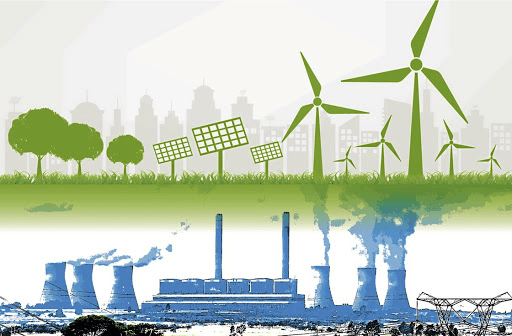
Yet even as zero-emission capacity expands, global fossil fuel use continues to rise. In British Columbia, the NDP government continues to support new fossil fuel infrastructure while spending almost nothing on renewable deployment.
We are experiencing a global energy transition marked by contradiction: record investment in clean power on one hand and continued expansion of climate-harming fuels on the other. This month the USA repealed a scientific finding that greenhouse gas emissions endanger human health. This is part of Trump’s regulatory cuts and other moves intended to unfetter fossil fuel development and stymie the rollout of clean energy.
Trump policies notwithstanding, David Roberts, publisher of Volts, asserts that even businesses that care nothing about climate change will utilize clean renewables. The reason is simple: these produce the lowest-cost electricity.
Batteries are becoming ever more important, and modern units offer higher energy density, faster charging, and lower costs. New designs include solid-state, sodium-ion, and lithium-ion. Donut Lab of Helsinki1 says it is reimagining the electric mobility industry. Its solid-state battery is said to provide:
- More energy. Less mass. More range or smaller packs.
- Fast charge in as little as 5 minutes.
- Charge to 100%. Discharge to 0%.
- Designed for 100,000 cycles.
- Safe operation in extreme heat and cold.
- Made with abundant, locally sourced materials.
- Low-cost, scalable production.
- Available today.
.
Beyond new generation capacity, important advances are also emerging from research labs working on materials recycling and recovery.
Lithium, a core component of modern batteries, can in principle be recycled repeatedly and reused in new battery manufacturing without loss of quality. Similarly, rare earth elements used in electric vehicle motors can be recovered and reprocessed with losses of less than five percent.
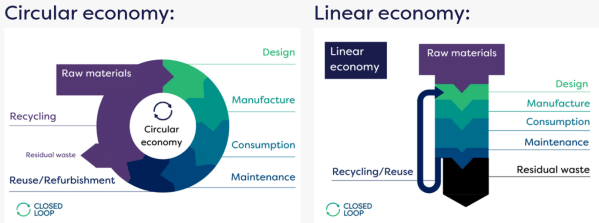
Closed-loop systems—where materials are continuously recovered and fed back into production—are quickly becoming one of the most promising industrial frontiers in the global clean-technology economy.
Instead of investing tens of billions of dollars into harmful fossil fuel infrastructure, Canada could focus on sectors aligned with the next energy era. Finland has positioned itself at the forefront of battery innovation and innovative applications of electricity. With a population comparable to British Columbia, Finland demonstrates that scale is not a barrier to leadership in advanced energy systems.
The choice facing Canada is not whether the energy transition will occur, but whether this country will participate as a supplier of future-oriented technologies—or remain anchored to dying and diminishing industries.
As with affordable housing and homelessness, the technical solutions are not mysterious. Other jurisdictions have demonstrated workable models. The barrier is not knowledge; it is political will.
Canada faces a similar choice in energy and industrial policy. We can accelerate the shift toward renewables, storage, recycling, and circular manufacturing—or continue prioritizing short-term returns from fossil fuel extraction.
Too often, the default approach is to maximize immediate wealth from nonrenewable resources and ignore the long-term consequences. That choice effectively transfers environmental, economic, and social costs to future generations.
The question is not whether better pathways exist. They do. The question is whether governments are prepared to act on them with the same urgency shown in protecting established industries.
1 Cova Power is associated with Donut Labs. It promises unprecedented cost savings for the trucking industry.
Categories: Energy


 in-sights.ca
1 reply »