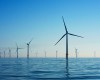
Contracted energy costs for wind and solar projects in Canada have fallen to half of what they were 10 years ago, new analysis shows. Now, they’re the lowest-cost form of new electricity generation.

Contracted energy costs for wind and solar projects in Canada have fallen to half of what they were 10 years ago, new analysis shows. Now, they’re the lowest-cost form of new electricity generation.

Clean Energy Canada published an important report for this province. It is titled BC Distributed Energy Resource Potential Study. It seems the best examinations of this province’s energy needs come from public interest groups, not from our multi-billion dollar public utility.
I have listened to Powering the Future a few times. There is much information to be gained, and a little misinformation was politely ignored. Check it out. BC Hydro Chair Glen Clark should be applauded for joining the panel for a 90 minute conversation. Fellow panelists Jae Mather and Markham Hislop showed their broad knowledge of energy matters.

Canada West Forum is presenting an online event available without cost on a Zoom livestream, Monday, March 9, 10:15 a.m. Moderated by filmmaker and environmental journalist Damien Gillis, the panel features three highly regarded individuals. They are Glen Clark, Chair of BC Hydro, renewables expert Jae Mather, and energy jounrlist Markham Hislop of Energi Media. The panel will examine the future of energy supplies in British Columbia and the key decisions that must be made to meet rising demand.

The latest report from Ember, a global energy think tank, says the way we measure energy can distort our understanding of the transition now underway. The paper highlights why accurate energy accounting matters for public policy and decision-making. In the video below, Dave Borlace distills Embers’s work and helps us gain understanding of an issue that affects us all.

Too often, the default approach is to maximize immediate wealth from non-renewable resources and defer the long-term consequences. That choice effectively transfers environmental, economic, and social costs to future generations. The question is not whether better pathways exist. They do. The question is whether governments are prepared to act on them with the same urgency shown in protecting established industries.
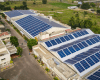
If B.C. is serious about building a resilient and forward-looking energy system, its public utility must invest more decisively in the innovations already being studied here at home. The University of British Columbia Okanagan Campus has the Laboratory for Solar Energy and Fuels. It is working to develop materials and devices that can convert abundant solar energy into clean electricity or storable fuels. BC Hydro is not listed as one of its research partners.
Dave Borlace of Just Have a Think explains heat pumps. He discusses how one British Company is helping heat engineers deliver the most efficient ways of heating a home with clean energy.

American company Quaise Energy is developing a new way to access the largest untapped energy source available. It will use established production methods of the fossil fuel industry, but the technology employed is new. Quaise intends to use beams of energy to vaporize bore holes through rocks and access deep geothermal heat.

Markham Hislop and Professor Mark Jacobson dive into the rarely discussed fact that the electric economy is significantly more efficient than the fossil fuel economy, and therefore, less energy is required to power it.

Months ago, I wrote Geothermal — clean, non-destructive renewable energy. It was about Calgary-based Eavor and the company’s use of unique drilling technology to realize geothermal energy. I have followed Eavor’s activities and noted recent developments, particularly in the Bavarian town of Geretsried…

The global battery market is now valued at around C$220 billion. That number is expected to be near half a trillion dollars in five years. Even that estimate may be conservative. Very conservative. China’s Contemporary Amperex Technology Company (CATL), the world’s largest battery maker, recently made an astonishing announcement. One was that its new Shenxing sodium-ion battery could add 520 kilometres of driving range in just five minutes of charging time. The total range is said to be 800 km…

Canadian climate journalist Geoff Dembicki wrote an opinion piece published by the New York Times almost six years ago. Canada’s Perverse Climate Change Policy: Gas Up. It was subtitled: Pushing toward the worst scenario despite better options for the future of the environment.

British Columbia has been reliant on hydroelectricity for generations. However, climate change is threatening that supply. Persistent dry conditions have become a reality. BC Hydro has spent tens of millions of dollars to add capacity and upgrade generating equipment at its hydroelectric dams. But this 28 year record reveals a problem. The output per MW of capacity was 54% higher in fiscal year 1997 than in FY 2024.

Many people in Canada are employed in fossil fuel industries. Were production of carbon-laden, climate damaging products to decline or end, many towns would be disrupted. However, quality of life would improve since toxic contaminants are by-products of oil, gas, and coal production. Overall employment would increase and stable populations would lead to safer communities…
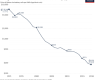
Large reductions in the cost of renewable technologies such as solar and wind have made them cost-competitive with fossil fuels. But to balance these intermittent sources and electrify our transport systems, we also need low-cost energy storage. Lithium-ion batteries are the most commonly used. Lithium-ion battery cells have also seen an impressive price reduction. Since 1991, prices have fallen by around 97%. Prices fall by an average of 19% for every doubling of capacity. Even more promising is that this rate of reduction does not yet appear to be slowing down.

In 2017, Site C proponents said the dam was required because British Columbia needed dispatchable electricity. According to those keen on the megaproject, low-cost wind and solar power could not be integrated into BC Hydro’s systems. At the time, 97.5 percent of the utility’s generating capacity was hydro. Like batteries, reservoirs store potential energy. When consumers use electricity from wind and solar sources, hydropower utilities keep water behind dams, ready for use when needed…
Proponents of hydroelectric dams love to talk about these as low-impact sources of clean energy. Many proponents expect to gain financially from construction of the megaprojects. To them, self-interest is always more important than public-interest. But many of the proponents expect to gain financially from construction of the megaprojects. To them, self-interest is always more important than public-interest. In British Columbia, the financial cost of electricity from Site C will be 4x to 6x that of wind and solar alternatives. Authorities choose to disregard human and environmental costs and leave them unmeasured.

The item below the separator was published in March 2018. That was three years before the Site C budget doubled to $16 billion, and we’ve now entered the fourth year since the dam budget was publicly updated. While overall inflation in Canada has been about 16% during the past four years, the non-residential construction industry experienced historic levels of inflation in 2022 and 2023. No one should be surprised when after the October 2024 provincial election, the Site C budget is revealed to be above $20 billion.
I write often about climate change and tend toward pessimism about humankind’s efforts to avoid disaster. But there are good stories that show progress. Will they be enough? Only if we have the will to go against powerful vested interests and implement 21st century technologies…


Trump declares USA is “stupid”. https://www.independent.co.uk/news/world/americas/us-politics/supreme-court-trump-birthright-citizenship-case-b2949973.html https://www.independent.co.uk/bulletin/news/trump-supreme-court-birthright-citizenship-debate-stupid-b2950293.html?utm_source=taboola&utm_medium=related&utm_campaign=embed1 President Donald Trump has branded the U.S. “stupid” after attending Supreme Court arguments over his administration's efforts…
Justice? More posts from Liz Oyer https://www.youtube.com/shorts/l3R3QUI1J-M?feature=share LIZ why Oyer was fired. https://www.youtube.com/shorts/xs9N_2W_6CU?feature=share LIZ explains the DOJ’s abnormaIity https://www.youtube.com/shorts/9tDcGMVW0HU?feature=share LIZ…
Who benefits most from Trump's DOJ? Trump’s Justice Department Dropped 23,000 Criminal Investigations in Shift to Immigration In the first…
There are examples worldwide of methods to produce electricity that provide us with solutions; some are tried and true and…
 in-sights.ca
There are examples worldwide of methods to produce electricity that provide us with solutions; some are tried and true and…