


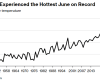
World Marks Full Year of Average Temperatures Above 1.5C Target

World Marks Full Year of Average Temperatures Above 1.5C Target

Frank Graves says we live in an era which sees a crisis of both trust and truth… Disinformation is polarizing our society in ways that we have never seen… But Graves is optimistic about the future. find it difficult to share his hopefulness and confidence in the future.

Large enterprises often fail to respond effectively when facing challenges. Professional people find it difficult to say that they may have been wrong. Passing the buck is a primary defence for responsible persons. Protecting the enterprise and its managers is more important than dealing fairly and truthfully with the public. Any innocent party damaged by wrongful acts is acceptable collateral damage.
It took a very long time and extraordinary public outrage before the UK government decided to allow a competent examination of the post office scandal. If transparency were an absolute principle, fewer scandals would arise.
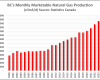
So BC taxpayers currently paying close to $3 billion a year in carbon tax must result in lower production of natural gas, right? Maybe not.

Environmental Defence Canada says climate change is one of the main reasons why food prices are increasing. There are other factors too, but some of the prices in 2024 are shocking. Today I paid $16 for a small basket of BC raspberries and $1.50 each for local corn. Earlier I noted red onions at $3.50 a pound…
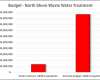
The real need is for the province to appoint a royal commission with broad ability to investigate financial and engineering problems with all megaprojects. The inquiry should be able to compel public officials to explain processes that result in massive cost increases and troublesome delays.

All senior public servant involved in the approval or management of megaprojects that consume vast sums should demonstrate detailed knowledge of Professor Flyvbjerg’s work. Many works would not be approved and billions of dollars would be saved. Of course, our approaches to management of megaprojects will not change. Political leaders have half-heartedly addressed widespread concerns about fiscal irresponsibility and the influence of lobbyists. That is, if they have addressed the concerns at all.

If the public interest is ever to be served, the power and influence of lobbyists must be reduced to near-zero and the ability to slip easily between the regulators and the regulated must end. Don’t expect that to happen though. The people who make the rules are also the people who benefit by having lax rules.

Some believe that wealth creation should be the paramount goal of a nation. In Canada, many of those people are political operatives opposing effective actions to mitigate climate change. A 2024 publication by The National Bureau of Economic Research (NBER) may give pause to climate science revisionists…

The United Kingdom’s National Audit Office said about a nuclear energy megaproject that was to cost C$35 billion and now looks to be costing more than C$80 billion, years after initial completion: “[Government] has committed electricity consumers and taxpayers to a high cost and risky deal in a changing energy marketplace.” The NAO message is almost exactly the arguments raised about British Columbia’s Site C hydropower project her at IN-SIGHTS and by others demanding that public projects deliver value for money.

The reality is that media filters reality instead of reflecting it. In authoritarian regimes, control of communication has always been a primary consideration and news is shaped to further the interests of the powerful. The same can be said in corporatocracies. Shaping the news will be more problematic as use of artificial intelligence expands. That is not good for social democracy.

Much is wrong with Facebook, but occasionally, it circulates nuggets of gold…

Days ago, I commented on the share price of the company that owns Canada’s Global Television Network and numerous broadcasting outlets in Vancouver and elsewhere. Stock in Corus Entertainment Inc. (TSE: CJR.B) that was once priced above $25 traded last week for 24 cents. The last few days have not been good for people invested in holding Corus. The stock closed at 15 cents on June 18, 2024…

The law is equal before all of us; but we are not all equal before the law. Virtually there is one law for the rich and another for the poor, one law for the cunning and another for the simple, one law for the forceful and another for the feeble, one law for the ignorant and another for the learned…

Over 40 percent of Thames Water, a troubled utility company in the United Kingdom, is owned by OMERS and BCI. These are two of Canada’s biggest public pension fund managers. The British utility is facing regulatory scrutiny and penalties for sewage leaks that require a financial bailout. Investors refused a request by Thames for more than £3 billion ($5.2 billion). Ontario’s OMERS has written down its Thames investment to zero. Presumably, British Columbia’s BCI has done the same…

An organization in the United Kingdom aims to identify funders of think tanks that work to influence public policy. While the group’s focus is on the UK, it is a safe bet that political operatives and large organizations use their financial resources to achieve similar objectives in Canada and other nations…

The possibility of Corus Entertainment Inc. disappearing may astound people. However, there is a common pattern following intergenerational transfers of business interests. Reuter’s Chris Taylor reported: 70 percent of wealthy families lose their wealth by the second generation, and a stunning 90 percent by the third…

Years ago, well managed radio stations enjoyed operating profits that could reach 50 percent of revenue. Having permits to broadcast were said to be like having licences to print money. Those days are no more. But one company has fared worse than most. Far worse.

Ali Velshi is a journalist often seen on MSNBC. Promoting a new book, he appeared on NPR’s Fresh Air. The program covers much ground and is worth our attention. The end segment resonates since it cautions us to know the difference between news and nonsense…

Climate change actions of British Columbia and Manitoba are inadequate and the main efforts by Alberta and Saskatchewan to reduce greenhouse emissions are illusory. While provinces in central and eastern Canada have reduced harmful discharges, western provinces have done the opposite…


Under the heading - Lessons From America. Emeritus Professor, Melania Trump – Who really doesn’t care. Do U? - stepped…

Lovely story Norm. My university summers were spent at the other end, figuratively and literally, of yours; pulling Douglas fir…
[…] When I was in high school, I spent time working for my uncles at Mahood Logging Ltd. That experience…

This is certainly a good news story. Indigenous nations take a multi generational approach to land use along with a…
 in-sights.ca
[…] The idiot crew around Donald Trump may have been so focused on personal enrichment schemes that they didn’t bother…