



A letter by White Rock resident Floyd Stanley was published in a Black Press Media newspaper. It included:
It is almost impossible to go for a walk on the promenade without encountering a BNSF train, spewing out exhaust, blaring whistles and screeching wheels on the tracks, making it intolerable to enjoy a walk or enjoy a nice lunch on a patio at one of our fine establishments on Marine Drive.
The main reason for my “mini rant” is to question why our elected officials allow this toxic material to be brought through our community and shipped overseas. I understand that our neighbours to the south refuse to allow coal to be brought to port in their states.
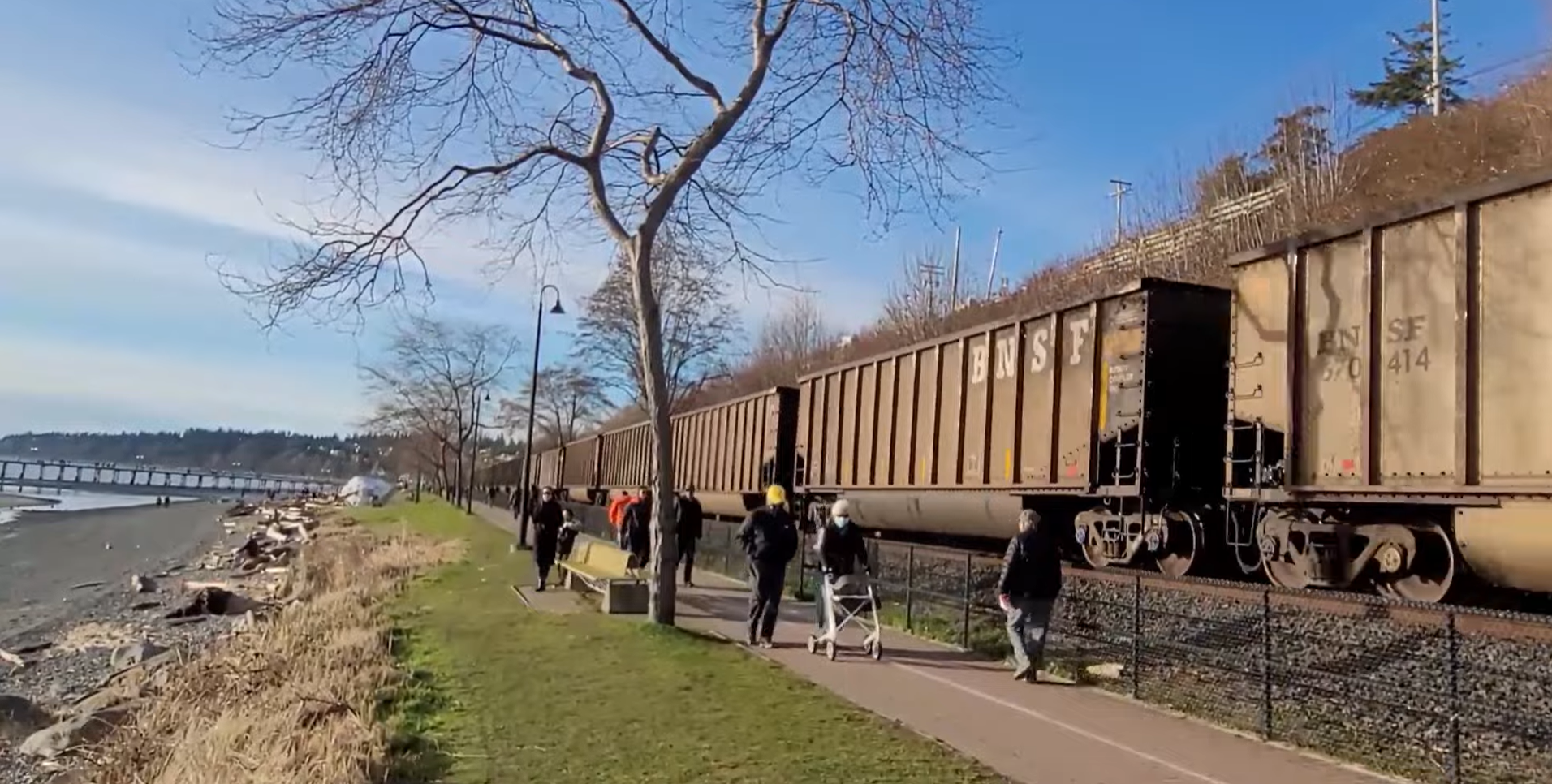
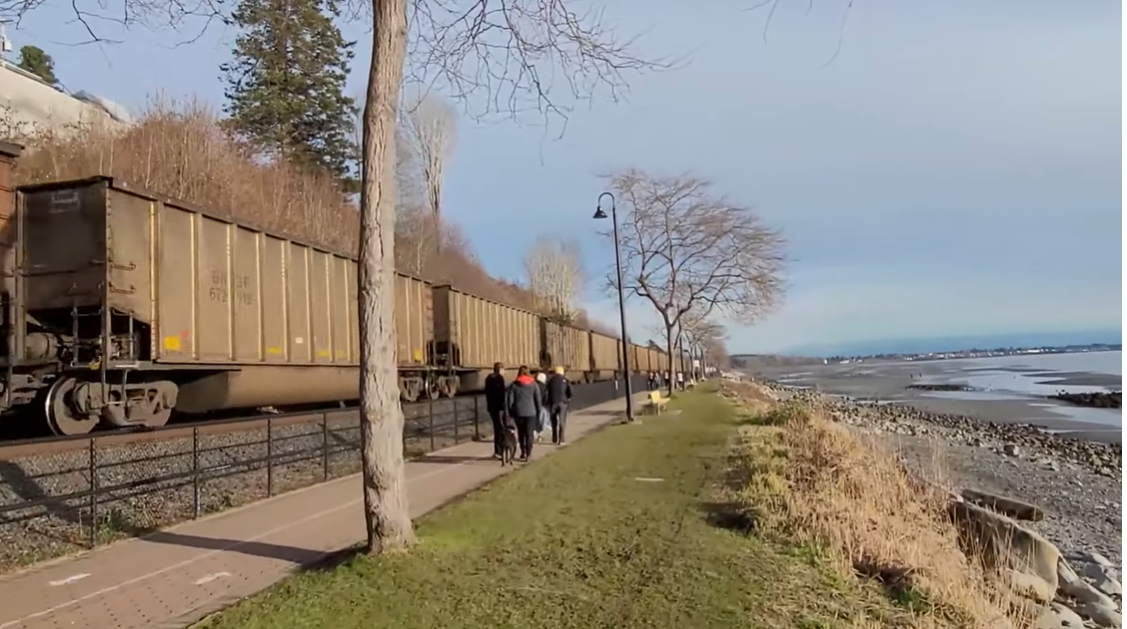
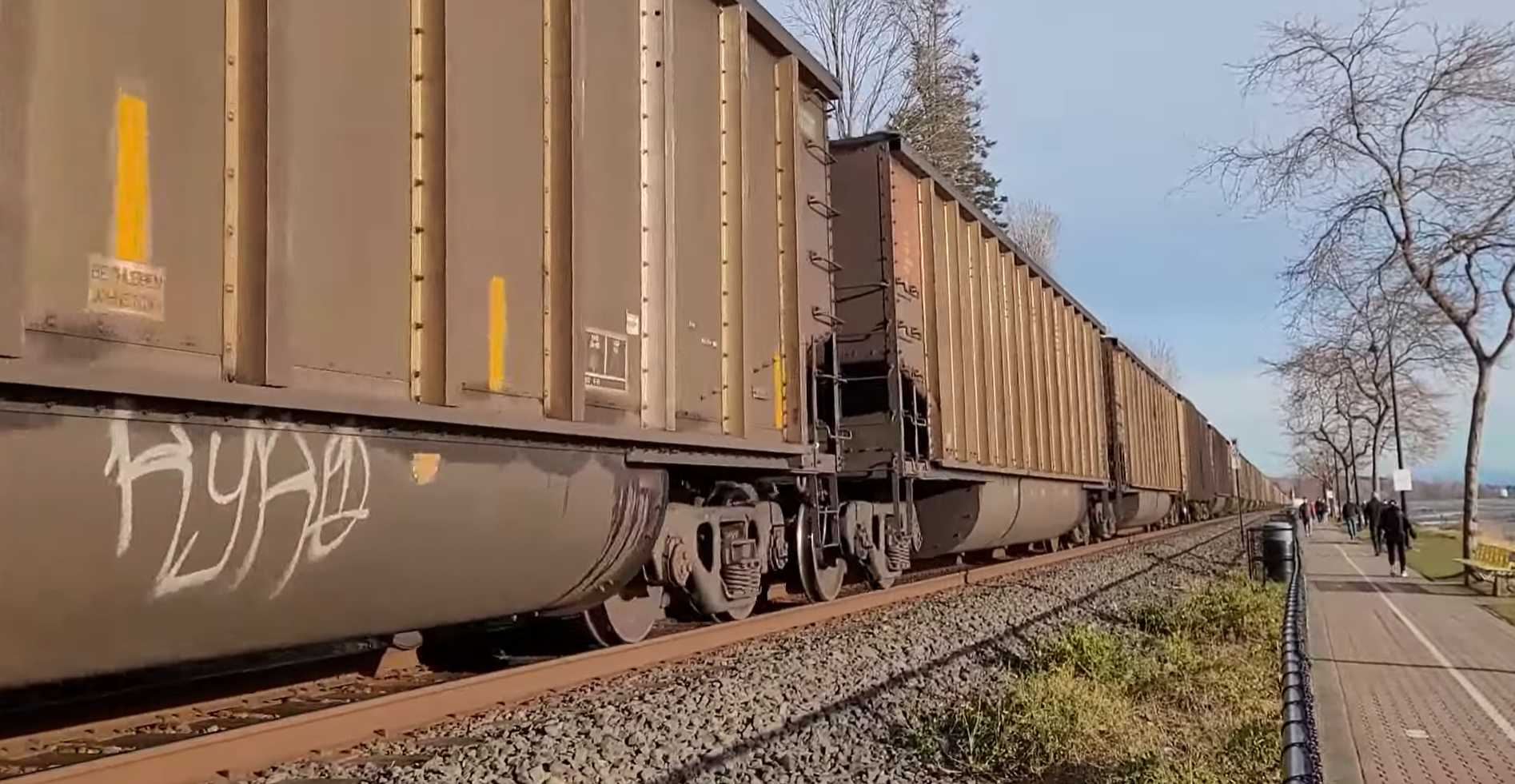
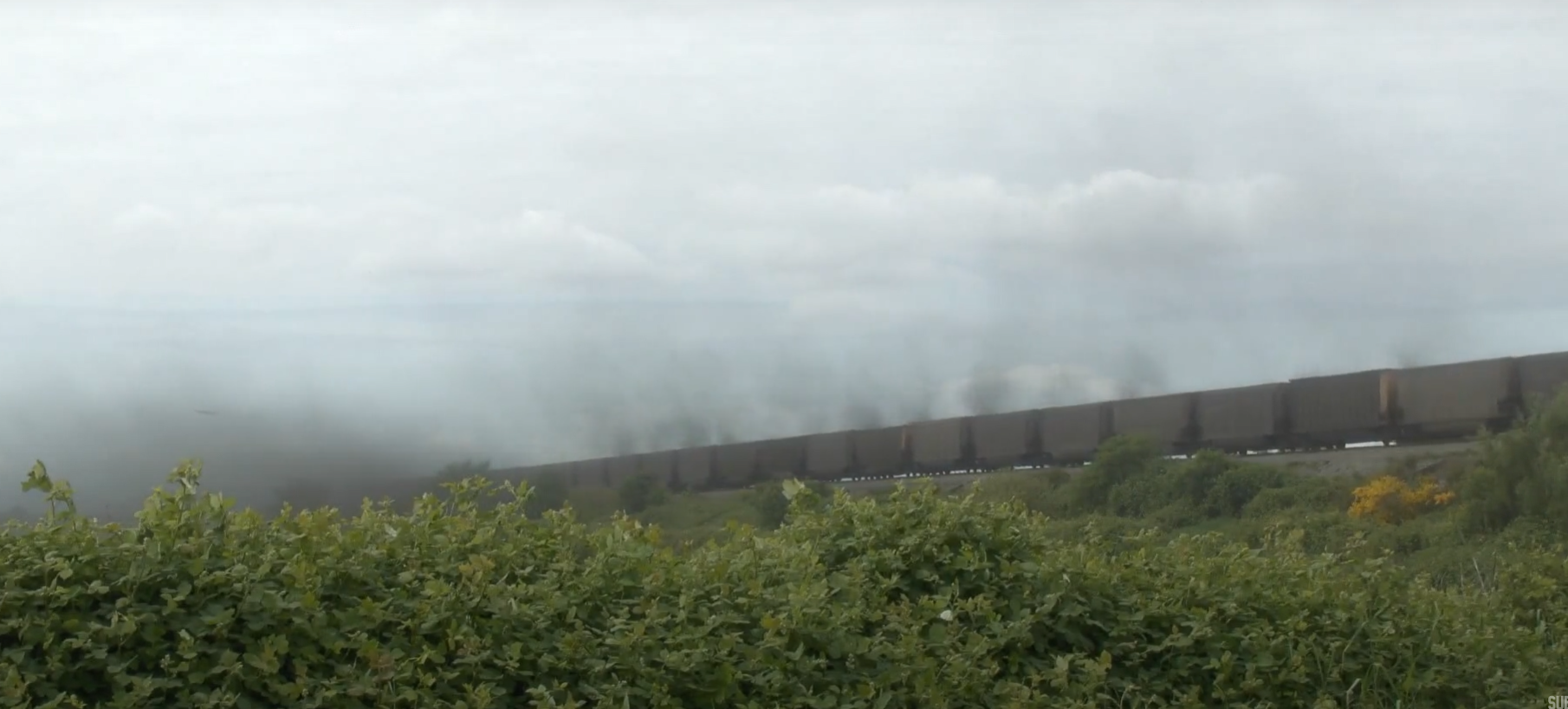
Coal trains leave behind part of their cargo. Of course that’s only part of the reason Americans in the Pacific Northwest don’t want coal trains rolling through their towns, with this dirty fossil fuel headed for export markets on ships that add deadly pollution to the atmosphere.
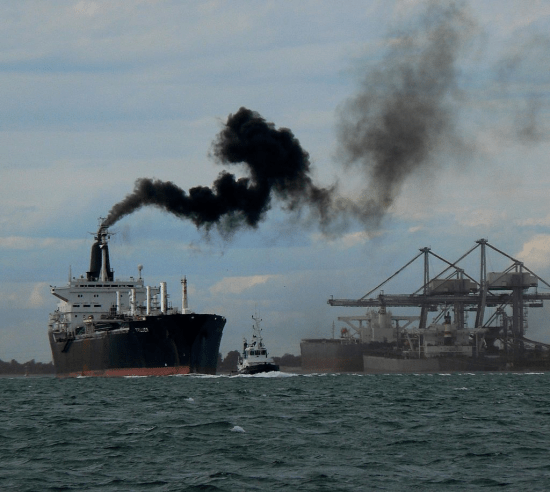
The transport of coal represents one component of the complete coal cycle—from exploration and extraction of the fuel, through beneficiation, storage, and finally, its conversion to an end-use product for consumers. Like all components of the cycle, environmental impacts result from the transport of coal. . .
Environmental impacts of coal transport occur during loading, en route, or during unloading. The impacts are likely to affect “natural” systems, including agriculture, forestry, horticulture, and aquaculture, buildings and installations, and involve death or injury to humans in an occupational capacity, or to the public.
. . . All forms of transport of coal exhibit certain common environmental impact features. The transport of coal in all its forms necessarily involves fugitive dusts, even though precautionary measures are increasingly taken.
Environmental Impacts of Coal Transportation
Six years ago, Dogwood asked Why does dirty U.S. coal get a free ride through B.C.?
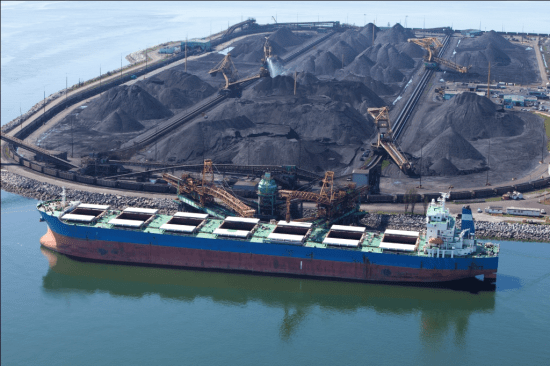
But the next day a whistle blows and another train rumbles toward the Westshore Terminals dock. This one is carrying thermal coal from Montana, bound for a massive power plant, perhaps in Korea.
As the train rolls through Delta, black clouds of coal dust billow from the open rail cars, irritating asthmatics and coating farmers’ crops.
Sadly, it’s worse in Shanxi province where coal is burned. There, men, women and children cover their mouths with cloth masks to fend off the toxic smog.
Although its impacts on climate and health are even worse than steelmaking coal, this American coal train pays no carbon tax, or comparable regulatory fee in B.C., leaving taxpayers like you and me with the tab for its harmful effects.
So, why are U.S. thermal coal trains crossing the border in the first place?
Of course, Dogwood answers the rhetorical question.
The short answer is that Washington and Oregon don’t want them. Under pressure from their constituents, county and state governments put the brakes on new export terminals and coal trains bringing more dirty coal through their communities. Native American tribes directly affected by these proposals led the charge.
Six proposed facilities are now scrapped because of community opposition, shaky economics, failed health and environmental assessments, or all of the above. But similar projects in B.C. are not subject to the same rigorous review, partially as a result of the gutted Canadian Environmental Assessment Act, leaving our communities in harm’s way as coal companies profit.
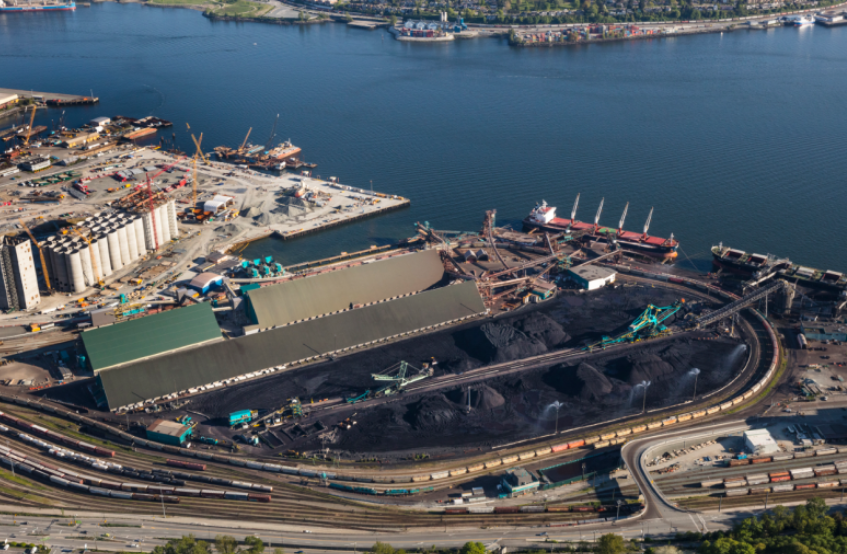
It is not only Roberts Bank that is shipping coal. Almost $2 billion dollars has been spent recently to expand capacity to export coal from Neptune Terminals in North Vancouver and Ridley Terminals in Prince Rupert.
North Shore residents have not seen one additional lane added for vehicular traffic across Burrard Inlet in sixty years, despite regional population quadrupling. But there’s been no shortage of money for coal terminals.
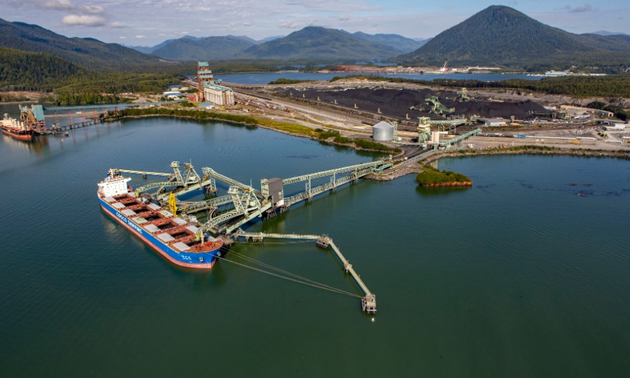
Teck Resources Ltd. has announced an expanded commercial agreement with Ridley Terminals Inc. for shipments of coal from Teck’s British Columbia operations. The agreement increases contracted capacity from three million tonnes per annum to six million tonnes annually with an option for Teck to expand to nine million tonnes annually. This will enable Teck to increase its shipment volumes through the Ridley terminal near Prince Rupert, B.C.
Politicians not part of the Convoy Party of Canada led by Pierre Poilievre talk about how they are encouraging transition to clean energy. At the same time, they facilitate and encourage expanded consumption of fossil fuels that are damaging Planet Earth.
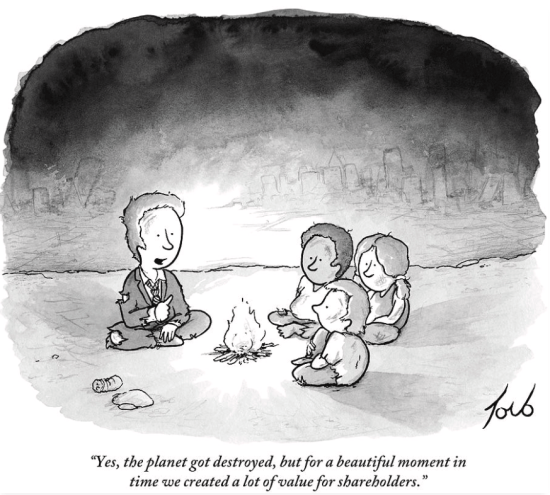
This image by New Yorker cartoonist Tim Toro proves again that a picture can be more powerful than words.
Categories: Environment


 in-sights.ca
Great point Norm, no new bridge for North Van but money for terminals to ship dirty coal. The government ought not to be putting tax dollars into termimals to ship coal anywhere. If corporations want terminals for specific resources, they can build and pay for them.. Yes, its important to have harbours, but what goes through them has to benefit the people who live around them.
Coal trains don’t do much for anyone except the corporations and their shareholders. Coal has dust. I can remember that from when I was a kid back in the 1950s about 5 years old. People still heated their homes with coal and as a kid we played with it and got ourselves very dirty. Now if that is blowing through the air, that needs to end. dump trucks with gravel, dirt, sand, etc. are required to have covers on their load while driving through traffic, trains ought not to be exempted.
Yes it is time to get rid of coal trains and expanding terminals to ship the stuff. IUt would be our contribution to the environment. Perhaps the Greens could get on that sooner than later.
The expansion of the Delta Port is just crazy. The whales are not going to be happy about it.
LikeLike
And CKNW is still giving a platform to (what appear to be) astroturf organizations fronting for the fossil fuel industry. On Friday, they had Dan McTeague on to talk about how “working Canadians” will only take so much when it comes to carbon taxes. No one else was interviewed to give an alternative perspective or broader context. Mr. McTeague is a former Conservative politician who heads an organization called “Canadians for Affordable Energy”. Their website has no information about a board of directors or about how they are funded.
LikeLike
It is revealing when McTeague blames carbon taxes for high gasoline prices. Not a word about oil company price gouging?
In total, the global industry’s profits last year reached about $4 trillion US, according to the International Energy Agency (IEA), compared with an average of $1.5 trillion in recent years.
All of us may notice that fuel prices can rise overnight by 10¢ a litre or more at nearly every retail operation in the region. Doesn’t take much intellect to surmise there’s a system in place to facilitate price-fixing in real time.
LikeLiked by 1 person
Canada’s Ports are controlled by your beloved federal govt aka Liberals.
The same green hugging liberals that paid billions too much for the Trans Canada OIL pipeline.
Trudeau spews out what you voters want to hear and then does the exact opposite.
LikeLike
Another reason to vote BC Green at next opportunity. Two by-elections next week, for instance.
LikeLike