



When British Columbia’s NDP Government approved continuation of Site C, it was partly based on the myth that dispatchability of hydro power was an overriding consideration. Marc Jaccard, the principal of industry consultants M.K. Jaccard and Associates, wrote in the Vancouver Sun:
…non-dispatchable sources may produce nothing. This is akin to ambulances and fire trucks that respond to emergency dispatch calls only if enough paramedics and firefighters happened to show up for work.
…dispatchable electricity sources can be 10 times or more the value per kilowatthour generated of non-dispatchable sources. In other words, comments that wind and solar are getting cheaper than Site C because their costs are falling are nonsensical.
Jaccard’s Site C support was disputed by people favouring less harmful power generation, but it was well received by the NDP Government and those who expected to line their pockets as the megaproject proceeded. However, the SFU professor’s sincerity can be questioned since in 2021 he countered his own arguments by writing:
Fortunately, Canada’s geography provides favourable opportunities to develop wind and solar throughout the country, as well as region-specific biomass, small hydro and some geothermal. And while the electricity output of solar, wind and small hydro plants is variable (hence non-dispatchable), these sources can be integrated with energy storage as well as with incentives to adjust the timing of electricity demand (load shifting).
Jaccard added that non-dispatchable generators benefit from the enormous energy storage of existing hydropower reservoirs, such as those controlled by BC Hydro now and in 2017.
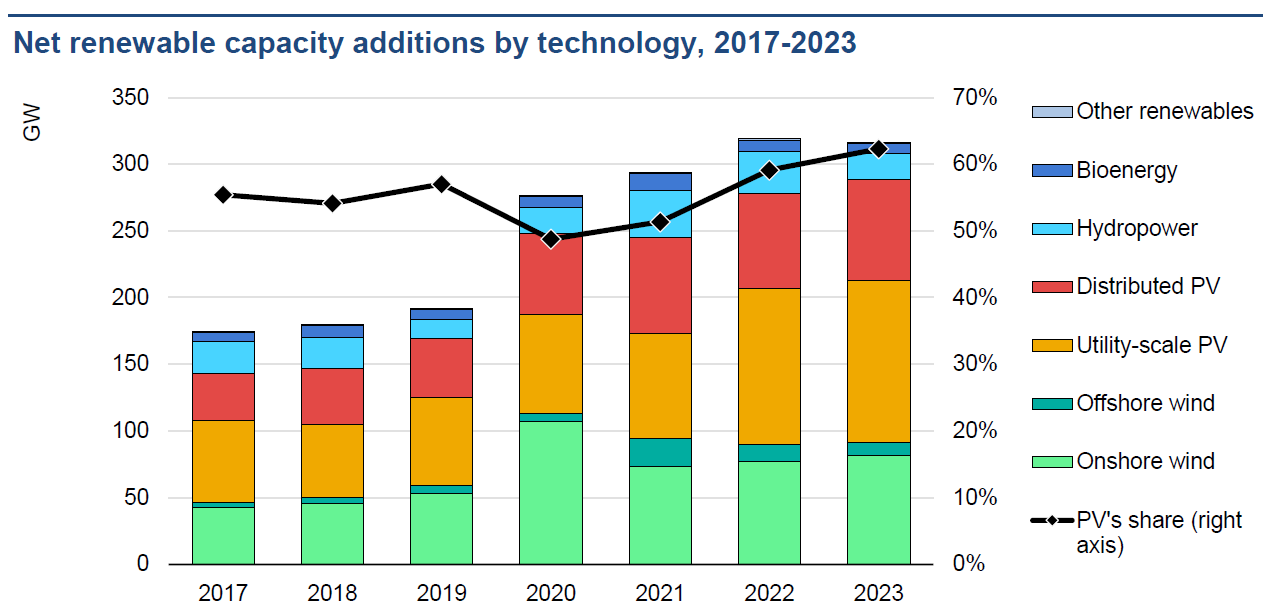
Arguments claiming impracticability of wind and solar power integration in British Columbia never passed scrutiny. Elsewhere in the world, it has been happening rapidly. The International Energy Agency reported:
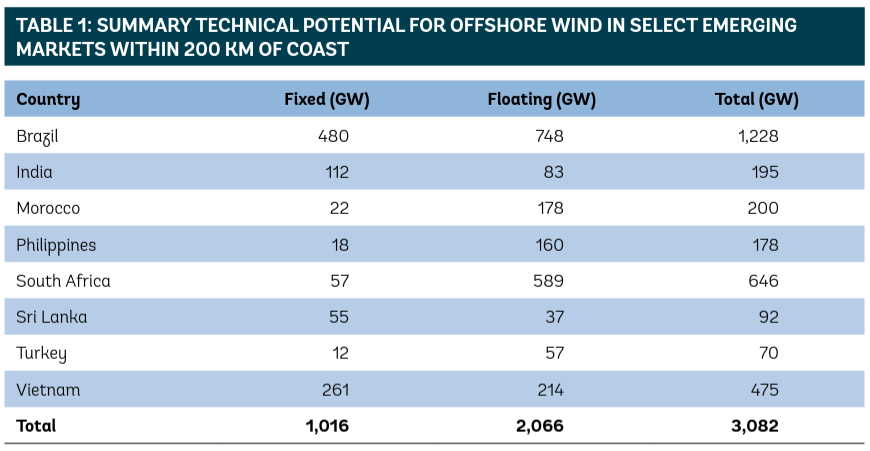
The World Bank reported on offshore wind power installations in emerging nations:
National Grid ESO is the electricity system operator for Great Britain. In June 2021, the company reported:
In 2019 zero carbon sources outstripped fossil fuelled electricity generation for the first time ever and 1.30pm on 17 August of that year saw the highest share of zero carbon power ever seen at 85.1% (wind 39%, solar 25%, nuclear 20% and hydro 1%).
Wednesday 12 February 2020 saw the highest ever output from zero carbon generators. . .
The growth in renewable sources of power, with record levels of wind and solar, means there will be enough zero carbon generation to meet demand. A key challenge is ensuring the electricity system is ready to accommodate that power. . .
Opponents of Site C have never been against using electricity to meet British Columbia’s energy needs. Instead, we have called for generating power in the least risky and damaging ways, and with the lowest possible financial, environmental, and cultural costs. BC Hydro has not prioritized those goals during the past decade. Instead, it has been a company with leadership focused on self-interest and corporate rewards.
The Site C budget almost doubled in 2021 and, like the Trans Mountain Pipeline, the final cost will land far higher. Not including environmental damage, electricity will cost somewhere in the range of $140 to $180 per MHh, even more than purchases from independent power producers, which averaged $100 per MWh in BC Hydro’s last quarterly report. (Unfortunately, the BC government promises to sell electricity to fossil fuel processors for a fraction of the utility’s marginal cost of power.)
Days ago, BC NDP announced a new call for clean power. No important details were provided but it is looking like government wants to replicate the insider-friendly private power program favoured by BC Liberals. That resulted in commitments for power that lasted as long as 70 years, at prices that are multiples of market value.
The province should not go that way again.
State owned Électricité de France S.A., commonly known as EDF, was recently selected to build an offshore wind farm project in Normandy. Electricity will cost less than EUR 45 (C$65) per MWh.
Lawrence Berkeley National Laboratory reported on U.S. prices for wind power:
The average levelized cost of wind energy was $32/MWh for plants built in 2021. Levelized costs vary across time and geography, but the national average stood at $32/MWh in 2021 – down substantially historically, though consistent with the previous three years. (Cost estimates do not count the effect of federal tax incentives for wind.)
If the cost of new renewable power is above these costs, we will know that British Columbia’s government has again placed private interests above public welfare.
Categories: Energy, Energy - Wind, Power Generation


 in-sights.ca
Dams only work when we have a fair amount of water. With climate change upon us, a consistent and plentiful supply of water everywhere in our province is not guaranteed. If people don’t believe that, have a look at Lake Mead in the U.S.A. and some other drought stricken places. Playing with water as site C does, may screw up things for the future and may be very difficult to change if not impossible.
Of course there is also the expense of building the dams. don’t remember the exact cost of Site C, but its somewhere between $8B and $16B. That is not economical. We could have sent a lot of those dam builders to school to become health care workers, i.e. doctors, nurses, physician assistants, pysils, built another few hospitals. We could have built affordable housing for retirees, working families, etc.
The thing about Site c and the other dams is how far away they are from the Lower Mainland. We live in an earthquake zone and of course we have climate change and in this day and age, we also have other countries, people who would like to do us harm. From a security point of view, I’d suggest closer to home for production of electricity. (Someone blew up a dam in Ukraine and it’s been a real inconvenience, not to mention a killing machine.)
LikeLike
On the eve of final approval, BC’s Minister of Energy said in mid-October 2014 that the $7.9 billion budget for Site C had been examined by top international experts and was assuredly “reliable.” Two months later, Premier Clark revealed the budget had jumped to $8.5 billion. Days passed and, when project approval was announced to the public, the budget jumped to $8.775 billion.
In 2021, BC NDP announced the budget total had moved to $16 billion and since then, they’ve not talked about the real budget, other than to hint that various factors were adding financial pressures. This Site C megaproject will be like the Trans Mountain Pipeline expansion project. That boondoggle was budgeted at $5.4 billion before construction but the number has been growing steadily. The most recent budget released to the public was $30.9 billion.
I expect Site C will cost somewhere north of $20 billion. Remember when they said it would cost $2 billion to cancel the project in 2017? Turns out that would have been a good deal.
LikeLike
we used to have a thermal plant here on the lower mainland. Makes way more sense to me.
Pipelines will come back to haunt us. One big spill can ruin not only our day, but our lives and the earth for decades. Its a waste of money. Canada’s oil isn’t of great quality and why we would export it to other countries is beyond me. First we foul our own country, then some one elses and all in the name of some corporation making more money.
All of this involves tax dollars and we have so many other things to use that money for. we’re simply providing welfare to corporations, while children in this country continue to live below the poverty line. then there are all the single people, retirees, the list goes on. None of these dams and pipelines are improving much of anything for those who need it most.
Closer to home for energy makes more sense and wind and sun are really not that expensive. Not too far from my home, I would drive past this home which had what a thought were lawn ornaments in their yard. One day, stopped at the traffic light, took a good look, it were small solar panel in the yard along with wind turbines. With the landscaping it didn’t look bad at all. Had this house had solar panels on it when we purchased it, I’d have saved a lot of money. My electricity bills have not gotten any lower
LikeLike
The metric we need to watch, and one I can’t seem to find, is the percentage of BC’s electricity used for the fossil fuel industry. How that has changed, and will change, over time.
The new call for power seems to be driven by a huge increase in electricity for LNG, and pipelines (not EV’s and non ff electrification).
This is not the direction we should bye heading in climate breakdown.
LikeLike