



Despite false claims by organizations paid to promote false claims, clean renewable energy must replace fossil fuels. The only question is when. The inevitable is assured by crucial environmental, social and economic benefits.
According to renewable energy policy think tank REN21, most barriers to moving out of the fossil fuel age are political rather than practical. Unfortunately, governments are beholden to fossil fuel companies and, even more important, the financial institutions that own and finance production of coal, oil, and gas. As REN21 puts it, “patience and faith in politicians, who hesitate and waver, is fading.”
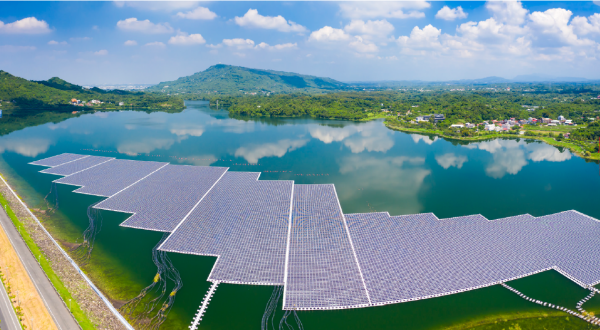
Floating photovoltaic (FVP) systems can provide large amounts of energy within a short time. Installed on lakes, reservoirs, or ponds,FVP can decrease land-use challenges associated with existing renewable energy sources. FVP is particularly suitable where hydropower infrastructure is in place but at risk from reduced water flows resulting from climate change. Systems mounted on reservoirs can use existing power distribution lines.
Combining floating solar with hydropower plants is of particular interest. Flexible hydropower output can be used to smooth the variability of the solar generation, while making better use of existing transmission assets
According to a 2023 study published in Nature Sustainability:
Floating photovoltaic (FPV) systems on reservoirs are advantageous over traditional ground-mounted solar systems in terms of land conservation, efficiency improvement and water loss reduction…
Considering the proximity of most reservoirs to population centres and the potential to develop dedicated local power systems, we find that 6,256 communities and/or cities in 124 countries, including 154 metropolises, could be self-sufficient with local FPV plants. Also beneficial to FPV worldwide is that the reduced annual evaporation could conserve 106 ± 1 km3 of water… .
Solar or photovoltaic (PV) power is gaining renewable energy market share because it is economical, quick to install in a wide range of environments and is especially appropriate for smart energy networks…
Floating solar farms offer another advantage. Water helps cool the panels, allowing them to be 15% more efficient than terrestrial solar, according to an estimate from the Environmental and Energy Study Institute.
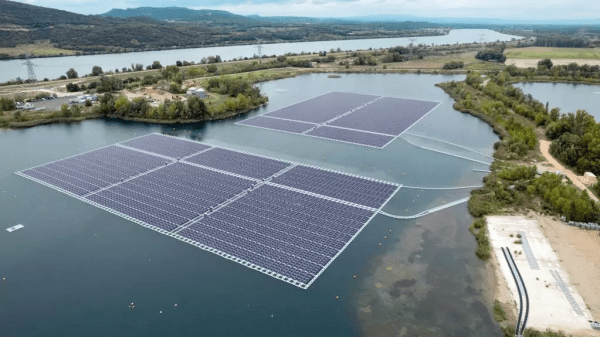
The O’MEGA1 floating solar power plant in Vaucluse France uses land that had been a material extraction quarry:
A Smithsonian article says the five countries that would generate the most electricity from introducing or expanding use of floating solar panels are the U.S., China, Brazil, India and Canada.
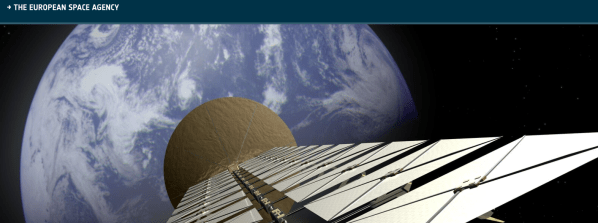
A completely different energy solution is proposed by the European Space Agency, which intends to could collect solar power in space and beam it down to the surface.
Sunlight is on average more than ten times as intense at the top of the atmosphere as it is down at the surface of the Earth. And up at a sufficiently high orbit sunlight would be available on a continuous basis, to capture all the sunlight available, able to be beamed to receiving stations across the planet, wherever it is needed.
The power is then transmitted wirelessly in the form of microwaves to dedicated receiver stations on Earth, called ‘rectennas’, which convert the energy back into electricity and feed it into the local grid.
Because the power is transferred wirelessly it will be possible to transfer it to receiver station where it is required… Space-Based Solar Power, SBSP, is based on existing technological principles and known physics, with no new breakthroughs required.
Caltech’s Space Solar Power Project (SSPP) aims to harvest solar power in space and transmit it to the Earth’s surface. The university launched a solar power prototype into orbit in January. It can wirelessly transmit power from space to Earth.you
Categories: Energy


 in-sights.ca
I still have concerns about the potential or even probable damage to the environment creating the solar panels and the transmission lines to take the energy to where it is needed. I would rather see more panels and vertical wind turbines on top of existing buildings to provide for the power needs of the buildings. Copper to create wiring is very destructive to wherever it is extracted.
LikeLike
A good point, but the quoted study proposes to use solar power sources close to the highly populated areas that consume power. Solar energy produced on the reservoir behind BC Hydro’s Bennett dam, the province’s largest facility producing hydroelectricity, would use existing power lines. The European concept for creating energy in space would have power delivered wirelessly to sites on Earth that would distribute it through existing grids.
LikeLike
Whatever is done, will damage the environment, you just cannot get away with that, the question is, what is best for the environment in the long term.
Would one rather have gas or fossil fuel power generation or clean electric generation from solar farms?
LikeLike
Good point Carolyn
I just retired a solar panel to the landfill for recycling.
Nope..went in the metal scrap pile. No recycling of
solar panels and I believe the same for props in wind
generation. As far as floating solar in water body candidates
in Canada what happens in winter? Who cleans the panels
after a heavy snow fall. Would this be a candidate for job
transition away from O & G type work in the winter. Perhaps
helicopters to the rescue. Just kidding.
If you want a major shift it has to start with the NA life style.
Consume less, drive less, shop local, purchase foods based on
the season they would normally be available, etc. The rest is just
distraction.
We are up against a time and scale issue to get some traction to
address our problem however out current life style will always win
out over any potential positive gains.
The so called technological
offerings still require a more escalating expensive extraction cost of a diminishing non renewal resource (O&G) to provide these alternate energy physical structures and may still end up in the dump after their useful life.
A perspective search might include a read on EROI by ecologist Charles
Hall for some clarity on bang for your buck returns on renewables.
LikeLike
I wonder if the Capilano and Seymour reservoirs locally would be candidates?
https://www.independent.co.uk/tech/solar-power-renewable-energy-b2300780.html
Snow doesn’t seem to be a disqualifying problem.
Some estimates have recycling solar panels a multi-billion dollar industry in the near future.
https://www.theverge.com/2022/7/8/23200153/solar-panel-value-recycling-renewable-energy
https://www.washingtonpost.com/climate-solutions/2023/07/05/solar-panel-recycling-microwave-technology/
Dogged use of the nirvana fallacy has cooked many a goose. Let’s not let it cook the entire planet.
LikeLike
There is no reason today not to have solar and wind generation be included in the building code for domestic power generation.
LikeLike