



Proponents tell us that fossil methane gas emits fewer greenhouse gases when burned than coal. “Natural Gas” has long been sold to us as a reliable, environmentally friendly, even classy energy source.
But end-use combustion is only part of the story. Total GHG life-cycle emissions from extraction, processing and transport of this fuel reveal this mixture of gaseous hydrocarbons ia a prime cause of global warming and a problematic source of pollution affecting its consumers.
Burning natural gas in commercial and residential buildings may account for more than 10 percent of emissions in North America. Additionally, gas appliances can produce unsafe pollutant levels throughout our homes.
Fossil gas, typically extracted by fracking, is 70 to 90 percent methane. So, when it leaks, mostly methane is released. As a climate pollutant, methane is up to 80 times more potent than CO2 across a 20-year period.
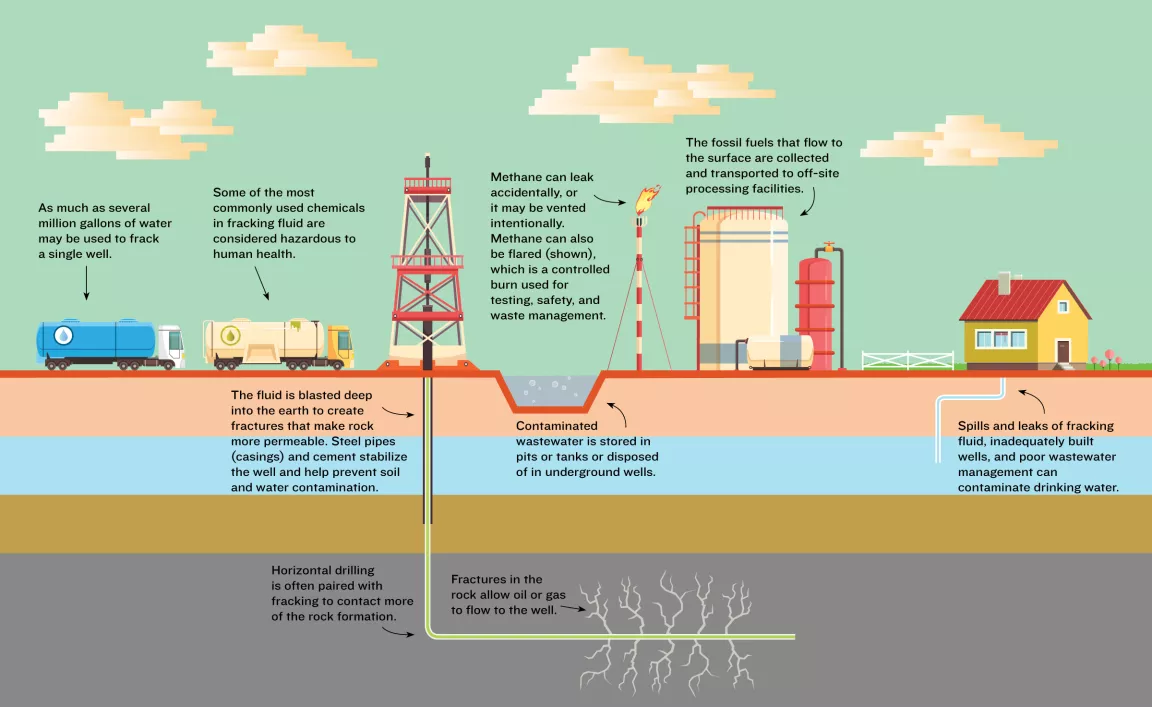
Methane leakage is caused by the malfunction of compressors, pumps, and valves, and by intentional releases (venting and flaring). Leakage is measured as a percentage of total gas produced.
Methane can only be visibly detected by imaging or high-end technological equipment. Inefficient flaring releases methane when gas is burned and converted to less potent CO2.
When methane leakage from gas systems is included, the climate benefit of gas compared to coal flips. Methane leakage as low as 0.2% can bring gas’ net GHG emissions on par with coal.
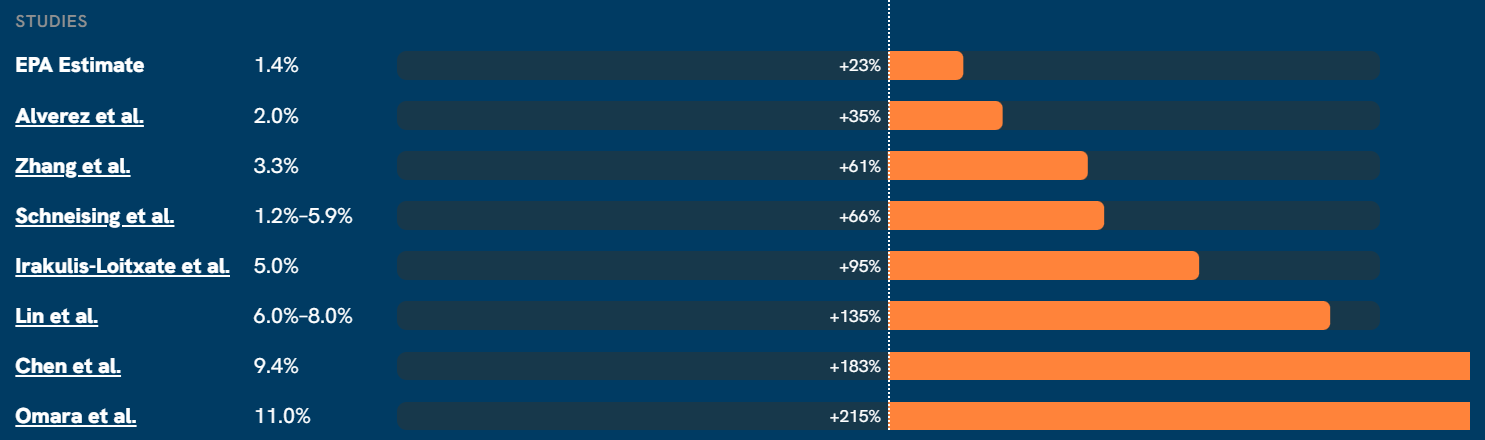
However, studies are finding that the EPA estimate is too low because it uses generic leakage factors and incomplete measurements from ground based equipment. Technology mounted on airplanes and satellites has provided more accurate methane emissions measurements at larger scale.
Over the past five years, several studies using this technology have been published. They reported methane leakage rates from 1.2 to 11 percent.
Coal vs. Natural Gas

- Methane (CH4), the primary component of natural gas, is responsible for more than 25 per cent of the warming we are experiencing today. (EDF)
- Methane is a powerful greenhouse gas, with a Global Warming Potential more than 80 times greater than that of carbon dioxide (CO2) during the 20 years after it is released into the atmosphere. (EDF)
- Methane is responsible for around half of the growth in tropospheric ozone formation, which is a potent local air. (UNEP)
- Limiting climate warming below 1.5 -degrees will require “rapid, far-reaching, and unprecedented changes”, including “deep reductions” in non-CO2 emissions like methane. (IPCC)
- The Paris Agreement cannot be achieved without reducing methane emissions by 40-45 per cent by 2030. Reduction of this magnitude would avoid nearly 0.3° C of warming by 2045 and complement long-term climate change mitigation efforts. (CCAC)
- Methane is increasingly a global climate priority, with ambition for addressing emissions building among both governments and companies. (UNEP)
- Agriculture is estimated to be the largest single source of global methane emissions, responsible for roughly 40 per cent of anthropogenic emissions; Fossil fuels are the second largest source, responsible for approximately 36 per cent of emissions, with waste and others making up the rest. (CCAC)
- Fossil fuels have by very far the greatest short-term reduction potential and therefore are prioritised.
Source: UN Environment Program — Facts about Methane.
Studies conducted by gas industry participants and industry-friendly regulators are suspect. Both groups seek to increase production. Nevertheless, The British Columbia Methane Emissions Field Study, led by Calgary based Cap-Op Energy, now part of carbon credit developer Radicle Group said:
Methane emissions from natural gas-driven pneumatic devices (67% of total) represent significant sources methane emissions at BC wells and batteries. Non-emitting control instruments and chemical injection pumps (e.g. solar electric or air-driven) were observed to be very common in BC.
Pneumatic devices are ubiquitous within the gas industry. Hyperspectral imaging would be used routinely by regulators if they cared to identify and quantify methane emissions.
Pneumatic devices are powered by gas pressure. They are mainly used where electrical power is not available. The two main types of pneumatic device used in the oil and gas industry are:
- Pneumatic controllers, which control conditions such as levels, temperatures and pressure.
- Pneumatic pumps, which inject chemicals into wells and pipelines or circulate dehydrator fluids.
Millions of pneumatic devices, mostly pneumatic controllers, are used in the oil and gas industry. These devices, when powered using natural gas, can be one of the largest sources of methane emissions in petroleum and natural gas supply chains.
A peer-reviewed study involving St. Francis Xavier University’s Flux Lab revealed that:
Methane emissions from B.C.’s Montney region alone are greater than what the provincial government has estimated for the entire industry. This suggests that methane emissions from the industry as a whole are at least 2.5 times higher than what the province estimates. In addition, this survey found that approximately 47 per cent of active wells are emitting methane-rich plumes.
Mobile Measurement of Methane Emissions from Natural Gas Developments in Northeastern British Columbia, Canada
Climate change is altering life as we know it on Earth. But government leaders think it is vital to maintain steady growth in Gross Domestic Product. Unwanted side effects are ignored since the perceived political benefit of economic growth is desired. GDP, has been a key yardstick but it ignores degradation of the natural environment and cares nothing about finite resources and human wellbeing.
A safer path forward will only be found when we start electing people to government who care about long-term human survival.
Alvarez et al: Assessment of methane emissions from the U.S. oil and gas supply chain
Zhang et al: Quantifying methane emissions from the largest oil-producing basin in the United States from space
Irakulis-Loitxate et al: Satellite-based survey of extreme methane emissions in the Permian basin
Chen et al: Quantifying Regional Methane Emissions in the New Mexico Permian Basin with a Comprehensive Aerial Survey
Omera et al: Methane emissions from US low production oil and natural gas well sites
Stanford-led study: Methane leaks are far worse than estimates
Categories: Fossil Gas


 in-sights.ca
And then we have BC Hydro building a dam that will have incessant infall of organic matter, soils trees shrubs and animals for the (expectedly) short life of the dam at Site C, which will cause the creation and release of methane in quantities similar /kwh to burning coal. And BC Hydro and the United Liberals and the NDP are building the dam to green wash the gas exports. Somebody somewhere, and I am thinking a thousand monkeys with typewriters, made this scenario up
LikeLiked by 1 person