



This follows the earlier article ‘Zombie fires’ burning at an alarming rate in British Columbia.
Journalists working for large corporate media properties in British Columbia may pay little attention to the subject, but we have Benjamin Shingler, a Montreal-based reporter who covers climate change and policy for CBC News. Shingler’s report It’s the middle of winter, and more than 100 wildfires are still smouldering includes this:
There are still 92 active fires in British Columbia and another 54 in Alberta — holdovers from last year — according to the latest figures from the Canadian Interagency Forest Fire Centre. Others are also active in the Northwest Territories, experts said...
Often, they are visible to the naked eye only by small plumes of smoke that billow into the winter sky...
“A lot of people talk about fire season and the end of the fire season, but our fires did not stop burning in 2023,” said [Sonja] Leverkus, who is also an adjunct professor researching wildfire at the University of Alberta...
Research suggests such fires are becoming more common as the climate warms…
“The dice are loaded, the deck is stacked — whatever phrase you want to use, there is a high likelihood of a very active spring.”
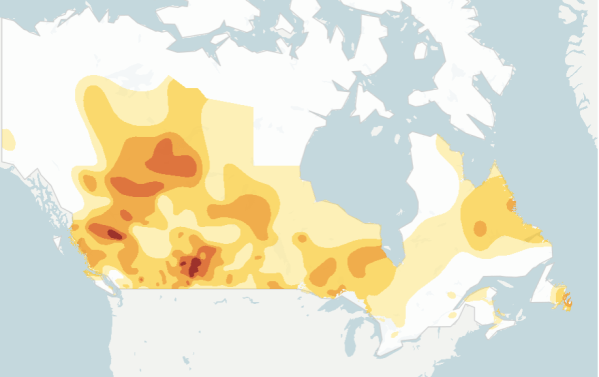
Climate change extends fire seasons and raises the risks of wildfire ignition in Canada. (Lightning is responsible for 81 percent of the total area burned.) Fossil fuel production and consumption release greenhouse gases, which lead to warming of the planet’s surface, which leads to wildfires that accelerate climate change.
According to Bloomberg News, the carbon releases from Canada’s wildfires in 2023 likely outweighed emissions from the country’s oil and gas, transport and agriculture sectors combined.
Western Canadian provinces remain dedicated to increased fossil fuel production. They refuse to measure and report emissions accurately and continue to provide direct and indirect subsidies to the oil and gas industry. They pretend to have no responsibility for significant emissions arising when oil and gas products are transported and consumed outside Canada.
Almost every news release by governments and industry aims to misinform citizens. By example, near the end of 2022, the federal government announced it was “investing” $75 million (46% of the project budget) for expansion of an American owned coal export terminal in Prince Rupert. The terminal operator described the expansion as a way of advancing “green diversification.”
Despite multi-billionaire Jim Pattison‘s promise to prioritize concerns about climate change, capacity at his Westshore Terminals at Roberts Bank was expanded in 2019. Westshore is where thermal coal from Wyoming and Montana is exported following arrival from the USA on diesel-burning trains owned by mega-billionaire Warren Buffett. Shipment from BC is necessary because new coal terminals in Washington and Oregon were rejected by American citizens.
Neptune Terminals covers 29 hectares on the North Vancouver waterfront. The company spent a reported $800 million to double its coal export capacity in 2021.
The people of British Columbia will soon pay $3 billion a year in carbon tax. Yet actions of governments, fossil fuel producers, financiers, and people holding extreme wealth ensure that climate change is dealt with more by words and empty promises than by meaningful actions.
If you find value at IN-SIGHTS.CA, please consider financial support. Significant payments for site hosting and subscriptions for software and news sources are required and the site carries no advertising.
As Tony Stubblebine said, “It’s expensive to write about things that you don’t already know.”
Supporting this work is a straightforward process explained HERE.
Categories: Climate Change


 in-sights.ca
Funny how the BBC is reporting on this and not our local media?
LikeLike