



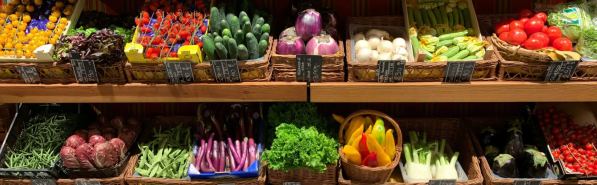
Environmental Defence Canada says climate change is one of the main reasons why food prices are increasing. There are other factors, but some of the prices in 2024 are shocking. Today I paid $16 for a small basket of BC raspberries and $1.50 each for local corn. Earlier I noted red onions at $3.50 a pound.
Environmental Defence says
- Climate change driven droughts in West Africa and Southeast Asia, where coffee and cocoa are grown, have significantly reduced supply, and caused prices to rise.
- Climate change driven heat waves in Spain, Italy and Greece, where olives and grapes are harvested, have recently led to one of the smallest harvests in decades and some of the highest prices for these products.
- India is the world’s largest exporter of rice. Climate change has caused a much smaller harvest than usual, To protect local supply, India imposed export restrictions, causing the price of rice at Canadian grocery stores to go up.
- Droughts have hurt cattle ranchers in Alberta. The lack of green pasture lands has meant ranchers are downsizing their herds due to a lack of grass for grazing. This has caused the price of beef to go up.
- Droughts have caused very low water levels in the Panama Canal and other transportation routes. Shipping traffic jams result in delays and higher prices for imported goods.
Washington Post reports that economists believe climate change is a major culprit behind certain price spikes. The impact will rise because every month in 2024 has been the hottest ever.
Soaring temperatures will create unbearable conditions for crops and workers. Severe storms and prolonged droughts will batter supply chains and disrupt the flow of trade. Escalating risk and uncertainty will make it more difficult to insure everything from a home to a new business venture…
Of all the goods that could be affected by climate-driven price spikes, food is among the most vulnerable,..
The Intergovernmental Panel on Climate Change — a U.N. coalition of the world’s top climate scientists — projects that disasters will increasingly strike multiple agricultural regions at the same time, creating worldwide shortages.
Climate change causes businesses and homeowners to pay higher prices for insurance. Bloomberg reports that prices for property catastrophe reinsurance doubled between 2018 and 2023, in part because reinsurers had a “climate epiphany” and recognized the need for much higher insurance prices. Jacques de Vaucleroy, Chair of Swiss Re, one of the world’s most important insurance providers, says premiums will continue to rise and that people and public officials have to start modifying their behavior as climate impacts mount.
But it is not just climate change that leads to the rising cost of food and other essential products.
Professor Robert Reich noted that as inflation cooled, grocery prices kept rising. He says this is because very few companies dominate North America’s wholesale and retail grocery sales.
Lobbyists influence government policies unduly. They promote fossil fuel developments that worsen climate issues. They advance costly megaprojects funded by the public and they dissuade governments from enforcing measures that could ensure competition in the marketplace.
As long as we vote for old line political parties, life for many will become more difficult. As cartoonist Walt Kelly’s Pogo said, “We have me the enemy and he is us.”
Here at advertising-free IN-SIGHTS, followers are not asked to subscribe, but financial support from readers enables the site to continue. If you find value in the content here, please make a contribution. Methods are described HERE.
Categories: Climate Change, Economics


 in-sights.ca
1 reply »