



U.S. Court of Appeals for the District of Columbia Circuit examined authorizations by the Federal Energy Regulatory Commission (FERC) for a pipeline and two liquefied natural gas (LNG) export terminals near Brownsville, Texas.
LNG proponents had applied for permits; FERC had issued approvals. Environmental groups, residents and a nearby city had objected. The Court found FERC’s review was inadequate and required the regulator to reexamine the issues. FERC reapproved the projects and opponents went back to court. Again, the regulator’s work was shown to be unacceptable. For a second time, the American court determined that FERC failed to review the projects in ways required by law:
Given the nature and severity of the flaws in the Commission’s second effort to properly assess the projects, we vacate the reauthorization orders and remand to the Commission for further consideration.
However, the judges did not immediately halt construction. When oil and gas corporations fail to follow rules, their projects are merely delayed. Industrialists expect governments and its regulators to promote large projects and minimize barriers to completion.
The political rulers of Alberta and British Columbia are no different than American counterparts.
Marc Lee writes that we live in a petrostate. He examined Cedar LNG. That $5.5 billion project promises 100 permanent positions, which is $55 million for each job. The project also represents a capital expenditure of $3.25 million for each one of the 1,700 Haisla Nation members. The Haisla are borrowing all the funding for its half-share of the project.
If the size of the loan from the FNFA proves too onerous, one can expect that one or both levels of government will step in an provide some form of financial support.
Journalist Marc Lee notes that increasing fossil fuel production is contrary to the Eby Government’s stated climate goals.
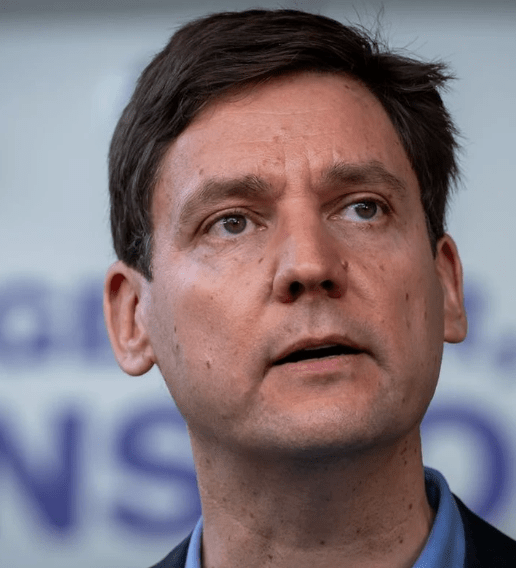
The main problem is the planet is burning. Cedar LNG would lock in substantial carbon emissions globally for decades into the future at a time when the world is reeling from climate change. Through 2024, we have seen heat records topple in Asia, Latin America and Africa, while floods and other extreme weather events that used to happen only rarely are daily news.
Marc Lee, Cedar LNG: Chronicles of a petro-state in the age of climate change
Increased output of gas works against the need to limit global warming. Gas production is a prime source of dangerous methane leaks and LNG facilities can be significant sources of toxic air pollution, including carbon monoxide, nitrogen oxides, and volatile organic compounds.
Nations spending unaffordable sums to promote fossil fuels are at risk of huge financial losses:
There is a fundamental shift underway as the global economy begins to decarbonise. Populations that are heavily reliant on fossil-fuel production face lower government revenues and job losses as the pace and inevitability of the energy transition increases.
Carbon Tracer, Beyond Petrostates: The burning need to cut oil dependence in the energy transition
I was talking with Green Party leader Sonia Furstenau in Victoria recently about BC history. She pointed to a piece she had written for BC Studies:
In The Curious Passage of Richard Blanshard, historian Barry Gough recounts the arrival in 1850 of the first governor of Vancouver Island. Blanshard very soon came to realize that, as a representative of the British Crown, he was in a secondary role to the man, James Douglas, who was already on Vancouver Island on behalf of another entity, the Hudson’s Bay Company (HBC), or, as it was called, the Company.
In 1850, Fort Victoria on Vancouver Island was a Company town through and through; the first governor had significantly less power than did the Company man; and the Company was the all-controlling power in the lands that would eventually become British Columbia.The Company did business according to its own methods; it guarded its files and ledgers with utmost secrecy…
Finding My Inner Tank Girl, Water as a Channel to Political Action
Ms. Furstenau said, “We’ve always been a company town and government has always existed to be of service to the company.”
That was true in the 19th century when interests of HBC fur traders dominated. It’s true today when the oil and gas industry dictates policies, even when those run contrary to Canada’s commitment to achieve net-zero emissions.
While administrations like those in BC and Alberta offer subsidies worth billions of dollars to oil and gas producers, Norway has followed a different path for years. As a result, this Scandinavian nation has a wealth fund worth C$2.3 TRILLION, shared by a population about equivalent to that of British Columbia.

Here at advertising-free IN-SIGHTS, followers are not asked to subscribe, but volunteer financial support from readers enables the site to continue. If you find value in the content here, please make a contribution. Methods are described HERE.
Categories: oil and gas


 in-sights.ca
It’s not just the petro companies that have a strangle hold on the well being of BC’ers.
BC’s mining act and forestry acts usurp much of the legislation that was designed for our betterment.
TB
LikeLike
why doesn’t gov just Cut back lobbyist hours like at home door knockers?
LikeLike