


BC Conservative Party leader John Rustad told KelownaNow that climate issues are not an existential threat and not a crisis. He said:
Matter of fact, I don’t even think it’s our largest issue that we need to deal with on an environmental side. There are much more pressing issues that we should be focused on.
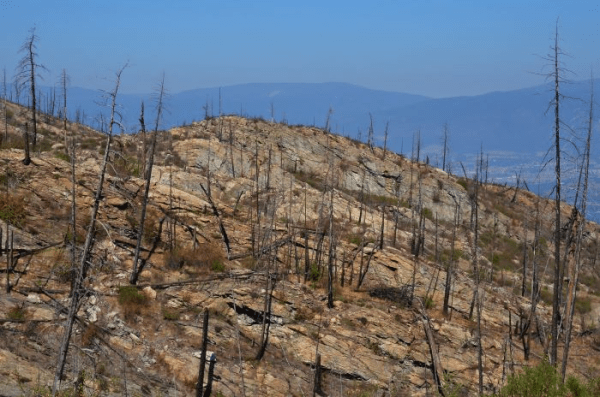


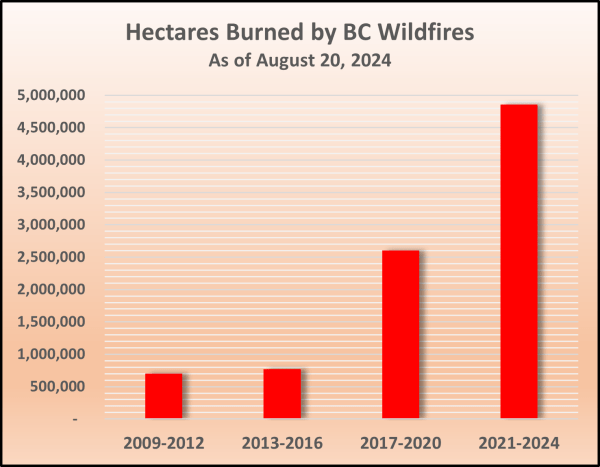
Wildfire victims and scientists have different opinions than Rustad and his cohort. Canada’s 2023 wildfire season was the most destructive ever recorded, double the worst previous year. Speaking about 2023, Canadian Forest Services scientist Jonathan Boucher said extreme weather, high temperatures, and dry conditions caused by climate change intensified the 2023 wildfire crisis.
Harvard wildfire expert Dr. Loretta Mickley says the fires present a dual problem:
Not only are they a symptom of climate change — becoming bigger, hotter, and more common in regions where they can affect large population centers — but they also make the crisis worse. By burning vast layers of partially decomposed vegetable matter called peat, fires like those in Canada release even more greenhouse gases into the atmosphere.
The consensus is that wildfires will increase in what we call boreal regions —Siberia, northern Canada, and Alaska. With climate change, these regions are warming more rapidly than elsewhere on the globe, and the warmer temperatures will dry out the fuel, leading to increased fire activity.
…there is a consensus that out-of-control, intense wildfires will increase in regions of the globe, imperiling people, animals, and vegetation.
The Harvard Gazette: Wildfires are much worse than a sign of climate change
So voters have to decide who to believe. Either experts who study the subject intensively or ideologues ignoring 97 per cent of actively publishing climate scientists who agree that human activities cause destructive global warming.
Three psychology academics from UBC wrote about the attachment of conservatives to climate change denial. It would be simple to blame a lack of knowledge or understanding of the causes of climate change, but that doesn’t fully explain partisan polarization.
Cognitive bias promotes deviation from rational judgements. People construct subjective realities by only paying attention to information sources that confirm their existing beliefs and understandings.
To put simply, what you believe influences what you see, and guides your future actions...
Overall, our framework suggested that people’s motivations prevent them from attending to and perceiving climate change evidence accurately, which influences their subsequent actions. Specifically, conservatives may focus selectively on climate data that confirm their beliefs, leading to inaction on mitigating climate change.
Climate explained: Why are climate change skeptics often right-wing conservatives?
Categories: Climate Change, Conservatives, BC


 in-sights.ca
Be on topic and civil.
It’s hard to be civil whilst discussing a man that has his head up his arse!
TB
LikeLike