



Failure to support the poorest and unhealthiest residents in our society is a form of collective violence. This is a choice that most of us would reject as individuals but we are more likely to accede to public policies, even if the result is cruelty.
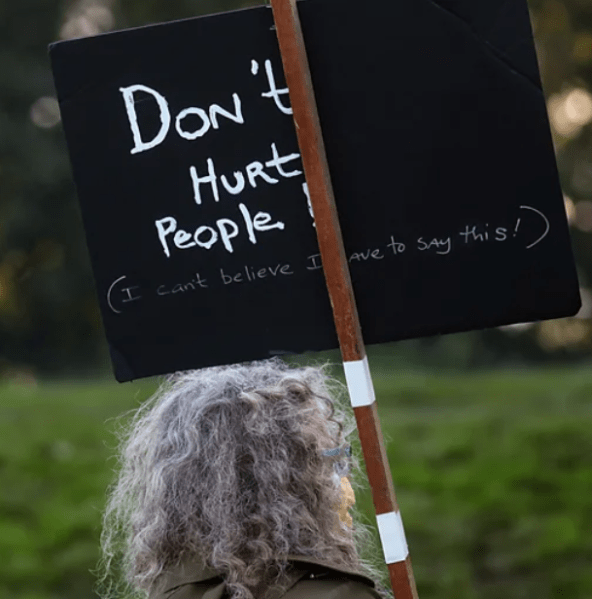
Inflicting harm or pain on someone incapable of doing the same to you might seem intolerably cruel, but it happens more than you might think.
Humans are the glory and the scum of the universe, concluded the French philosopher, Blaise Pascal, in 1658. Little has changed. We love and we loathe. We help and we harm. We reach out a hand and we stick in the knife…
Humans typically do things to get pleasure or avoid pain. For most of us, hurting others causes us to feel their pain. And we don’t like this feeling. This suggests two reasons people may harm the harmless – either they don’t feel the others’ pain or they enjoy feeling the others’ pain.
Some believe addictive and mental disorders are root causes of homelessness. However, a study in the USA found the opposite to be true in a large proportion of cases. Social problems increase significantly after people lose their residences. Safe, adequate, affordable, and appropriate housing is critical to health, well-being, and social and economic security.1
The increase in addictive and psychiatric problems following homelessness suggests that interventions that prevent loss of housing will be more effective and less costly than interventions that provide economic and social assistance after the loss of shelter,
Unhoused people are that way for a variety of reasons including domestic abuse, poor physical and mental health, substance abuse, inadequate income and financial resources, racism, and lack of trust in people outside their immediate social environment.
The reality is that there is no such thing as a ‘typical’ homeless person, and the population is incredibly diverse. No one is absolutely safe from experiencing homelessness.
Some jurisdictions have programs that get people into stable shelters before trying to address other issues and needs. Those facilities are uncommon because for-profit developers prefer to construct small, upscale condominiums, and they resist measures that would deliver large amounts of housing to serve the homeless and the underhoused.
Bill Appledorf wrote in Victoria News that governments were mistaken when they chose not to finance a massive build-out of social housing. He explained:
Social housing is not housing for poor people. It is affordable housing for everyone, priced on the basis of what it costs to build it, not the maximum profit for which financial predators can gouge the public to dwell in it.
Improving housing stock is possible, if we choose to establish that as a priority. Possible actions:
- Recognize that social housing is a form of essential social infrastructure that warrants public investment.1
- Deter financialization of housing,2
- Introduce effective rent stabilization,
- Fund community land trusts that acquire land for housing and remove it from the speculative real estate market,3
- Develop low-cost building materials,
- Use cooperatives and other public-private partnerships to create and manage affordable housing projects.
In the latter years of the 2010s, the nation of Finland positioned itself as a global leader in combating homelessness. Through an innovative public policy strategy that has virtually eliminated homelessness within its borders,
Through partnerships between the state, cities, municipalities, and local non-governmental organizations (NGOs), the policy has gradually reduced the reliance on conventional short-term shelters, transforming them into affordable rented accommodation units. From 2008 to 2022, the number of individuals experiencing long-term homelessness in Finland decreased by 68 percent.
Finland’s “Housing First” Policy successfully tackles long-term homelessness
Utah, where conservative Republicans dominate, has a “housing first” model. State auditors said it is successful in keeping people off the streets. Roughly 95% of people placed into permanent housing in Utah stayed there or moved into another housing situation. Despite the success, right-wing groups like the Cato Institute argue that needy people staying long-term in state-funded housing is undesirable.
Governments that choose not to spend large amounts on housing turn to hostile architecture, hoping to move homeless people down the road.
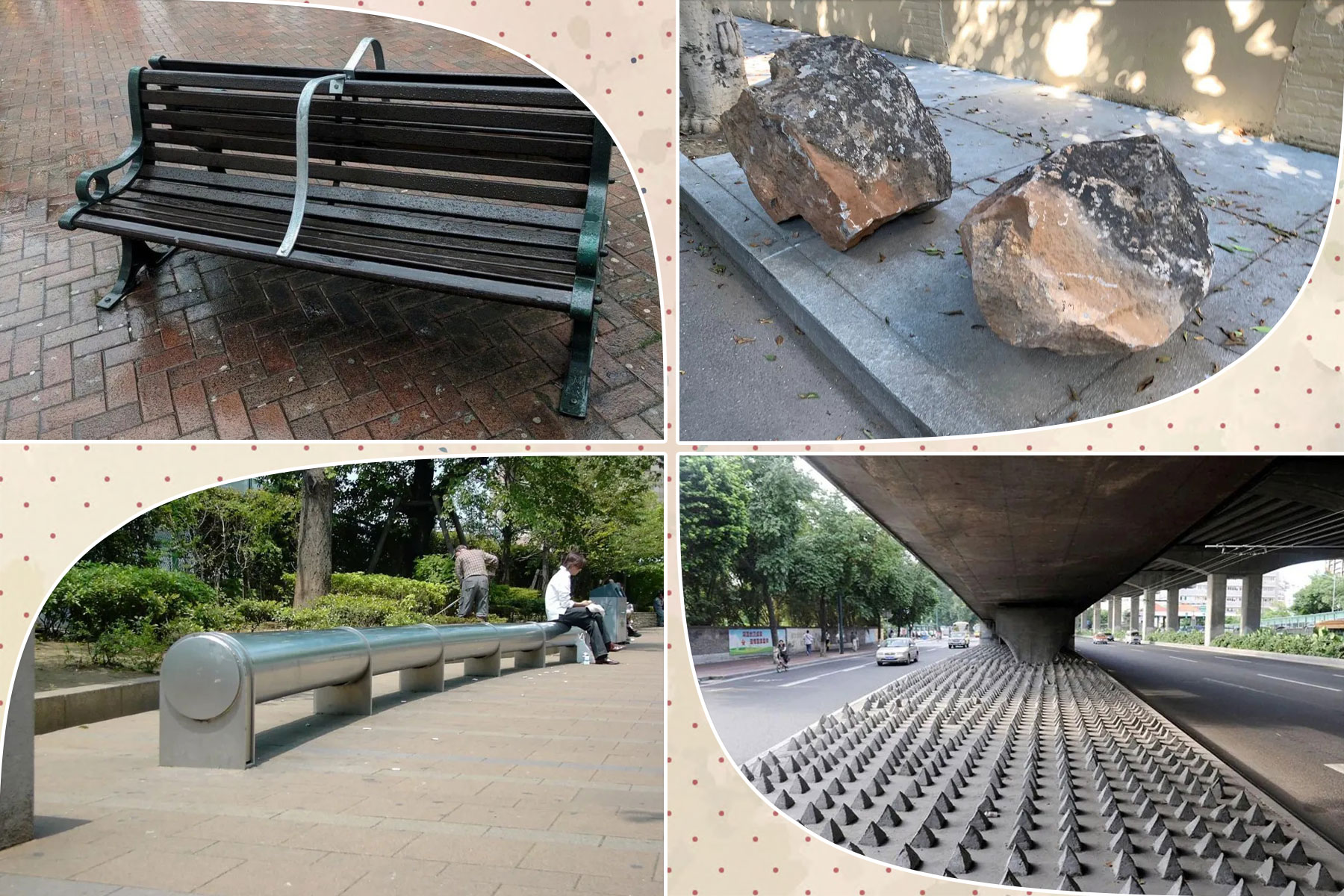
In Washington State boulders are seen as one solution to homelessness.
1 Social housing as infrastructure: rationale, prioritisation, and investment pathway. Australian Housing and Urban Research Institute.
2 The de-financialization of housing.
3 WEF: Practical solutions to the world’s spiraling housing crisis.
Categories: Housing


 in-sights.ca
Thanks for focusing the spotlight on this important issue. Compassionate societies don’t accept people sleeping on the streets. We need to do people.
LikeLike
Perhaps this is the time for local governments do the land developing themselves. The major benefits would be cheaper land and the profits would more than cover the costs to the local governments they have to incur anyway. This also helps to reduce the wealth inequities in our society.
LikeLike
Gregor Craigie has a chapter on Finland in his book “Our Crumbling Foundation – How We Solve Canada’s Housing Crisis”. In the book he examines best practices efforts around the world and here at home to address the issue. Zoning and other regulatory burdens are a common problem to be overcome, as we are currently witnessing in BC where the provincial government is attempting to legislate municipal change in that regard. Much too little, much too late seems to be the consensus. And even that is facing resistance.
In terms of the magnitude of the problem, this passage regarding President Biden’s 2022 Housing Action Plan is worthy of note:
“…Biden mentioned the national housing deficit in the United States of roughly 1.5 million homes, saying ‘this shortfall burdens family budgets, drives up inflation, limits economic growth, maintains residential segregation, and exacerbates climate change.’ That’s a convincing claim, and a sobering one for Canada. If a country with eight times our population is worried about a deficit of 1.5 million homes, how should Canadians feel about a predicted deficit of 3.5 million homes by 2030?” (p.181)
Another passage relates to your suggestion for use of municipal land:
“[Victoria developer] Luke Mari sees similar potential almost everywhere he looks. The municipally owned Cedar Hill Golf Course in Saanich, for instance. The eighteen-hole ‘working man’s course” has rolling green hills, beautiful mountain views, and a whole lot of land in the middle of Greater Victoria. The course has faced financial hardship in the past, and Luke thinks it should be reinvented as a home for twenty thousand people. ‘You could line that whole golf course with six-storey apartments! I’ve done it in a sketch-up. Ten thousand units and you’re touching less than 2 percent of the land base of the golf course. The rest would be a gorgeous Central Park. That’s the power of six-storey buildings.” (p.170)
The key, and the stumbling block to unleashing senior government funding, is what percentage of new housing is actually affordable. There is a very elusive sweet spot between the financial and political needs of all the players. This article illustrates the type of frustrating antics that are playing out while the crisis deepens:
Federal Liberals & Ontario PCs accused each other of sabotaging affordable housing plans as Ford’s cat & mouse game continues | The Pointer
LikeLiked by 1 person
“Inflicting harm or pain on someone incapable of doing the same to you might seem intolerably cruel, but it happens more than you might think.”
“Humans typically do things to get pleasure or avoid pain. For most of us, hurting others causes us to feel their pain. And we don’t like this feeling. This suggests two reasons people may harm the harmless – either they don’t feel the others’ pain or they enjoy feeling the others’ pain.”
I think this applies most strongly to how most humans treat the OTHER animal species of this Earth. They are by far the most vulnerable, the most oppressed, the most victimized and the most ignored and disregarded individuals on the planet. And they are completely harmless to us. I agree with your assessment that if most people don’t like hurting others because it causes us to feel their pain, and yet most people DO unnecessarily hurt and exploit others (the non-human sentient beings we share the world with) to such an extreme degree as we do, and with seemingly no compunction or feelings of remorse and heavy resistance to the notion of extending compassion beyond our species (except if it’s a dog or we gain more utility from being kind to them), then the only possible conclusion is people aren’t feeling the pain of the other conscious beings. For this I recommend the documentary Dominion and others that shine a light on the deliberately hidden world of animal exploitation by humans that most of us participate in without much thought. It makes sense we wouldn’t perceive or recognize the seriousness of the other animals’ suffering and misfortunes if we are so disconnected from it – though also desensitized to violence and cruelty and numbed by tradition and culture.
LikeLike
Grass roots intellectuals confront NDP top brass
Redemptorist/ NeoLiberal Economists
… You’re welcome
LikeLike