



Harvard Law School’s Forum on Corporate Governance published a paper about the management of energy providers. It noted that utilities had been involved in scandals that included bribery of regulators and responsibility for wildfires. The authors reported that American utilities had emerged as powerful opponents of climate action. Failures of corporate governance are blamed.
When utilities are well-run, value flows to ratepayers in the form of lower bills. However, if ratepayers are unrepresented on utility boards, how can their interests be prioritized? The authors have ideas:
We suggest a variety of governance reforms to induce managers to pursue the interests of ratepayers. These reforms include ratepayer representation on the board of directors, modifications to fiduciary duties and the business judgment rule, and regulations that quarantine utilities from other business enterprises to prevent firms from using utility franchises to subsidize their activities in non-rate regulated industries. [Editor’s note: emphasis added]

The NDP has appointed a board that is gender balanced and includes Indigenous people. However, the 12 directors are drawn exclusively from the business sector. Resource extraction companies, including coal miners, are particularly well-represented. So too are large construction and engineering companies. This may explain BC Hydro’s resistance to the idea that conserving energy is better than making energy.
Residential consumers provide more revenue to BC Hydro than any other group, but that is not reflected by board appointments. Perhaps the government thinks a person primarily concerned with ratepayers would have a conflict of interest. However, there appears to be no concern that directors involved with extractive industries in remote regions might have conflicting interests.
Listed below are the directors of BC Hydro at the date of writing.
Representatives of residential consumers:
| — — — |
Directors with backgrounds in business, construction, and extractive industries:
| Brynn Bourke is the Executive Director of the BC Building Trades, which represents 25 local craft construction unions belonging to 13 international unions. |
| Catherine Roome is a Director of the engineering firm McElhanney and a director of Prospera Credit Union. |
| Clarence Louie manages eight businesses, including a golf course, a construction company, a forestry company, the largest privately owned vineyard in Canada, a retail store, and a residential and agricultural leasing company. He is the Chief of the Osoyoos Indian Band. |
| Don Kayne served as the President and CEO of Canfor until 2024 and continues to serve as a Director of the Jim Pattison company. |
| Glen Clark, former Premier of British Columbia is board chair and was the president and CEO of the Jim Pattison Group until 2023. |
| John Nunn is a retired professional engineer who is a Life member of the Canadian Dam Association. |
| Karen Tam Wu is a program director for the Houssian Foundation, which was established by Joe Houssian, owner of Elemental Energy, a successful bidder in BC Hydro’s recent award of private power contracts. Houssian also owns large-real estate developer Intracorp. |
| Lynette DuJohn is a former information technology executive with Vancouver International Airport and previously had a similar role with the BC Lottery Corporation. |
| Merran Smith is President of New Economy Canada, an organization that involves several energy producers in the private sector as well as the coal mining and river polluter Teck Corporation. |
| Mike McDonald is retired from full-time practice of law and is a Director of Jameson Resources Limited, which has coal mining interests in northeast BC and southeast BC. He is a member of the Peguis First Nation in Manitoba. |
| Nalaine Morin labels herself a “resource development advisor.” She is Vice President of Skeena Resources Limited, a company that is redeveloping Eskay Creek as an open-pit mine in northwest BC. |
| Vasee Navaratnam is a Senior Vice-President, Global Mining Operations for Fluor Corporation, a Texas-based engineering and construction firm. Fluor is involved in the construction of LNG Canada’s export facility at Kitimat. |
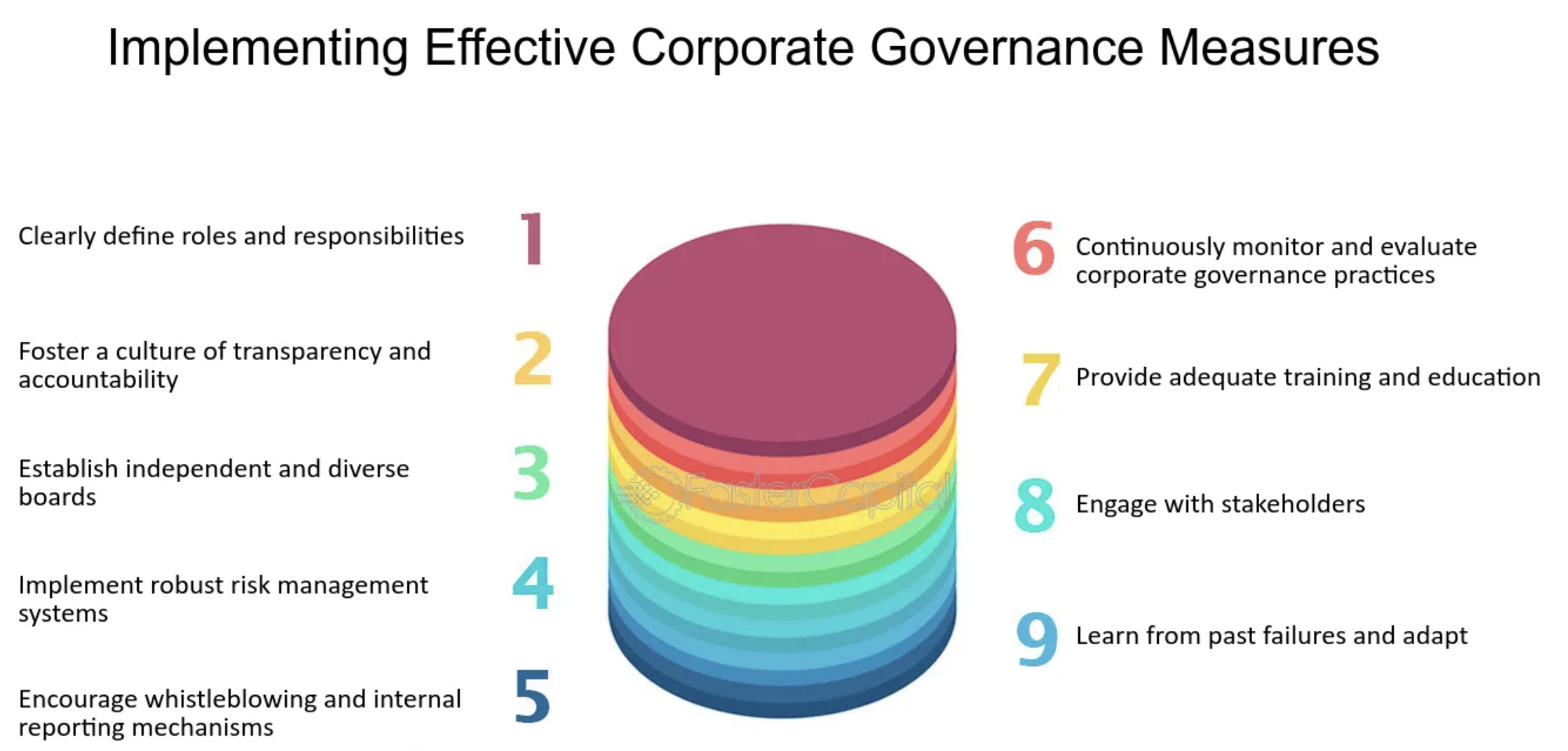
A person who held a senior position at BC Hydro told me that a mantra at BC Hydro is “Truth is what we say it is.” That person admitted that management had little interest in transparency and accountability. Rather than encouraging whistleblowing, the corporation threatens and punishes those who may be tempted to release damaging information to the public. I believe BC’s public utility fails in almost all of the measures shown below.
Categories: BC Hydro


 in-sights.ca
The insights here cringe-worthy. The self-serving myopia of these folks is staggering, but not unexpected
LikeLike
You have hit upon the essence of BC Hydro, 2025. BCH was first designed as a “Natural Monopoly” and was only that to about the early 1980s.
I did some private work for BCH President Norm Olsen in 1982 and it was very clear he knew what a ” Natural Monopoly” should look and behave like.
When we get to the 90s, commercial instincts were introduced at BC Hydro. The Enron combine was the first outstanding example of using the credit worthiness of the population of BC Citizens to play at behaving like a private enterprise, but the people making those kinds of decisions did so with no personal “skin in the game.”
Then and up to now, BC Hydro signs up for borrowed capital and indirectly as financial contracts, from wherever, with citizens guaranteeing repayment. BC Hydro is no longer a “Natural Monopoly” but has become a hybrid enterprise . They play at being a private enterprise but do it knowing that the Board members and Executives have nothing personal to lose, freeriding on the creditworthiness of the whole population.
I call this predatory enterprise when business managers conduct affairs without the risk to their own capital.
LikeLike
Many will not remember Norm Olsen. An interesting man who knew just about everything there was to know about utility operations and management. He died at age 91 in 2015. Here is part of his obituary:
Norm Olsen graduated from UBC in 1946. The BC government had just formed the BC Power Commission and along with seven other graduate engineers, Norm began his training to become a district manager in an organization with the goal of providing electrical power at affordable rates throughout the province.
Norm and fellow trainee Donn Wales were dispatched to Williams Lake for field training. They lived in an old army tent outside the Williams Lake diesel powerhouse. The tent was heated by an oil stove made from a small oil drum. His job was to tend the powerhouse and work as a lineman, climbing 30-to-40-foot poles installing new electrical service.
His first permanent posting as a district manager was at the Village of Alert Bay where he was a lineman/ electrician, meter reader, and bill collector by day and powerhouse operator from four to midnight, seven days per week.
A rapid succession of postings took him to Nanaimo, the Alberni Valley, Campbell River and finally the Comox Valley. While managing the Comox District, he established an open-door policy for customers. He positioned his office at the front of the building for easy access for customers wanting to speak with the manager.
He followed this open-door policy throughout his career, even later as President of BC Hydro; unless he was having a meeting, his door was always open and he always answered his own phone. With staff he maintained ‘you don’t write a memo when you can go speak to the person.
Through a series of promotions after creation of BC Hydro from a merged BCPC and BC Electric Company, Norm rose to become G.M. in 1974, then Hydro’s President a position he would hold until 1986. When Norm retired as President of BC Hydro, he was referred to in the newspaper as Mr. Hydro, an appropriate title given his Hydro career that started in 1946 and spanned 40 continuous years.
1992, he returned to BC Hydro as its Chairman and CEO and Executive Director in 1993-94.
LikeLike