



Andrew Currey wrote in SCIENCE about forest gardens that were not recognized as human-created because they did not fit the modern image of agriculture.
The journal described work by Simon Fraser University’s ethnoecologist and archaeologist Chelsea Armstrong. Professor Armstrong, with other scientists from SFU, UBC, Stanford, and the New York Botanical Garden, concluded that ancient Indigenous management practices were tied to ecosystem health and resilience.
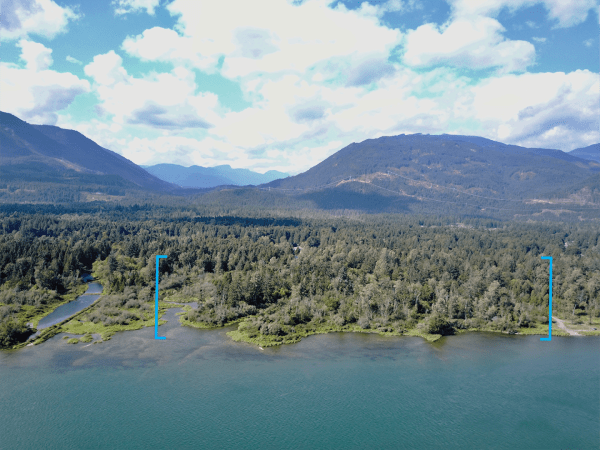
For decades, First Nations people in British Columbia knew their ancestral homes—villages forcibly emptied in the late 1800s—were great places to forage for traditional foods like hazelnuts, crabapples, cranberries, and hawthorn. A new study reveals that isolated patches of fruit trees and berry bushes in the region’s hemlock and cedar forests were deliberately planted by Indigenous peoples in and around their settlements more than 150 years ago. It’s one of the first times such “forest gardens” have been identified outside the tropics, and it shows that people were capable of changing forests in long-lasting, productive ways.
…The forest gardens were filled with plants that benefited humans, but they also continue to provide food for birds, bears, and insect pollinators, even after 150 years of neglect. It’s evidence that human impact on the environment can have long-lasting positive effects.
To Armstrong and her team, however, plants — and their historical relationship with human communities — are a key study area that helps answer bigger societal questions around Indigenous rights and titles, climate change, and resource use and management.XOne example of this relationship — forest gardening — has been known and practiced in some form by Indigenous groups around the world since prehistoric times.
Canadian Geographic, The Indigenous forest gardens of coastal B.C.
This is the kind of science that Conservatives want to shut down. It interferes with their belief that residential schools were necessary to educate Indigenous children so they would no longer be “savages” unwilling to serve colonizers who claimed ownership of lands Indigenous ancestors occupied for millennia.
A long time ago, Conservative Public Works Minister Hector Langevin told the House of Commons:
The fact is, that if you wish to educate those children you must separate them from their parents during the time they are being educated. If you leave them in the family they may know how to read and write, but they still remain savages, whereas by separating them in the way proposed, they acquire the habits and tastes — it is to be hoped only the good tastes — of civilized people.
Sadly, that uninformed, racist attitude persists today.
Hat tip to Don Pettipas for linking me to this story.
Categories: Indigenous


 in-sights.ca
I doubt that humanity will survive with such farming with so many people to feed.
Just as modern day Greens seek to save the world with dry toilets at the bottom of the lot and a potters wheel in the front porch, I hope and wish for pragmatic Greens to emerge!
TB
LikeLike
I think the issue is not about reverting entirely to Indigenous methods to feed the 8.2 billion people that inhabit Earth. Human population is now 5.5x what it was 300 years ago. Adaptation is necessary and nothing suggests the people who lived here before colonization could not adapt.
This scientific report explodes the myth that Indigenous people were “savages” unable to cope with the needs of nature and their communities. Those disrespectful stories were told by governments and churches in days gone by. Sadly, some Canadians, including politicians, still cling to those beliefs.
LikeLike
Two problems are entangled. Food and population. This dilemma caused Reverend Thomas Malthus to counsel his government that – regardless of what Jesus said or intended – it is folly to feed the poor.
https://en.wikipedia.org/wiki/Malthusianism
“Malthusianism is a theory that population growth is potentially exponential, according to the Malthusian growth model, while the growth of the food supply or other resources is linear, which eventually reduces living standards to the point of triggering a population decline “
For the British Empire’s foreign policy it was deemed humane and practical – having done His Math – not to feed the starving masses in their colonies. If able to stay alive the masses would be doomed to reproduce and starve.
Which makes contemporary reality a bit odd.
“The current world population is 8,211,939,609 as of Friday, March 21, 2025 according to the most recent United Nations estimates elaborated by Worldometer.”
To satisfy soon-to-become Bishop Malthus inevitable calculations what happened? Why haven’t 7 billion people starved?
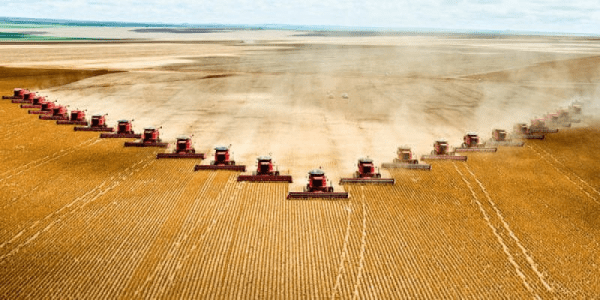
For one, modern mechanized agriculture as in the picture above. But thousands of years before that there was indigenous intelligence – working with the environment rather than trying merely to exploit it.
Nor is there a shortage of research in BC on how incredibly adaptive and clever First Nation’s farming and fishing methods were.
To offer further analysis along came a new book called “1491: New Revelations of the Americas Before Columbus.”
How different were these ideas? Consider the Amazon region and Terra Preta
“Indigenous Kuikuro people in Brazil have been creating fertile soil for farming for thousands of years by making their own soil from ash, food scraps, and controlled burns. This tradition is known as Terra Preta, which owes its characteristic black color to weathered charcoal content. It was made by adding a mixture of charcoal, bones, broken pottery, compost, and manure to low fertility Amazonian soil. Ancient Amazonians intentionally produced patches of fertile soil, known as dark earth, to improve the soil and sustain large and complex societies.”
A 2023 report from MIT…
https://news.mit.edu/2023/ancient-amazonians-intentionally-created-fertile-dark-earth-0920
“The Amazon river basin is known for its immense and lush tropical forests, so one might assume that the Amazon’s land is equally rich. In fact, the soils underlying the forested vegetation, particularly in the hilly uplands, are surprisingly infertile. Much of the Amazon’s soil is acidic and low in nutrients, making it notoriously difficult to farm.”
“As the team concludes in their paper, “modern sustainable agriculture and climate change mitigation efforts, inspired by the persistent fertility of ancient dark earth, can draw on traditional methods practiced to this day by Indigenous Amazonians.””
Attempts to replicate dark earth so far have failed. Why would this matter? What’s at stake?
Is anyone on any continent happy with the skyrocketing cost of food?
With an under-regulated oligopoly happy to profit from scarcity it can create at will, perhaps only a combination of ancient techniques and modern technology could once again refute Mr. Malthus’ Imperial Bureaucratic Pessimism. As Jesus intended.
LikeLike
1491 (Second Edition): New Revelations of the Americas Before Columbus Paperback – Illustrated, Oct. 10 2006
by Charles C. Mann (Author)
4.6 4.6 out of 5 stars (5,940) 4.1 on Goodreads 91,679 ratingsIn this groundbreaking work of science, history, and archaeology, Charles C. Mann radically alters our understanding of the Americas before the arrival of Columbus in 1492.
Sorry to advertise…
Contrary to what so many Americans learn in school, the pre-Columbian Indians were not sparsely settled in a pristine wilderness; rather, there were huge numbers of Indians who actively molded and influenced the land around them. The astonishing Aztec capital of Tenochtitlan had running water and immaculately clean streets, and was larger than any contemporary European city. Mexican cultures created corn in a specialized breeding process that it has been called man’s first feat of genetic engineering. Indeed, Indians were not living lightly on the land but were landscaping and manipulating their world in ways that we are only now beginning to understand. Challenging and surprising, this a transformative new look at a rich and fascinating world we only thought we knew.
LikeLike