
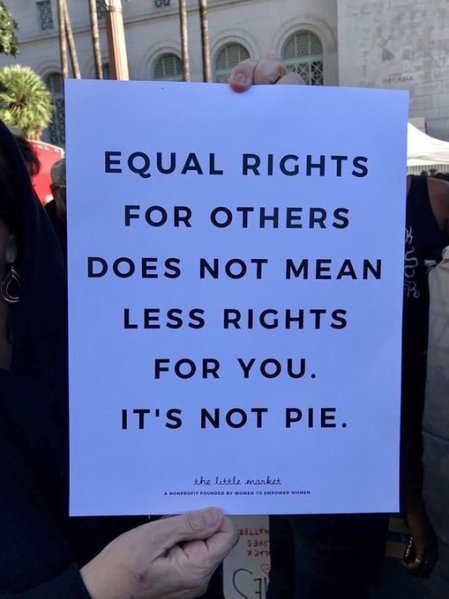


Billionaires control a massive and growing share of global wealth. The most affluent 1% of adults control roughly half the world’s assets, while the richest 0.001% have three times more than the world’s poorest 50%. The rich accumulate assets at almost double the rate of everyone else, so extreme concentrations of wealth worsen from month to month.

Equality brings benefits like stronger economies, healthier societies, and improved individual well-being. It ensures fair resource and opportunity distribution, reduces social problems, and fosters a more productive, stable, and humane environment for everyone.
An essay published in The New York Times includes:
Billionaires had a great thing going. The ruling in the 2010 Citizens United case, among others, invited the super rich to exert all the influence on policy and politics that their money could buy — and then enjoy all the wealth that influence secured for them in return. Thanks to ever-more-obliging tax policies, the billionaire class grew absurdly rich over the years that followed. In the last five years alone, the wealthiest 20 Americans increased their net worth from $1.3 trillion to $3 trillion, Forbes reported.
And they did it in many cases without the rest of us even having a clue. It took the investigative reporter Jane Mayer five years of relentless digging to figure out how the Koch brothers gained a chokehold on the Republican Party. The title of her 2016 book, “Dark Money,” became synonymous with a particularly effective form of influence that was all but untraceable. The billionaires could have kept on like that forever. All they had to do was keep their mouths closed.
Today, billionaires are still flooding politics with their money and still reaping the benefits…
The sheer scale of this wealth, which beggars even the riches of the Gilded Age, has induced a kind of class sociopathy.
Peter Thiel, the crucial funder of JD Vance’s ascent, talks extensively about his desire to escape democracy (and politics generally) in favor of some kind of bizarre techno-libertarian future.
Balaji Srinivasan, the investor and former crypto exec, calls for tech elites to take control of cities and states — or build their own — and run them as quasi-private entities.
Alex Karp, who along with Thiel founded the high-flying military intelligence company Palantir, shares his predictions about an apocalyptic clash of civilizations, pausing to brag, “I think I’m the highest-ranked tai chi practitioner in the business world.”
In another era, this would all be laughable. But as the MAGA moment emboldens them to drop any pretense of civic virtue and just go full will-to-power, their nutty ideas are now borderline plausible. And terrifying...
Billionaires control the cable channels, social media platforms, newspapers, movie studios and essentially everything else that we consume…
An October 2025 article in The Guardian discusses economic woes experienced by many while the wealth of the world’s billionaires increased 54% in a single year.
In his new book Burned by Billionaires, inequality researcher Chuck Collins argues that the system that perpetuates wealth inequality is purposely opaque to most Americans.
“[The wealthy] have bought their jets, they’ve bought their multiple houses and mansions, but now they’re buying senators and media outlets,” Collins told the Guardian in an interview. “We’re now entering this other chapter of hyper-extraction where the wealthy are preying on the system of inequality.”
Collins, a director at the Institute for Policy Studies, is no stranger to wealth. A great-grandson to Oscar F Mayer, the founder of the meat processing brand, he is a member of the Patriotic Millionaires, a non-partisan group of wealthy Americans who advocate for higher taxes for the rich and higher wages.
…To understand how wealth at the billionaire level works, Collins breaks it down into four parts: getting the wealth, defending the wealth, political capture and hyper-extraction.
When many Americans think about wealth, they usually think solely about the first step, Collins said. People can create a modest amount of wealth through starting or running a successful business, which could get them residency in Affluent Town.
But getting to Billionaireville requires serious investment and strategy in those next three steps. Collins describes what he calls the “wealth defense industry”: the tax lawyers, accountants and wealth managers who use their expertise to ensure that the super rich are being strategic about their taxes.
“Wealth defense professionals use a wide variety of tools such as trusts, offshore bank accounts, anonymous shell companies, charitable foundations and other vehicles to hold assets,” he writes.
To further a wealth defense strategy, a family needs political support. Wealth of over $40m translates to political power, Collins says, and can be used to defend wealth and protect its accumulation…
The effects of this inequality go beyond the wealth getting wealthier. It’s about people paying more for their healthcare, rent and vet bills without seeing any meaningful wage increases. And Collins said the pain and frustration of this kind of society can lead to deep discontent…
A simple person can ask, “Once a few billionaires control most of the world’s wealth, who will sustain their businesses?” Indeed, business enterprises would collapse due to a lack of consumers with the purchasing power to sustain demand.
Ordinary people can control the influence of billionaires through collective action. We can:
- Advocate for systemic policy changes, including stricter tax laws and stronger labor movements;
- Engage in politics, or, at least, communicate regularly with politicians;
- Contribute to grassroots organizations;
- Circulate information reported in this blog post.
If it is to be preserved and protected, we must participate in democracy. This must happen regularly, not just every few years.
Categories: Inequality


Among the special advantages granted to billionaires? They can create monopolies which politicians will both subsidize and protect. Are domestic US electrical bills being inflated merely to keep billionaires happy?
https://www.theverge.com/news/846696/electricity-cost-ai-data-center-democrat-investigation
https://avg.1news.io/news/4724f687513d6742fbe42f6819dff080?utm_source=avg&utm_medium=ntp
“U.S. Senators are raising concerns about the significant electricity consumption of tech companies and data centers. They are demanding greater transparency regarding the impact of this energy use on American utility bills, particularly in light of rising electricity rates.
““Senators Elizabeth Warren, Chris Van Hollen, and Richard Blumenthal have sent letters to major tech firms (Google, Microsoft, Amazon, Meta) and data center developers.”
“The inquiry focuses on how the growing demand for electricity from these facilities is contributing to increased utility costs for American households.”
“Data centers’ power demand has surged, largely due to the generative AI boom, leading utilities to propose new power plants and transmission lines, with costs often passed to consumers.”
“Household electricity bills have seen a national increase of 13% this year, influenced by factors such as aging infrastructure, extreme weather, and increased demand from data centers, manufacturing, and electrification.”
“Data centers currently account for over 4% of U.S. electricity use, with projections suggesting this could rise to 12% by 2028.”
“The senators are seeking information on electricity consumption, expansion plans, and lobbying efforts related to local regulations.”
“Transparency is limited as tech companies sometimes broker deals with utilities and request NDAs, making it difficult to determine the full burden on residential consumers.”
“Amazon has stated it pays for its own electricity costs and provided a report suggesting its data centers generate more revenue for utilities than they cost to serve.”
“A Lawrence Berkeley National Laboratory report indicated that rising electricity demand can potentially lower average retail prices by spreading costs, though this trend may favor large, non-residential customers and its future applicability is uncertain.”
“Companies like Microsoft and Meta have declined to comment, while Google and some data center developers have not yet responded to inquiries.”
Another threat to Bitcoin? This time from Japan?
https://www.thestreet.com/crypto/markets/japans-december-rate-decision-could-crash-bitcoin
https://avg.1news.io/news/025c2dfe02fa2b159979816a837a4c03?utm_source=avg&utm_medium=ntp
“The Bank of Japan (BOJ) is considering raising interest rates, a move that historically has a significant global impact. This potential policy change has sparked anxiety in financial markets, particularly concerning risk-on assets like Bitcoin. Investors are closely watching the upcoming BOJ announcement on December 19th for any indication of a shift in monetary policy.”
“The Bank of Japan (BOJ) is anticipated to announce a decision on its interest rates on December 19th.”
“There is growing speculation that the BOJ might raise its interest rates, which could put pressure on Bitcoin and other risk assets.”
“BOJ Governor Kazuo Ueda has signaled that further rate increases are a possibility.”
“The BOJ’s policy decisions have global consequences due to the “carry trade,” where investors borrow Yen at low rates to invest in higher-yielding assets elsewhere.”
“A BOJ rate hike can lead to the unwinding of these carry trades, causing liquidity to flow out of various markets, including equities, bonds, and digital assets.”
“The process of a carry trade collapse involves rising bond yields in Japan, a rapid appreciation of the Yen, making Yen-denominated debts more expensive. This can trigger forced liquidations across leveraged positions, leading to a sell-off in risk assets, with Bitcoin often being among the first to be dumped as cheap liquidity disappears.”
“A Reuters poll indicated that 90% of economists surveyed expected the BOJ to raise short-term interest rates from 0.50% to 0.75% at their December meeting.”
“Bitcoin has shown a negative correlation with previous BOJ tightening cycles, experiencing significant drops following past rate hikes and policy adjustments.”
“Analysts from Deutsche Bank and independent crypto analysts have also predicted potential further declines in Bitcoin’s price, drawing parallels to market reactions in 2022.”
https://www.msn.com/en-us/money/markets/melania-meme-coin-value-bottoms-out-as-trump-brands-collapse-wsj/ar-AA1Rog5L
Investing in Trump currency? Low risk?
“Supporters of Donald Trump, who believed everything he touches turns to gold, are finding out the hard way that investing in the president has turned into a bad bet. “
“With the Journal reporting that the market has “soured” on Trump brands, reporter Jack Pitcher wrote, “Digital ‘meme coins’ named for Trump and first lady Melania Trump are down 86% and 99% since inauguration day, respectively. And one of the Trump family’s crypto ventures, a token called World Liberty Financial, has dropped roughly 40% since its September launch.”
“As the Journal’s Pitcher is reporting, “DJT, for example, trades at 1,240 times its annual revenues, according to FactSet. And the Trump family’s various crypto businesses, including World Liberty Financial and American Bitcoin, have been swept up in a recent drop in cryptocurrencies. One of many users discussing the stock on Reddit investing forums last month self-identified as a ‘DJT bag holder’ who bought at $46 a share. The stock is now trading at $11.07. ‘When do I give up on this and move on?’ user SimpleMindHatter asked.”“
LikeLike
To certain exceptional people he was a very helpful President…
Which persons of interest became incredibly wealthier because of their association with Donald Trump? Don’t be concerned. All that fabulous wealth is certain to trickle down. You bet.
https://www.rawstory.com/richest-people/
“Led by Big Tech billionaires including Jeff Bezos, Larry Ellison, and Elon Musk, the world’s 500 richest people added a record $2.2 trillion to their collective wealth in 2025, Bloomberg reported as the year ended on Wednesday.”
“According to Bloomberg, the gains that brought the combined net worth of all 500 people to $11.9 trillion “were turbocharged” by the 2024 election victory of President Donald Trump. The Republican and his relatives were among the “biggest winners” of 2025, gaining at least $282 million, for a net worth of $6.8 billion.”
“The “winners” also include Musk, who gained $190.3 billion for a net worth of $622.7 billion; Ellison, who gained $57.7 billion for a net worth of $249.8 billion; and Australian mining magnate Gina Rinehart, who gained $12.6 billion for a net worth of $37.7 billion.”
“The Guardian pointed to Oxfam International’s November statement that $2.2 trillion “would have been more than enough to lift 3.8 billion people out of poverty,” which the humanitarian group highlighted ahead of the Group of 20 Summit hosted by South Africa, whose government used its G20 presidency to push for solutions to global inequality.”
““Inequality is a deliberate policy choice. Despite record wealth at the top, public wealth is stagnating, even declining, and debt distress is growing,” Oxfam executive director Amitabh Behar said at the time. “Inequality rips away life opportunities and rights from the majority of citizens, sparking poverty, hunger, resentment, distrust, and instability.””
“A June 2024 report from French economist and EU Tax Observatory director Gabriel Zucman—prepared for the G20’s Brazilian presidency—estimated that a global 2% minimum tax on the wealth of 3,000 billionaires could generate about $250 billion.”
“As seven Nobel laureates, including Joseph Stiglitz, noted in a July op-ed published by the French newspaper Le Monde, “By extending this minimum rate to individuals with wealth over $100 million, these sums would increase significantly.””
The original Guardian and Bloomberg reports are here:
https://www.bloomberg.com/news/articles/2025-12-31/richest-billionaires-added-2-2-trillion-in-wealth-in-2025-led-by-musk-ellison
https://www.theguardian.com/news/2025/dec/31/billionaires-added-record-wealth-2025
LikeLike
The stat about the richest 0.001% having three times more than the world’s poorest 50% is staggering… what can be done to address this extreme wealth gap? 🤔
LikeLike