



The Energy Mix reports:
Contracted energy costs for wind and solar projects in Canada have fallen to half of what they were 10 years ago, new analysis shows.
“Now, they’re the lowest-cost form of new electricity generation,” write Pembina Institute electricity program manager David Pickup and senior analyst Will Noel, citing Ontario and Alberta grid operators and global analysts [pdf]. The authors say the trend is expected to continue, with projections that wind and solar costs will fall another 25% to 50% over the next decade.
The cost decline comes at a good time, as demand for new electricity generation rises with the increasing adoption of electric vehicles, heat pumps, and other new technologies.
The kWh’s delivered by BC Hydro to consumers barely changed in the last decade. Demand will grow in the next ten years, with the fossil fuel industry, particularly LNG companies, as the primary drivers of demand growth.
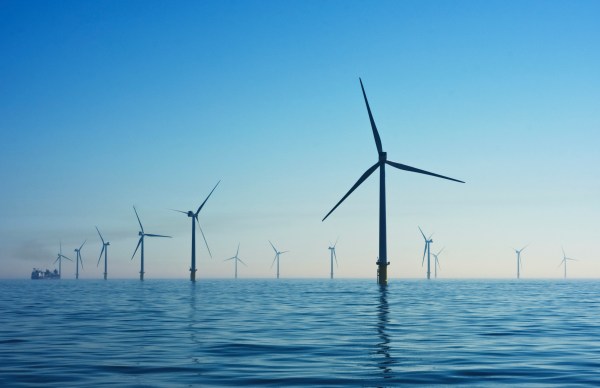
To meet new demand, in 2024 BC Hydro asked private power producers to supply additional electricity. The Call for Power resulted in 10 successful bidders, nine of which proposed to use wind turbines. The total capacity of these projects was 1,635 MW, with delivery of electricity expected to be around 5,000 GWh.
Site C is designed to deliver the same amount of electricity. There are major differences, though. Wind power will cost a fraction of Site C power, and the time it takes to deliver electricity from wind turbines will be two or three years. Site C took ten years from the start of construction to full operation, plus decades of planning.
By the way, Canada West Forum is holding a free online webinar about wind power on March 24th. Check the CWF website for a link to the event. In the first half of April, a forum on solar will follow. Later, the nonprofit organization will host forums on next-generation, grid-scale geothermal, distributed energy resources, and energy conservation.
Taken together, these forums will provide the absolute best learning resource for people interested in renewable energy.
Categories: Energy, Energy - Wind


 in-sights.ca
Windmills for Britain? Really soon? Nope.
Is it possible that “two-tier” Sir Keir Starmer is catching up to energy reality? Because out of control energy costs threaten everything else.
Three Tory PMs killed the renewables idea. When Labour finally took charge many argued that shifting to renewables would save money and lives. But only now does this PM admit that somewhere in the hazy future that sort of clever thinking might be justified.
https://www.independent.co.uk/news/uk/politics/uk-inflation-rates-reeves-updates-iran-war-b2944996.html
Sir Keir Starmer has vowed to go “further and faster” on renewable energy to bring soaring bills down amid the Middle East conflict.
Facing a grilling over his government’s response to the crisis in the final PMQs before parliamentary recess, the prime minister told MPs: “Oil prices hit £100 a barrel in the last four weeks because we’re on the fossil fuel rollercoaster. Everybody has been held to ransom. The only way is to go further and faster on renewables.”
Rachel Reeves warned on Tuesday that the US-Israel war against Iran may cause ”significant” economic challenges for Britons.
But the chancellor indicated that millions of households will not get support to pay soaring energy bills, as she pledged to offer targeted, rather than universal, support “to those who need it most”.
The approach has drawn criticism, as the crisis in the Middle East has pushed up oil and gas prices and is set to hit other goods, with the average annual household energy bill predicted to rise by £332 in July.
UK inflation remained steady at 3 per cent on Wednesday – but this does not yet reflect the impact of the war on the cost of living in the UK, with economists saying inflation is now set to accelerate over the coming months.
========================================================================
Meanwhile in America… A billion dollars to kill Windfarms?
But it’s not like the Energy Game is rigged though…
https://crooksandliars.com/2026/03/trump-pays-out-billion-dollars-leases-stop
As the war in Iran drives up global fossil fuel prices, the Trump administration has announced it will pay French energy major TotalEnergies $1bn to kill plans to construct wind farms off the US east coast.
According to the Guardian, in the deal announced on Monday, TotalEnergies will give up two offshore leases it had purchased off New York and North Carolina. The Department of the Interior will reimburse the company the $928m it paid for the leases under Joe Biden
TotalEnergies has pledged not to develop any new offshore wind projects in the country, a US interior department statement said, and will invest nearly $1bn this year in the development of four trains at the Rio Grande LNG plant in Texas, and the development of upstream conventional oil in the US Gulf and shale gas production, the statement said.
Lena Moffitt, executive director of the climate advocacy group Evergreen Action, called the new deal “a taxpayer-funded bribe to kill homegrown clean energy and hand the money straight to oil and gas executives”.
LikeLike
In 2 years, by the time of the next scheduled election the NDP will have subsidized BC’s private school system by 500 million dollars every year. That’s 5 billion dollars, while under-funding health care, housing, job creation, social, and essential services. To save money!
https://www.policyalternatives.ca/news-research/increased-public-funding-for-private-schools-is-dividing-us-and-needs-to-stop/
It gets worse. CHEK News Victoria reported that BC Hydro informed Campbell River’s mayor that the corporation was cancelling an existing independent power contract the city needs.
https://cheknews.ca/campbell-river-pushing-for-new-island-generation-bc-hydro-contract-to-spur-growth-1314155/
The mayor of Campbell River says much is at stake if BC Hydro doesn’t extend a contract with a private energy provider in his city.
Mayor Kermit Dahl says the back-up power is critical for future development at a former mill site.
The old Elk Falls mill site just north of the city has sat empty for over 15 years but Dahl says the key to any redevelopment and return of industry there could already exist next door: a privately-owned, natural gas-fired power generation plant.
“The resource industries in our area have taken a beating. We need to find other ways to replace that revenue,” Dahl told CHEK News. “You know just like every other community in B.C. we’ve got bills to pay.”
Island Generation is a 275-megawatt combined cycle natural gas facility owned by Capital Power in Edmonton and has a contract with BC Hydro for back-up power if needed until October 2026.
Island Generation used to provide power to the Catalyst Pulp mill next door until it closed in 2010.
BC Hydro renewed a contract with Capital Power for four years in 2022
“What’s happened over time is it’s become a backup for the various facilities on Vancouver Island but also for the undersea cables coming from the mainland providing reliability to the Island,” said the president of Capital Power at the time, Brian Vaasjo.
BC Hydro generally uses the power from Island Generation during transmission outages or in times of high domestic load like during cold snaps or heat waves.
It was used extensively in July 2021 because BC Hydro had issues with an undersea transmission line from the mainland due to the late June heat dome that year.
The concern is that BC Hydro won’t renew the contract this time, affecting any future industry there.
“That’s been the main concern with two projects that have come forward is the lack of capacity if Capital Power leaves in October,” Dahl added.
“The mayor says Energy Minister Adrian Dix told him that future energy security will come from planned wind farms north of Campbell River but they’re not expected to be online until 2031 at the earliest leaving at least a five year gap after this year.
“Even 2031 is too far, what are we supposed to do the next five years? You know we’re turning projects away today so should we expect to be turning projects away for ten years?” Dahl asked.
“BC Hydro understands there is strong community interest in the Island Generation facility. While we can’t comment on matters related to specific facilities or contracts, we recognize the importance of Island Generation to the City of Campbell River,” BC Hydro said in an emailed statement Thursday.
“We’ve been trying to get that pulp mill site redeveloped for quite some time now, that should come as a serious concern,” Dahl added.
Capital Power in Edmonton did not respond to our request for comment.
========================================================================
https://globalnews.ca/news/11049173/kelowna-developers-anticipate-delays-lack-of-power-fortisbc/
A lack of power could lead to developers temporarily pulling the plug on new Kelowna, B.C., developments.
“We’re running into situations where developers are being told they won’t have power until 2027 or 2028 to fully energize their buildings,” said Ian Grannary, of Smith + Andersen.
Multiple Kelowna developers have been advised by FortisBC to pause their projects due to limited electrical capacity, with Smith and Andersen’s Pandosy project potentially delayed until at least 2028.
“That’s pretty vague, and that’s if everything goes well. If we’re four years out that’s going to affect a lot of projects,” said Grannary.
FortisBC says the expansion of local substations will help with getting more power to the new builds, but that work is facing delays.
LikeLike