



The following is a post from the Canada West Forum website.
Geothermal Opportunities is the third installment of the Canada West Forum Society’s series of online energy forums. The series began with Powering the Future, an overview of energy in British Columbia, and continued with Harnessing Wind Energy.
Geothermal Opportunities will be followed by forums that examine solar power and energy conservation, which may be the most important subject in this series. The International Energy Agency called conservation the “first fuel.”
Journalist Markham Hislop makes the point that we must encourage electrification. That results in greater consumption of electricity. People who advocate for conservation do not want to lower consumption; they want to discourage waste and ensure that energy is used more efficiently. It’s about consuming less energy through better habits, state-of-the-art technology, and energy efficient designs.
Geothermal energy is dependable, low-carbon, and abundant—yet it plays only a minor role in most energy systems.
So the question is hard to avoid: are we overlooking geothermal? And if we are, what must change—technology, investment, or policy—to elevate it into a central pillar of the low-carbon transition?
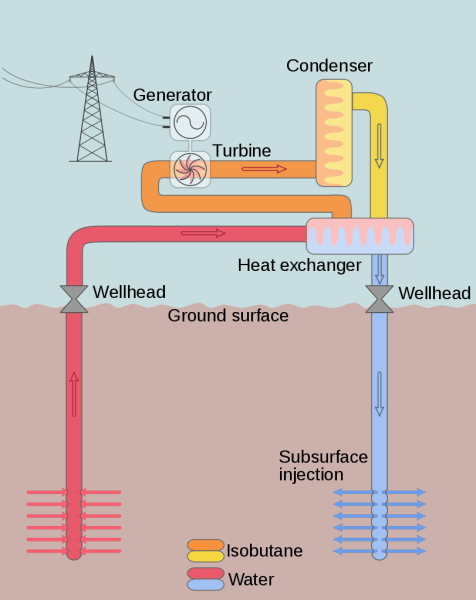
Modern EGS companies are putting EGS back on the map with new technological developments… Advancements in geothermal well design are also contributing to geothermal’s recent momentum. One of these advancements is the exploration of super-hot-rock geothermal, or Super Hot EGS. These systems are very similar to traditional EGS but seek to drill into much deeper, much hotter rock. While traditional EGS seeks to drill into rock in the 200°C temperature range, Super Hot EGS seeks to tap into rock that measures around 400°C. Each Super Hot EGS project can produce the same amount of energy of about 10 traditional EGS projects and is much more cost-effective per megawatt-hour.
Advances in Geothermal, Stanford University
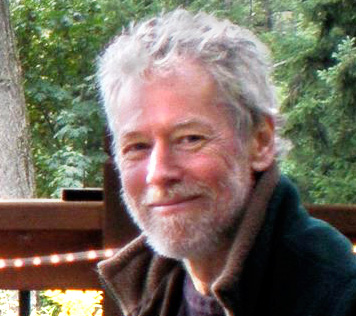
Our geothermal forum was moderated by Guy Dauncey, a tireless advocate for a sustainable future. Guy is the author of several books and co-chair of West Coast Climate Action Network, a cooperative of climate action groups, organizations, businesses, and initiatives in British Columbia.
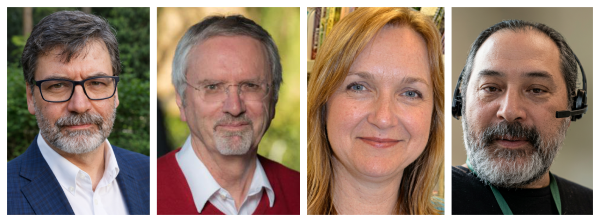
Forum panelists included:
| Markham Hislop | Western Canada’s foremost energy and climate journalist. He conducts audio and video interviews with global experts and he regularly writes incisive political analyses about the future of energy. |
| Roland Horne | A Professor of Earth Sciences at Stanford University and Senior Fellow in the Precourt Institute for Energy. Dr. Horne is a former president of the International Geothermal Association and served as Technical Program chair of the World Geothermal Congress for several years. |
| Charlotte Adams | CEO of the National Geothermal Centre in the UK. It was established to accelerate the sector through expertise, policy influence, and investment. Dr. Adams has extensive experience across academia, government, and industry. |
| Alex Tu | A senior staff member at BC Hydro, specializing in resource planning, technology innovation, and sustainability. As of 2025, he has served as a Senior Team Lead for Resource Planning and a Senior Strategic Technology Specialist, contributing to the 2025 Integrated Resource Plan (IRP) and grid planning. |
Geothermal energy is poised to grow in importance across British Columbia and the American West Coast. Large hydropower projects carry significant environmental costs, while wind and solar are inherently intermittent. By contrast, geothermal delivers steady, around-the-clock power and can be dispatched when needed—making it a uniquely reliable complement to other low-carbon sources.
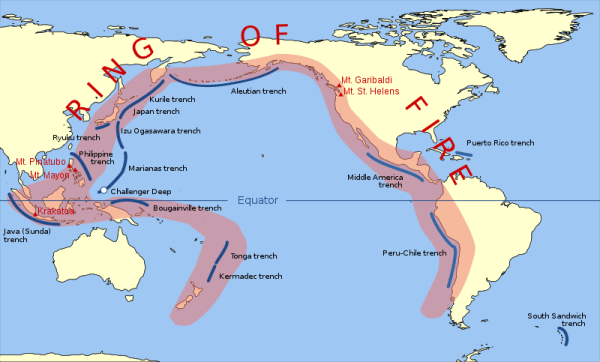
Canada is one of the only countries along the Pacific Rim that has yet to capitalize on its geothermal potential and in the Western provinces, it is still very much in its developmental stages. Because British Columbia’s coast is directly situated on the Pacific Ocean’s “Ring of Fire,” its geothermal potential is enormous…
Geothermal Potential in Western Canada
Categories: Geothermal, Uncategorized


 in-sights.ca
Hello Norm and thank you for the geothermal session. Very interesting.
I would have hoped a few more participants would have joined us with
such an excellent panel you had.
I was disappointed with Alex Tu, as he came across, to me, like the
ultimate bureaucrat … “we are studying it”. I expected some passion
or drive, but did not feel that. Am I wrong? Which leads to “how
likely is it that BC Hydro will expand their thinking with a person
that does not seem very interested in his subject”?
cheers and thank you. Looking forward to other topics and sessions.
Roger
LikeLike
Another engrossing discussion. Hopefully these forums are achieving the circulation and viewership they deserve. The insight provided by the subject matter experts is exceptional and again those involved in putting them together should be congratulated on a job very well done.
The comments from Professor Roland regarding the inviability of closed loop geothermal were a bit of a downer for me given his status and background in the industry, and the fact that his view didn’t align with what I’d come to believe previously about the technology. This caused me to do some further reading on the subject, which incidentally has been the case after each of these forums. That’s a good thing, and dare I say the intended goal of the project, after all.
It seems to me that the professor may come to change his mind at some point, hopefully in the near future. There’s a hill to climb for certain, but the advances in drilling techniques, recent developments surrounding possible capture of lithium during the drilling process, and the incentive of some industries (such as data centers) to find and pay a premium for a dedicated and stable power source that can be situated virtually anywhere, all may conspire to give the technology the shot in the arm it needs to get over the hump.
Too bad Markham Hislop had to leave a bit early. We would have benefited from his experience on the closed loop potential.
LikeLike