



A study published online by Cambridge University Press in 2014 had a blunt conclusion:
Multivariate analysis indicates that economic elites and organized groups representing business interests have substantial independent impacts on U.S. government policy, while average citizens and mass-based interest groups have little or no independent influence.
One of America’s most accomplished corporate welfare recipients is now on track to become the world’s first trillionaire. As Elon Musk stands to gain from what Fortune called “the biggest initial public offering of all time,” it is worth remembering how heavily his empire has depended on public money and government support.
During the years when Musk’s SpaceX was developing its launch systems, government contracts reportedly accounted for between 76% and 84% of company revenue. Taxpayer funding, regulatory advantages, and publicly financed infrastructure all helped build the foundation beneath Musk’s staggering fortune.
Elon Musk’s rise illustrates how modern oligarchic wealth is often built through close relationships with politicians and senior regulatory officials. When the financial rewards are vast, directing a small share of that wealth toward lobbying, political influence, campaign support, or cultivating powerful allies is simply another cost of doing business.
When political power and extreme wealth become intertwined, corruption no longer bothers to hide behind respectable appearances. The ruling circle rewards allies, protects insiders, and channels public resources upward while ordinary citizens are told there is never enough money for housing, healthcare, or social needs.
If the head of a political machine operates more like the don of a crime family than a public servant, it is hardly surprising that favoured billionaires are ushered toward ever more obscene concentrations of wealth. The skids are greased, the rules rewritten, and the public treasury treated as a private feeding trough.
For decades, many influential American politicians and lobbying groups have opposed universal social programs, arguing that they would increase taxes, expand government power, or reduce market competition. They resist programs known to improve — and often save — the lives of America’s poorest residents, yet see nothing wrong with wealthy individuals becoming vastly richer through corporate welfare financed by taxpayers.

.
.
.
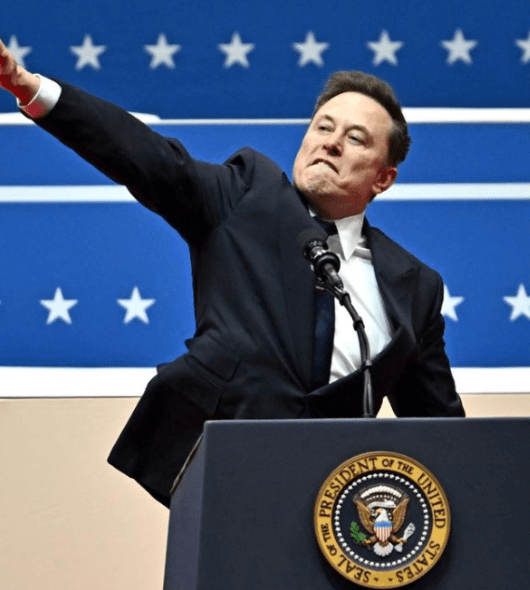
In a comment, a reader asked for a link to the study quoted at the top. Testing Theories of American Politics: Elites, Interest Groups, and Average Citizens was published online by Cambridge University Press in 2014. The work was credited to UCLA Professor Martin Gilens and Northwestern Professor Benjamin I. Page.
These authors have written several books, including:
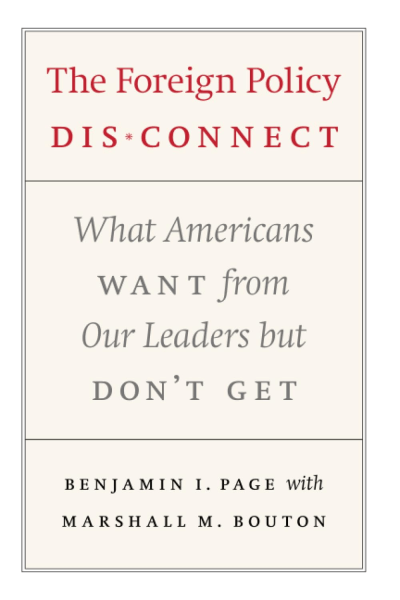
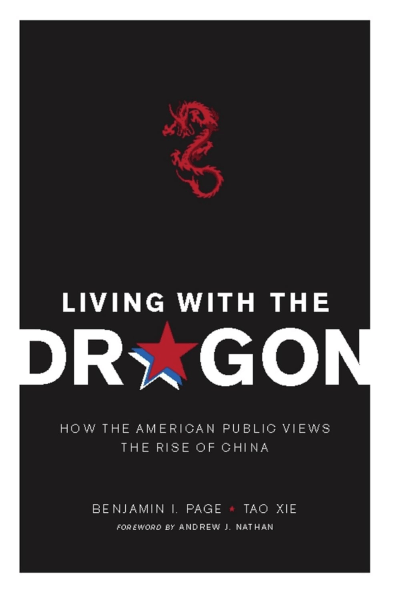


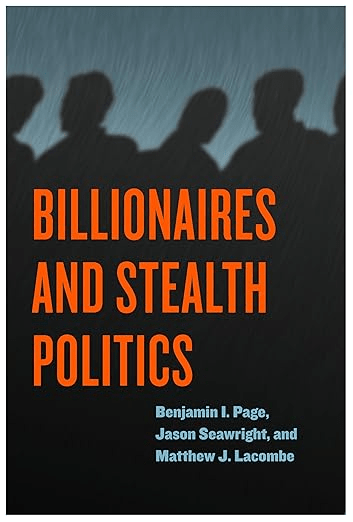
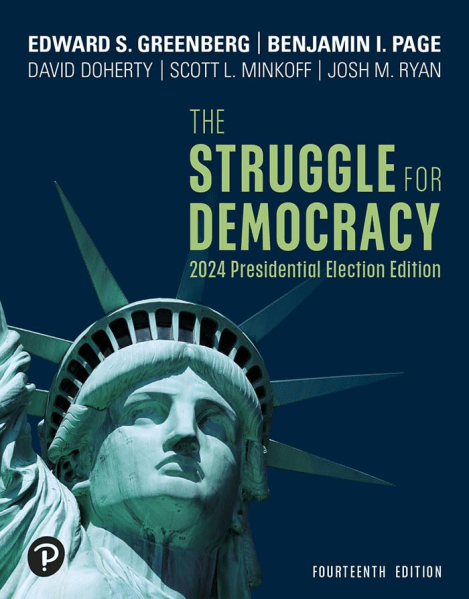


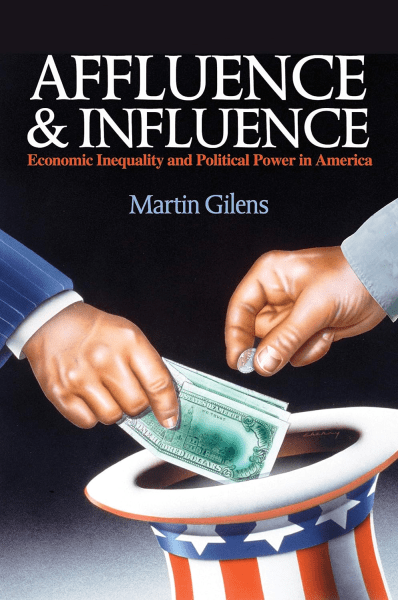
BBC published commentary about the referenced study authored by Professors Gilens and Page:
The US is dominated by a rich and powerful elite.
So concludes a recent study by Princeton University Prof Martin Gilens and Northwestern University Prof Benjamin I Page.
This is not news, you say.
Perhaps, but the two professors have conducted exhaustive research to try to present data-driven support for this conclusion.
…They conclude:
Americans do enjoy many features central to democratic governance, such as regular elections, freedom of speech and association and a widespread (if still contested) franchise. But we believe that if policymaking is dominated by powerful business organisations and a small number of affluent Americans, then America’s claims to being a democratic society are seriously threatened.
If you believe that democracy was in poor shape in 2014, when Barack Obama was president, consider the current situation, where a convicted felon is in power and engaged in unprecedented corruption.
Categories: Conflict of Interest, Inequality


Would you please post a link (or give a more complete citation) to the original study? Thank you!
LikeLike
Thanks for the suggestion. I didn’t show a link to the study initially because it was on a site that required a US$30 payment. But your comment prompted me to add the link and a little more detail about it. While the study is reported to have been influential, critics argued with the authors’ methodology and conclusions.
Of course, that is not surprising. Oligarchs aim to protect the oligarchy, and they spend vast sums to convince ordinary people to defend the very system that exploits them.
LikeLike
Thanks, I appreciate this follow-up.
LikeLiked by 1 person
Regular reader of insights here. I seldom comment but will try to do that more in the future.
I’m glad you added that video by Patrick Boyle. He’s informative and amusing so I frequently watch his youtube channel. I suggest others should check it out.
LikeLike
You say that, “Average citizens and mass-based interest groups have little or no independent influence on governments”
Point taken. Publicly acceptable governments should/must consult the public about top priorities in a Representative Democracy. But that died when the century changed.
Aren’t there any governments left which operate “independent” of business-as-usual pressure?
Are there no “rogue” administrations that might reject a huge boondoggle like an enormous Data Centre?
None.
Except for pandering endlessly to Alberta, Ottawa calls the shots. Do something unacceptable to our current PM?. Not if you’re a weak lets-not-make-a-fuss Premier.
Only if you’re Manitoba’s Rab Kinew. Only if you’ve done the math to see who benefits least from a Data Centre boondoggle deal.
The story…
https://www.thesanity.org/p/manitoba-did-the-math-on-ai-data
Why Manitoba Said No to a 500-Megawatt AI Data Centre
And what Premier Kinew’s grid math reveals about Ottawa’s silence on energy costs
On the morning of June 4, 2026, Manitoba Premier Wab Kinew appeared on CBC Radio and said, essentially, no thanks.
Not a hedged “we need more study.” Not a “we support responsible development, but.” Just a clean, plainspoken no to a proposed 500-megawatt hyperscale AI data centre backed by a Las Vegas company called Jet.AI and a Vancouver firm called Consensus Core. The facility would have consumed 141 hectares of farmland near Île-des-Chênes, burned natural gas around the clock, and made promises about jobs and tax revenue that Kinew clearly didn’t buy.
Hours later, in Toronto, Prime Minister Mark Carney unveiled “AI for All,” Canada’s national artificial intelligence strategy, anchored on building sovereign AI infrastructure. Specifically, it called for “large-scale AI data centres with total planned capacities greater than 100 megawatts.”
The federal government launched its biggest technology bet of the decade on the same day a province told that bet to find somewhere else.
That collision wasn’t accidental. And the tension it exposed isn’t going away.
[With a 63% approval rate Mr Kinew leads all other premiers in popular support.. Curious, no?.]
LikeLike