


De Volkskrant (The People’s Newspaper) is a Dutch morning daily, the third largest newspaper in The Netherlands. Its journalists Maud Effting and Willem Feenstra won the 2026 European Press Prize for Distinguished Reporting for What the wounds are telling us, a powerful investigation of targeted violence through the testimony of victims, medical professionals, and forensic analysis.
The honour is the latest in a long list of achievements for the two reporters. Between them, Effting and Feenstra have won De Tegel—the Netherlands’ highest journalism award—five times. They are widely respected for rigour, independence, and willingness to pursue difficult stories.
On her Linkedin account, Ms. Effting explained how the investigation began. More than two dozen comments, many from fellow journalists, expressed admiration for the investigation and praise for the skill and courage required to produce the challenging project.
‘I thought: what the hell?’
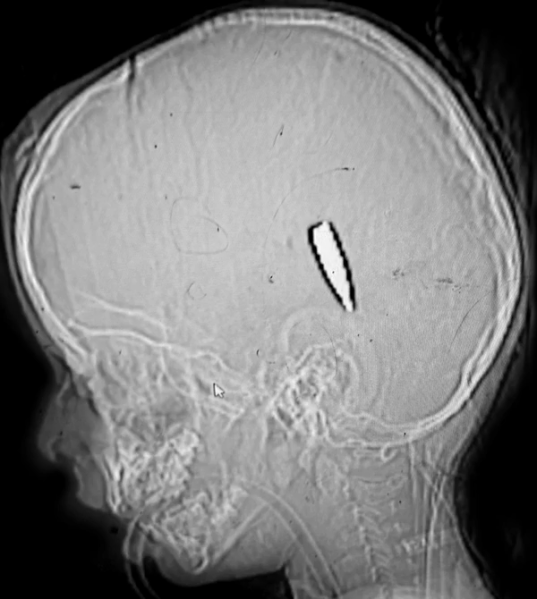
One year ago I found myself on the phone in the middle of the night with an American trauma surgeon who was telling me about what he saw in Gaza. He was calm and outraged at the same time. On his first day he had witnessed four boys with gunshot wounds to their heads. They were dying.
And there were more to come.
“I started to wonder,” the surgeon told me, “if my hospital was near some crazy sniper. Or a drone team killing children just for fun.”
This doctor was Feroze Sidhwa, one of the seventeen doctors we interviewed for our article ‘What the wounds are telling us’ for de Volkskrant. Fifteen of them collectively saw 114 children with a single bullet wound to the head or the chest. Most of them died. According to former commander of the Dutch land forces Mart de Kruif, the chance that these were accidental hits is negligible.
This week, my colleague Willem Feenstra and I won the European Press Prize with our article for Distinguished Reporting. We were deeply honoured, but the real prize belongs to the courageous doctors who spoke out about what is happening to the children of Gaza.
De Volkskrant’s article is not easy reading. For Canadians living far from the violence, it is difficult to comprehend such cruelty. Equally difficult to understand is the weakness of Canada’s response.
Our government has failed to respond with the urgency and moral clarity that the suffering in Gaza demands. Under Prime Minister Mark Carney, Ottawa has offered words of regret and admonition but nothing in the way of concrete action. This reflects a government more concerned with protecting economic and financial interests than defending human rights. Carney seems unwilling to pursue policies that might offend industrial titans, major investors, or hedge fund managers, regardless of the humanitarian consequences.
People of my age remember times when this country was willing to mediate disputes, pursue peaceful solutions, and provide moral and material support to oppressed people.
For several decades after Lester Pearson earned the 1957 Nobel Peace Prize, Canada was widely viewed as an honest broker—neither a superpower nor a developing state but a country concerned with universal human rights.
More recently, Canada has become unwilling to accept the political and economic costs that can accompany strong human rights advocacy. While the country joined 147 other nations in recognizing a Palestinian state, the move is equivalent to American politicians sending “thoughts and prayers” after another mass shooting of children and other innocents.
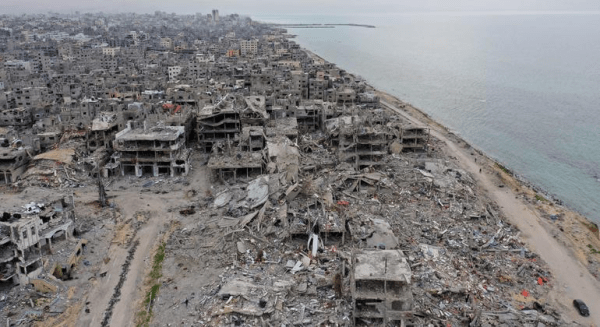
The International Criminal Court has found sufficient evidence to support allegations of war crimes and crimes against humanity in the Middle East. Boston University’s Costs of War project documents hundreds of thousands of Gazan casualties—far exceeding Israeli losses. Almost half of the population of Gaza has been displaced.
International law explicitly prohibits using starvation against civilians, yet Israel has employed it—along with indiscriminate bombing—as part of its efforts to eliminate Palestinians and their sympathizers from neighbouring territories.
The ICC is conducting an investigation into the situation in the State of Palestine and issued arrest warrants for Israeli Prime Minister Benjamin Netanyahu and former defence minister Yoav Gallant. The court also issued a warrant for Hamas military commander Mohammed Deif, although Israel claims it killed Deif in an air strike.
Many human rights activists and some political leaders have argued that Israel should face isolation similar to that used against apartheid-era South Africa. Arms embargoes, divestment, and other non-violent pressure would encourage compliance with international law and human rights standards.
Canada should lead international efforts to impose punitive sanctions on military and political leaders responsible for genocide, war crimes, and crimes against humanity.
I dare you to watch this one-hour documentary and be unmoved.
Categories: Human Rights, Israel


1 reply »