



The Tyee is reporting on why the federal government wants to promote and subsidize a national network of data centres.
But a top advisory body to Carney’s Liberal government has also quietly identified another policy goal that wasn’t mentioned in the hotly anticipated “AI for All” road map. One of the top “public policy benefits to Canada” of constructing a national network of data centres is creating new markets for Canadian natural gas producers.
Apparently the Liberals discount peer-reviewed science that says the global warming emissions from burning natural gas are higher than those from clean energy sources like wind or solar.
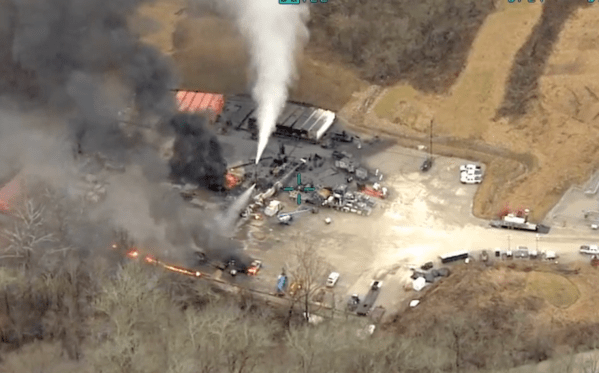
The drilling and extraction of gas from wells and its transportation in pipelines results in the leakage of methane, the primary component of natural gas. Methane is 34 times stronger than CO₂ at trapping heat over a 100-year period and 86 times stronger over 20 years. Studies as well as field and aerial measurements have shown that high rates of methane leakage can be found throughout the natural gas system.
A regular IN-SIGHTS reader sends me well-reasoned information about important subjects. The Tyee article led to a lengthy email, parts of which follow:
Step back a few years, before the oil and gas lobby finally exterminated those pesky ridiculous Conference of Parties clown shows. It was obvious that the public mood towards annihilating all planetary life merely to profit Big Oil and Gas had shifted.
OK then. Is now a good time for energy alternatives? Could we try renewables? Why not?
Why not? Up popped a deeply concerned volunteer army of industry experts. At first the game was dirt simple—green energy is unreliable. It’s intermittent. If [gulp] the wind doesn’t blow or the sun doesn’t shine oil and gas are safer and cheaper. Green energy is way too expensive as a start up. Forget renewables. The real transition requires LNG. Lots of “green” LNG.
However… among heedless Europeans, Africans and SE Asian geeks many realized that if you combined solar and wind in the same location then stored accumulating power using batteries as back up, well that’s 24/7 power and it’s cheaper energy to boot!
Wait! No! Stop!
The wheels are coming off the gravy train! What to do? Create a new technology. One that is absurdly energy-dependent and hyper-reliant on massive energy consumption.
Next, without mentioning that AI is designed to depopulate the workplace permanently, declare the data centre a humanitarian necessity!
Next, providing nowhere near sufficient justification, spend enormous sums promoting energy gluttony with the help of our forever timid (subsidy-dependent) Canadian corporate media. A collection of mice that would never dare challenge such an heroic agenda. As expected, media repeated precisely what they were told, uncritically.
The finished product? It was not backroom deals among a small circle of like-minded amigos. It was necessity that determined energy policy. Not global conferences, not wishful neo-hippies yapping in chat rooms. Necessity dictated that only lots of gas, gushing forth from a new energy superpower, could sustain behemoth data centres.
As expected, until recently no one dared to challenge the scam with proof to the contrary.
Except China, by example.
Not only did the Chinese hypothesize that gas-powered centres decidedly were not necessary—they proved it.
A datacentre off the Shanghai coast uses less power and water than a land-based equivalent.
The world’s first wind-powered underwater datacentre has started operations off the coast of Shanghai as China presses forwards with solutions for energy challenges created by the country’s artificial intelligence boom.
The Shanghai Lingang undersea datacentre demonstration project, which launched in May, has a capacity of 24 megawatts. It is a joint effort between HiCloud Technology and China Communications Construction, a state-owned company.
Located more than 6 miles (10 km) off the coast of Shanghai, the datacentre is submerged 10 metres below the surface of the water and is powered by a nearby offshore wind farm. According to the Chinese government, the datacentre reduces power consumption by more than one-fifth compared with land-based datacentres.
That is because as well as being powered by renewable energy, its overall energy demands are less because of the natural cooling effect that comes from being submerged in seawater.
========================================================================
Is anyone in Canadian media or policy circles paying any attention to innovations elsewhere?
Of course not.
What else aren’t we seeing, talking about, or doing?
https://www.nature.com/articles/s44287-025-00161-x
Amid geopolitical crises and economic challenges, it is crucial to reassess the future role of fossil fuel resources, particularly oil and gas fields. A promising opportunity now exists to repurpose these fields for geothermal energy, helping to accelerate the energy transition while mitigating the risk of resource stranding.
More detail? There’s this…
Summary
In regions where oil and gas extraction has been ongoing for decades, there is an inventory of wells that range from fully abandoned (plugged and wellhead removed) to suspended to operational.
In Alberta, there are over 450,000 wells (Alberta Energy Regulator, 2022) that have been drilled since the early decades of the 20th century (Figure 1). The financial states of companies that hold these assets have changed through time, and many previously owned wells are now “orphaned.” Orphan wells may range in status from abandoned to operational, but the most important aspect is the lack of a viable company that can be held responsible for the reclamation of the wells and surface disturbance (pad, roads, pipelines, etc.) (Alberta Energy Regulator, 2022). All wells have a liability associated with them to ensure safe and environmentally responsible abandonment and reclamation.
In Alberta, this liability is estimated at $100 billion (McNeill, 2018). Given the potential reclamation costs and reutilization possibilities of these and future wells, we outline the investigative process of reviewing, analyzing, and assessing suspended and active wells in Alberta for their geothermal potential.
https://ww3.rics.org/uk/en/journals/land-journal/mine-water-heats-homes-businesses.html
Project draws geothermal heat from former mine
A pioneering project to extract heat from water-filled mine workings shows that many of Britain’s 23,000 disused deep coal mines could help provide low-carbon heat for local networks
This project has demonstrated that our disused mining infrastructure can provide a secure source of heat that may be scaled up while reducing carbon emissions by around 1,800 tonnes per annum.
Offering lower-than-market prices for heat, the scheme enables customers to access low-carbon heat and removes the need for domestic boilers. More widely, mine water heat networks in disused coalfields can provide new business opportunities in building and operating networks.
Mine water heat networks use existing technology such as heat pumps, heat exchangers, and boreholes that can contribute to net-zero targets now, helping to decarbonize heat supply in former mining areas. We are also exploring other opportunities for this resource, such as cooling, thermal storage, and food production.
The northeast of England has several projects in planning, including a development of 1,500 homes at Seaham Garden Village and a 10 MW project for Sunderland city centre. These continue the region’s rich history of energy innovation, much of which was derived from coal. It is fitting that we are now able to explore new ways to use this as part of the low-carbon transition.
Impressive, no?
==============================================================
Categories: Climate Change, Liberal Party of Canada


So what can we do? Vote in a Conservative government? I doubt they will be any better. Either the federal or BC Green Party is unlikely ever to form government. If the decision makers are aware of the economic sense of renewable energy but continue to promote fossil fuels because they are under the thumb of the oil companies, then life on Earth is collectively doomed in the short term. We may as well ignore all these warnings and amuse ourselves until the end.
LikeLiked by 1 person
Afterthought: I suppose if large numbers of us installed solar panels, batteries, and heat pumps, and switched to electric cars, that would send a message. But doing this is expensive, even with rebates, and many people aren’t in a position to make these kinds of changes in their dwellings.
I heard some heavy facts (on subsidized CBC Radio) yesterday critical of an enormous data centre planned for Alberta, one of many it seems. Organizing to oppose it at the community level seems to be the only option, but how effective that will be is doubtful.
LikeLike
Ms. Driscoll writes,
“Organizing to oppose it at the community level seems to be the only option, but how effective that will be is doubtful.”
Think back. It’s 1937. The super-modern airship Hindenburg is on fire over New Jersey. This device is The Future! In fact, it wasn’t.
How could such an enormous gas-balloon burst into flames and consume itself? How could this tragedy be prevented?
For starters you’d need a smart and progressive leader like Manitoba’s Wab Kinew. Someone willing to hesitate to join the AirShip Uber Alles Bandwagon Party..
========================================================================
https://www.msn.com/en-ca/news/canada/premier-says-no-to-massive-ai-data-centre-proposed-for-south-of-winnipeg/ar-AA24Ptqj?ocid=BingNewsSerp
Premier says no to massive AI data centre proposed for south of Winnipeg
A large AI data centre pitched for a 141-hectare tract of farmland south of Winnipeg will not go ahead, Manitoba Premier Wab Kinew says.
“We’ve taken a look at this project. We’ve taken a look at AI more broadly — what’s happening across North America — and these hyperscale data centres don’t appear to be in the best interests of Manitobans,” he told CBC Manitoba Information Radio host Marcy Markusa on Thursday.
“So we’re going to say no to this data centre.”
=====================================================================
His approval?
https://angusreid.org/premiers-performance-june-2026/
June 11, 2026 – Political discontent may be growing across the country, but this quarter’s premier approval ratings show a clear concentration of trouble among three of the country’s most prominent leaders. In Alberta, British Columbia and Ontario, Danielle Smith, David Eby and Doug Ford all fall to personal lows, each facing a different mix of governing fatigue, economic pressure and controversy at home.
Smith and Eby, premiers of neighbouring provinces increasingly at odds over pipelines, federalism and the future of national unity, both lose ground this quarter. Smith’s approval falls drops to an all time low at 39 per cent after weeks of controversy over her government’s plan to hold an October referendum related to Alberta’s place in Canada.
West of the Rockies, Eby drops to 31 per cent as his government faces ongoing pressure over DRIPA, property-rights concerns, health care and affordability after nearly nine years of NDP government in B.C.
In Ontario, Ford falls to 21 per cent – the lowest approval level of his eight-year premiership – after a season marked by tariff concerns, deficit projections and backlash over the now-reversed purchase of a government jet.
=====================================================================
Mr Eby’s last poll ranked him at 37%. He now replaces Mr Ford at 31%. Next quarter where is he and his party?
Telling taxpayers – you have no say in what we do with your money is dumb. Telling the public they are obliged to pay for what looks like a huge political gravy train (for billionaires) soon will see the public looking for leaders ready to say, “Enough”.
As for Mr. Kinew? His approval rating is up to 62%.
Clearly you understand the harm inertia does. Ask pols for better polices, then do nothing?
I think you’re right. “Organizing to oppose [another boondoggle] at the community level seems to be the only option.”
Lets do just that.
LikeLike
A Thought, Canada could help construct a bitumen refinery in Alberta and all this other mayhem could be avoided, right?
Instead is this latest pipeline “agreement” going too far?
https://thetyee.ca/Opinion/2026/07/03/Inside-Carney-Pipeline-Deal-Alberta-BC/
Alberta separatists and their many foreign-funded bots were in a frenzy Thursday attacking all parties, but especially Smith, for doing a deal with the PM that they insisted would never come to fruition.
On the other side of the ledger, the realization is yet to set in with the public that 90 per cent of the cost of this multibillion-dollar project — we don’t know how many multiples of billions yet — is going to be paid by Alberta and Canadian taxpayers, just as we were promised would never happen.
“It appears that Alberta — you and me and everyone else — will have to pay up if the southern route is to be financed,” said recently retired Mount Royal University political science professor Keith Brownsey. “There goes my pension!”
“It is now clear: there is no business case for a new West Coast pipeline in Canada,” said Pembina Institute executive director Chris Severson-Baker in a news release Thursday. “If this was a smart economic venture; if there was any kind of reasonable return on investment to be made, a private company or companies would have put up the cash.”
Obviously, the Alberta government can’t pretend Trans Mountain Corp., a federal Crown corporation, or the Alberta Petroleum Marketing Commission are private entities. And as for Pembina Pipeline Corp., described by Ottawa as a “strategic investor,” we can be confident that behind the scenes it’s been protected from any risk as a result of its role as a fig leaf in this political Kabuki theatre.
The Globe and Mail reported that Pembina Pipeline said its involvement was as a signatory to a non-binding memorandum of understanding with the federal and provincial governments and their two Crown entities.
Alberta’s proposal will now be referred to the federal government’s Major Projects Office for a decision on whether it will be named a project of national interest by Oct. 1. But, c’mon, Carney wouldn’t have flown all the way to Vancouver and Calgary to make announcements if this were not a done deal, or the next thing to it.
LikeLiked by 1 person