



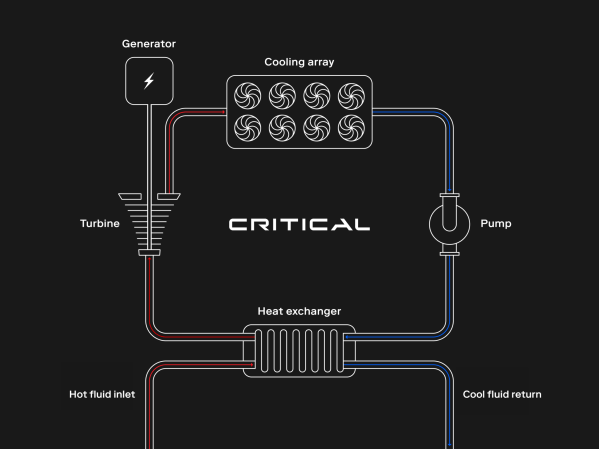
Los Angeles-based Critical Energy is developing modular power plants that can be mass-produced in factories, transported in sections by 18-wheelers, and installed in as little as two weeks to meet soaring electricity demand from AI data centres.
The AI boom is intensifying interest in modular generation and geothermal energy as data centre operators need dependable, around-the-clock power. Although Critical Energy’s turbines were designed for geothermal projects, they could also generate electricity from waste heat produced by data centres.

Another geothermal developer, Fervo Energy Co., raised almost $1.9 billion in a US initial public offering in May.
Conventional geothermal development has been limited largely to places where naturally hot water or steam is relatively accessible. That could change with enhanced geothermal systems and closed-loop technologies. These use advanced drilling to reach hot rock in locations without natural steam reservoirs.
Enhanced Geothermal Systems (EGS) are a next-generation technology that unlocks limitless, around-the-clock renewable energy almost anywhere in the world. Unlike conventional geothermal, which requires natural water and permeable rock, EGS uses hydraulic stimulation to engineer artificial underground reservoirs.
Categories: Energy, Geothermal


Hint: Don’t show this to David Eby… or DJ Trump.
https://oilprice.com/Energy/Energy-General/Geothermal-Could-Power-65-Million-US-Homes-by-2050-DOE-Says.html
Geothermal Could Power 65 Million U.S. Homes by 2050, DOE Says
Drilling techniques borrowed largely from fracking are making geothermal energy viable almost anywhere on Earth, not just in geologically active hot spots.
• Startups like Birch Geothermal are applying oil and gas reservoir management know-how to keep geothermal wells producing steady, round-the-clock power.
• The Department of Energy projects enhanced geothermal could supply 90 gigawatts of carbon-free power by 2050, enough for at least 65 million homes.
“It’s going to be the decade of geothermal,” Cindy Taff, chief executive of geothermal company Sage Geosystems, told The Hill in February of 2025.
Over a year later, it is becoming increasingly evident that Taff is definitely onto something.
Although geothermal energy is still a tiny sector and faces some significant headwinds when it comes to its up-front installation and development costs, it has numerous competitive edges over other, more common energy sources. It’s clean, it’s constant, it’s politically popular, it’s finally feasible in nearly any geological context, and it’s probably coming very soon to a grid near you.
Until recently, geothermal energy, which captures the heat that naturally emanates from the Earth’s core and converts it into electricity, was only applicable in geologically anomalous places where that heat escapes to the surface of the Earth naturally, such as through geysers. For this reason, geothermal still accounts for just a tiny fraction of the global energy mix. But if you dig deep enough, the heat from the Earth’s core can be accessed from nearly anywhere in the world. As such, recent breakthroughs in drilling technologies and methods could make geothermal energy a practical approach with enormously disruptive consequences for global energy markets.
========================================================================
https://oilprice.com/Alternative-Energy/Renewable-Energy/The-Worlds-Biggest-Energy-Bet-Is-No-Longer-on-Fossil-Fuels.html
The World’s Biggest Energy Bet Is No Longer on Fossil Fuels
Clean energy investment has decisively overtaken fossil fuels, with the IEA forecasting $2.16 trillion flowing into clean energy in 2025 versus just over $1 trillion for oil, gas, and coal.
Geopolitical instability is accelerating—not slowing—the energy transition.
The biggest story is where capital is flowing, with investors pouring money into solar, batteries, transmission, and electrification while oil investment continues to decline.
For years, critics of the energy transition have made essentially the same argument. Renewable energy was supposedly too expensive, too dependent on subsidies, too intermittent, and too vulnerable to survive a serious energy security crisis. Sooner or later, they argued, governments and investors would return to the comfort of oil, gas, and coal.
The latest figures from the International Energy Agency suggest the opposite is happening.
According to the IEA’s newly released World Energy Investment 2026 report, global investment in clean energy has reached $2.155 trillion in 2025, more than double the $1.008 trillion flowing into fossil fuels. The crossover occurred around 2016 when clean energy first overtook fossil fuels. At the time, many assumed the lead would be temporary. Instead, it has widened every year since, transforming what was once a marginal advantage into a decisive one.
========================================================================
https://oilprice.com/Alternative-Energy/Renewable-Energy/China-Is-Quietly-Winning-the-Clean-Energy-Trade-War.html
China Is Quietly Winning the Clean Energy Trade War
Chinese photovoltaic cell exports to the US surged 346 percent year on year last month, with lithium-ion battery exports up 20.8 percent and lead-acid batteries up 151 percent.
The Iran war’s disruption of the Strait of Hormuz is pushing countries toward clean energy for energy security, and China controls most of that supply chain.
Warmer US-China trade relations following Trump’s Beijing visit are accelerating the flow of cheap Chinese solar and battery components into American clean energy projects.
China’s clean energy dominance is growing. Buoyed by the skyrocketing energy needs and future projected demands of the artificial intelligence boom, clean energy projects are getting greenlit at a breakneck pace. And those projects depend on cheap Chinese clean energy components, as Beijing has near-total control of global supply chains for clean energy tech including solar panels and lithium-ion batteries for electric vehicles as well as energy storage systems. As a result, Chinese clean energy exports are going gangbusters in virtually every corner of the globe, from the poorest counties in the Global South to the richest nation in the world.
Despite the Trump administration’s best efforts to put America first when it comes to energy production, customs data from last month shows that exports of clean energies from China to the United States are growing at a rapid clip. Exports of the photovoltaic cells that make up solar panels surged 346 per cent year on year to reach US$39.96 million, lithium-ion batteries rose 20.8 per cent year on year to reach US$780 million, and export values of lead-acid batteries increased 151 per cent year on year to reach US$6.72 million, according to figures from the South China Morning Post.
=======================================================================
Wait. What do you mean Egypt is going Green?
https://oilprice.com/Energy/Energy-General/Egypt-Targets-60-Renewable-Electricity-by-2040.html
Egypt Targets 60% Renewable Electricity by 2040
Egypt aims to generate 42% of its electricity from renewables by 2030 and over 60% by 2040, supported by large-scale solar, wind and hydrogen projects.
Billions of dollars in investment from private developers and international partners are accelerating new renewable generation, battery storage, and transmission infrastructure.
Egypt is positioning itself as a regional clean energy hub, with growing ambitions to export green hydrogen and strengthen electricity links with Europe.
========================================================================
LikeLike