



A. Reader is back again with another informative post. This particular contributor sends me much useful information. I always appreciate the person’s work. The latest piece follows the separator.
The question is, “How catastrophic can privatization of a public service make things?” Consult British media for details.
Before her death, Margaret Thatcher decided to privatize the UK’s water and sewage system. In rushed various “investors, who then became…
A/ Exceptionally rich and exceptionally unwilling to maintain system standards.
B/ Incredibly indifferent to competence.
C/ Incredibly greedy and heedless of the damage they caused..
What could only make matters worse? A regulator, OFWAT, is reluctant to regulate too intrusively. They became busy issuing trivial fines. The fines were sufficiently tiny that they could be considered a license to do more of the same.
This was further enhanced by six prime ministers who preoccupied themselves with avoiding the issue.
I mention this because there’s a Canadian chap who witnessed all this deregulatory and privatization mania yet returned to Ottawa determined to gut those pesky environmental regulations Big Business didn’t like.
So it’s not like our PM has no conception of how badly under-regulated companies can behave.
Here’s a sample:
Southern Water fined £7m after illegally dumping sewage off Kent coast
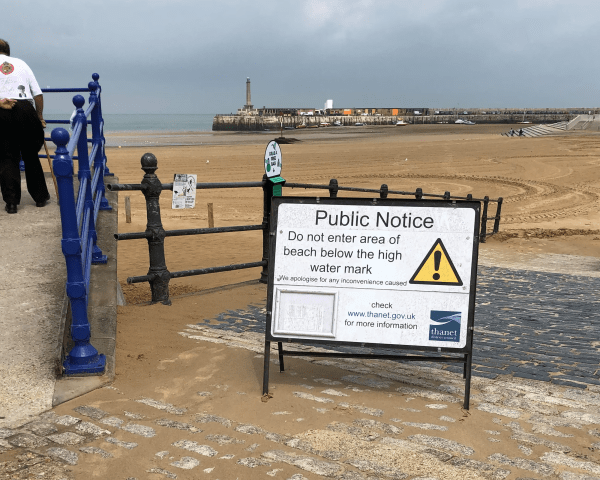
The company, described by the judge as having a “record of criminality” that was “an exceptionally serious aggravating factor,” pleaded guilty to 13 offences at Medway Magistrates Court last April over sewage discharges at Margate and Broadstairs wastewater pumping stations between 2019 and 2021.
Nine counts related to the incidents of untreated sewage dumped off the Kent coast, while three counts were over the failure to notify authorities of the discharges as soon as practicable and within 24 hours of a warning. This is a condition of the environmental permit.
A final conviction was for failing to have a standby pump at Margate’s station between 27 July 2019 and 4 October 2020, in breach of the permit.
The sentencing, at Canterbury Crown Court, took place on Thursday and Friday, with Mr. Justice Johnson imposing a total fine of £7,127,083.
The company was fined £90m for nearly 7,000 incidents across Hampshire, Kent, and Sussex in a case brought by the Environment Agency in 2021.
Yorkshire Water fined over £700,000 for repeated sewage releases
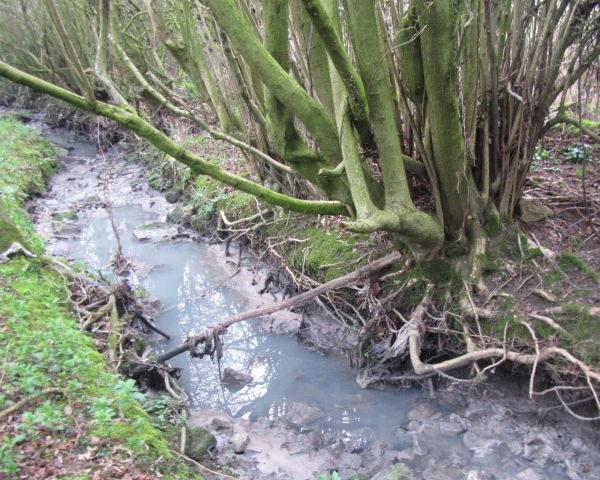
Company admits three pollution events that killed fish and insects in Pools Brook country park near Chesterfield
A water company has been fined more than £700,000 for repeatedly releasing sewage into a stream.
Yorkshire Water was issued with the penalty after pleading guilty to three offences of sewage pollution in Pools Brook Country Park near Chesterfield.
The three events killed fish and insects and polluted the stream for more than half a mile.
===============================================
Where does this go off the rails entirely?
With Mr. Starmer at the helm, various town councils approved an amazing number of huge new data centres. What the townsfolk didn’t analyze beforehand was whether or not Britain had enough local water to supply the data centres and supply the local population with drinking water.
Of course, desalinating ocean water on a scale common in the Middle East could solve the problem—but…
Plant in Beckton has run only five times and has been beset by multiple problems since it was built
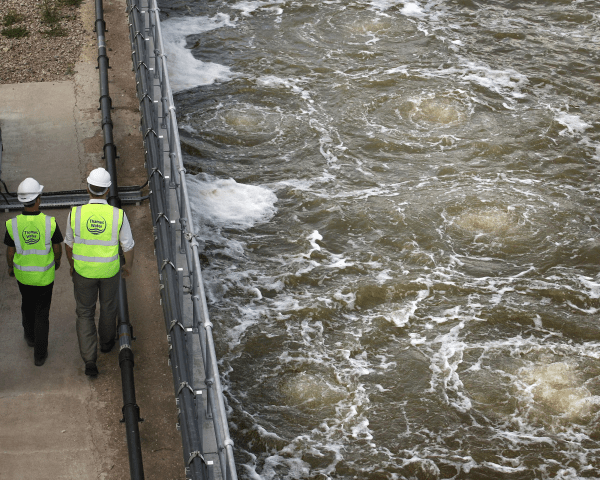
London’s desalination plant has cost more than half a billion pounds since 2010 and has run only five times, delivering 7.2bn litres of drinking water, roughly seven days of London’s typical daily demand. Now Thames Water is planning a new £500m project to tackle drought in the capital.
The Thames Gateway desalination plant at Beckton, built for £270m and now largely mothballed, has racked up an estimated £200m in debt interest, about £45m in idle upkeep and about £3m in operating costs, according to Thames Water figures. That puts the lifetime bill at about £518m, or about 7p for every litre the plant has ever produced, which is 28 times more than customers usually pay for their water.
Thames Water now plans to build a new drought-resilience scheme on the Thames for an estimated cost of between £359m and £535m, which will be paid for by customers.
The Teddington Direct River Abstraction (TDRA) scheme would remove water from the river at Teddington, pump it to the Lee Valley reservoirs in north London, and replace it with treated effluent from Mogden sewage works in west London.
================================================
Not enough water for UK’s datacentre plans, trade body says
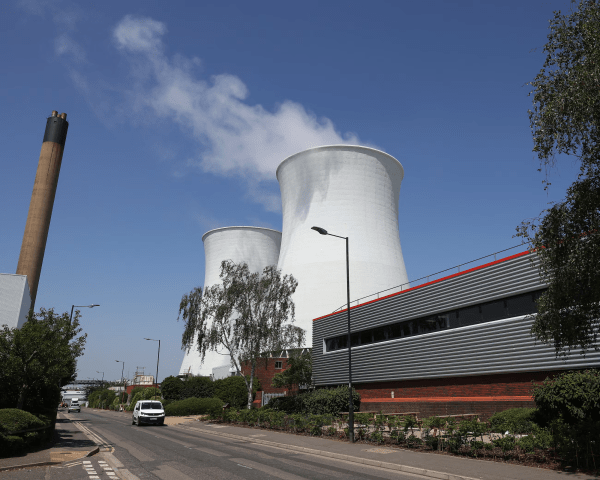
Industry says government’s failure to address cooling demands means AI growth plans are ‘fatally flawed.’
The UK will not have enough water for future datacentres, the water industry has said in stark criticism of the government’s AI growth plans.
Datacentres rely on large amounts of water to manage the heat generated by densely packed servers. Cooling towers, chillers, and humidification systems make direct use of this water, with large volumes also consumed indirectly through high electrical power needs.
Water UK, the trade body that represents water companies in Britain and Northern Ireland, said in a publicly available written briefing to MPs that the government’s water forecasts were “fatally flawed” and “explicitly exclude” datacentres.
It wrote that the government “makes not a single mention of water” in its policy for delivering AI growth zones, its AI for science strategy, or its AI opportunities action plan.
It added that the Environment Agency’s most recent national framework for water resources, published in June 2025, also failed to include an estimate of the water demands of datacentres.
“There appears to be an assumption that the country will always have enough water for its economic needs,” the briefing said. “Nothing could be further from the truth.”
In May, a House of Lords report said England faced a 5bn litre a day shortfall for public water supplies by 2055.
===============================================
Of course none of this could possibly happen here in Canada, and never in BC. Right?
Categories: Privatization, Uncategorized


Hi Norm- your recent post reminderd me of an article I just read.
Perhaps you saw it https://alexkrainer.substack.com/p/is-private-enterprise-best?publication_id=1063805&post_id=207429991&isFreemail=true&r=n60ya&triedRedirect=true
LikeLike
How crazy is too crazy?
https://thetyee.ca/Culture/2026/07/24/Cory-Doctorow-Predicts-AI-Bubble-Will-Burst/
When asked by The Tyee Mr Doctorow has 2 opinions about Data Centre Mania.
1/ AI exists in a bubble and it will crash.
2/ After the crash a new friendlier version might emerge.
A more immediate concern is that of Erin Brockovitch.
https://www.theguardian.com/environment/2026/jun/29/were-up-against-forces-that-have-all-the-money-in-the-world-erin-brockovich-on-her-battle-against-ai-datacentres
‘We’re up against forces that have all the money in the world’: Erin Brockovich on her battle against AI datacentres
In 1993, she squeezed a $333m settlement from a Californian energy company in a scandal over contaminated water. Three decades later, she has a new target in her sights – and it’s global
When Erin Brockovich woke to find 30 emails from people from the same town, she realised something was going on. People email Brockovich all the time because of what happened in 1993, when she was instrumental in suing Pacific Gas and Electric Company (PG&E) on behalf of residents of the town of Hinkley, California, whose groundwater had been contaminated. The case resulted in a settlement of $333m – then the largest ever payout for a direct-action lawsuit. When she was immortalised by Julia Roberts in the 2000 film Erin Brockovich, she became the hero we didn’t know we needed, a modern day Joan of Arc. She had won against PG&E with no formal legal training.
The emails she received a few weeks ago were about datacentres. In April, she put a callout on her website asking for anyone with concerns about one near them to get in touch. Within a month, 3,862 people had replied. Tech companies have needed datacentres to power their technology “for ever”, she says, but the new ones being built to power AI? “This feels like Hinkley on steroids.”
This isn’t a story about AI, she says. “That genie is out of the bottle: it’s here, it’s an effective tool, you can use it or not,” Brockovich says matter-of-factly. This is about the massive structures being built to house the vast computing facilities AI requires. These datacentres, she says, stretch over “hundreds and hundreds of acres”. In May, Utah gave approval to a centre twice the size of Manhattan.
Some of the emails Brockovich gets from people near datacentres express genuine bafflement: “Why did I not know about this? How did this construction just start? Why am I now getting a notice from the city council that this has already passed when I didn’t even have a voice in it?”
Others reflect concerns about the impact of the centres: “What about our resources? What’s happening to the water? Who’s paying for all this energy and am I going to foot that bill? What will the future impact on health be from these monstrosities? What’s going to happen to the wildlife?”
From the emails, Brockovich built a map of significant AI datacentres in the US that are either operational or under construction, overlaid with locations where community members have emailed in concerns. This open-source document is chilling: as of 24 June, 33 AI datacenters have been completed and are operational, 68 are under construction and 41 are proposed. And there had been 7,005 reports submitted through the online form, which is to say, all that is known about them is what people have seen. As a post on her Substack blog is headlined: “If data centers are so great, why are they being built in secret?”
Datacentre developers often enter into nondisclosure agreements with local officials, so it is not possible to see why they were approved without environmental-impact assessments or input from residents. “I am getting reports from people where their local leaders are changing zoning laws for this to happen,” she says, incredulous that anyone would bypass democracy to that degree.
She does not believe this is a story of sudden, nationwide corruption or that local governments are setting out to stonewall residents. “What I’m seeing now is that councils, having heard community responses, are trying to hit pause and they’re getting sued [by the developers] for $100m-plus. They cannot withstand that.” In one case, Hill County in Texas, county commissioners, not expecting the public outcry over a planned datacentre, voted on a year-long moratorium to halt building. The county was then sued by the developers for $100m in damages and, according to the Texas Tribune, has now backed down.
What is certain, though, is that the land cannot withstand these centres’ immense demand for water. According to analysis by the Guardian, two-thirds of planned datacentres in the US are in drought-stricken areas. The larger centres need up to 5m gallons of water a day for cooling, equivalent to the average usage of 50,000 people. It is unclear what the plan is and whose needs will take priority between AI, agriculture and everyone else.
“People are reporting bill spikes,” Brockovich says, reading an email from someone who says their monthly water bill went from $22 (£17) to more than $350 (£265). The threat of these centres is about more than money – it feels existential. “How will the water use disrupt the balance of nature? People are asking: “What will happen to us?”
========================
Larger questions remain.
Utah gave approval to a centre twice the size of Manhattan. A Data Centre equal to the size of Manhattan wasn’t enough? This makes sense? In who’s estimation?
Why spend billions in this way rather than help fellow citizens: by constructing more affordable Housing, more hospitals, more Health Care facilities, more Social Programs, more Environmental Protection, to finally reduce the cost of Food, Transportation, Education and so on?
Why not use money to make money available to make life less chaotic and more affordable? How is that course too great a risk? Or of too little benefit?
https://brockovichdatacenter.com
LikeLike