


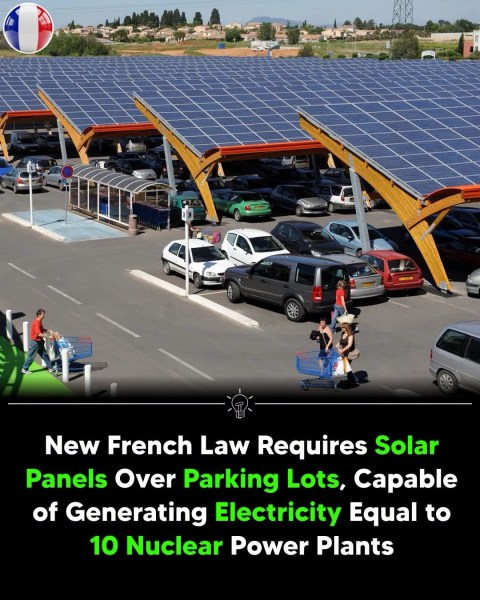
Canadians might follow the French, if the country were not so dedicated to the burning of fossil fuels.
Categories: oil and gas

Canadians might follow the French, if the country were not so dedicated to the burning of fossil fuels.
Categories: oil and gas


Once the "moral majority" decided that it didn't have any responsibility for large chunks of society, it became quite acceptable…

Impossible tasks? Build a ready-to-operate hospital in 6 days? China did it. Twice. Move ocean water to the Gobi Desert…
r Just read your link to a very detailed Richmond News report. For the NDP faithful this mindless LNG embroglio…
F Forensic audit. Under oath. Full disclosure of who granted approval of so many absurd giveaways and why any bureaucrat…

https://www.richmond-news.com/highlights/budget-error-could-cost-bc-billions-in-gas-royalties-12702159 read middle at least -wealth paragraph


A no-brainer. California has been doing this for a while. We should also carpet warehouse and big box store rooftops with solar panels. Multi purpose existing land instead of purchasing or leasing new property for a solar farm.
LikeLiked by 2 people
Geothermal Innovation?
https://www.cbc.ca/radio/quirks/former-mines-geothermal-energy-1.6720501
Dirty old mines could be a source of clean new energy
Bob McDonald’s blog: Springhill, N.S., heats several of its buildings using geothermal energy from mines
In a strange twist of irony, abandoned coal mines that once produced among the dirtiest fossil fuels are starting to be exploited for clean energy.
Water that has seeped into the mines, and has been naturally warmed by heat from the Earth’s core, can be used to provide low carbon heat and clean energy storage.
This isn’t exactly a new idea, but in our continued search for clean energy, engineers in Canada, the U.K. and several European countries are taking another look at mine water as an underutilized resource.
This is a version of geothermal energy, which has been seen as having significant potential as an alternative energy source.
The way geothermal energy typically works is by exploiting the fact that the earth gets warmer the deeper you go. Energy is harnessed by drilling into the earth, where water is circulated deep underground through a bore hole and heated. The heated water is then pumped back up, and used for warmth or for generating electricity.
Using old mines allows you to skip a step or two. The large, deep holes in the ground are already there. After mines are abandoned, water tends to naturally fill in the chambers and tunnels, and it’s heated by the Earth.
=============
OK that’s fine for places where lots of mines were abandoned but how many such candidates are there in BC?
https://farmonaut.com/mining/abandoned-gold-mines-bc-abandoned-mine-map-for-2026
British Columbia’s mining history is both extensive and storied, with abandoned gold mines BC forming a legacy that spans the province’s varied landscapes.
As of 2026, thousands of historic gold mines exist, most abandoned long before modern reclamation standards took hold.
These mines left scars—altered topography, soil and water contamination, legacy hazards—and their impact is not just a story of the past. Rather, the interaction between historic mining operations and contemporary land use—from agriculture to forestry and watershed protection—actively shapes ongoing restoration and sustainable land management strategies.
How about Alberta?
https://www.orphanwell.ca/inventory/inventory-across-alberta
======================
Repurposing abandoned mines for geothermal energy offers a win-win solution:
• Environmental Restoration: Transforming industrial sites into clean energy hubs gives them new purpose while reducing the environmental impact of their previous use.
• Energy Security: Locally sourced geothermal energy reduces dependence on imported fuels and enhances energy resilience.
• Economic Benefits: These projects create jobs in renewable energy and revitalise post-industrial communities.
https://open.canada.ca/data/en/dataset/330ec960-cc52-47d9-840b-d93470347ab4
LikeLike
Batteries? Sand Batteries?. Are you kidding?
More energy Innovation from? Finland. Why am I not surprised?
https://www.msn.com/en-ca/money/general/the-sand-battery-that-could-change-home-energy-forever/vi-AA26xRxk?ocid=winp2fptaskbarhover&cvid=6043e23f9df14c50f9b622b91223d915&cvpid=6a6616b797344bd9b7dc6759606e5153&ei=87#details
Finland’s radical answer to renewable energy’s biggest headache: The world’s largest sand battery
A small Finnish town has turned to the world’s largest commercial sand battery to tackle a major hurdle in the energy transition: intermittency.
The giant sand battery can cover almost one month of the town’s heating demands in the summer and as much as one week in the winter.
“Hopefully a big portion of those storages could be sand battery-type of storages where we don’t need rare earth materials,” Tommi Eronen, CEO of Polar Night Energy, told CNBC.
A small town in southern Finland has turned to the world’s largest commercial sand battery to fix what many see as the most critical problem facing renewable energy: intermittency.
Standing at 13 meters tall and 15 meters wide, the eye-catching facility uses 2,000 metric tons of crushed soapstone to store clean energy in the form of heat to provide 100 megawatt-hours of thermal energy.
That’s enough to provide the 5,000 residents of Pornainen with nearly one month of heat demand through the summer — and roughly one week of demand in the winter.
Commissioned by Finnish district heating company Loviisan Lämpö and developed by Polar Night Energy, the giant sand battery launched last year as part of a push to introduce a flexible heat production technology and reduce carbon emissions generated by the local district heating network.
Polar Night Energy said the project is estimated to have slashed greenhouse gas emissions from the heating network by almost 70% and reduced the use of wood chips by about 60%. An existing wood-chip power plant remains in operation as a backup and peak-load facility.
=====================
https://www.pv-magazine.com/2025/05/01/polar-night-energy-to-build-second-power-to-heat-to-power-sand-battery-in-finland/
Polar Night Energy will build a second pilot plant in southern Finland to test its power-to-heat-to-power sand battery technology. The project aims to demonstrate the system’s ability to reconvert stored heat into electricity.
Finnish startup Polar Night Energy has announced a new pilot project that will test the next generation of its sand battery technology.
The sand battery pilot plant will build on the company’s existing technology, which stores thermal energy for industrial or district heating, and will be capable of converting the stored thermal energy back into electricity, a process known as power-to-heat-to-power (P2H2P).
The project will be built in Valkeakoski, southern Finland, in collaboration with Valkeakosken Energia, an energy company owned by the city. Construction is due to begin in autumn this year. The site will feature a thermal energy storage unit and technical building covering nearly the entire plot.
A statement from Polar Night Energy said the project will operate at significantly higher temperatures than current sand batteries used for heat production. It adds that achieving these higher temperatures and overcoming related material technology challenges are key goals for the project, which will run through early 2027.
=====================
LikeLike
It’s that big bad Global Warming hoax-thing, isn’t it?
How else can you explain what they’re doing to fish in France?? As in? Rescuing them?
https://www.theguardian.com/world/2026/jul/25/france-rivers-heatwaves-water-levels-drop
Fish being moved to oxygenated flowing water further downstream as water levels drop across country
Along the Odet River in Brittany, fisher Mathieu Le Bouter and a dozen volunteers are catching hundreds of trout and young salmon – not for sport but to save them.
They are only a few miles from the source of the river, which springs from the Black Mountains in Finistère and runs for about 40 miles (65km) into the Atlantic Ocean, but the water is barely up to their knees.
“The situation is catastrophic, far worse than we thought,” said Le Bouter, of the Finistère fishing federation. Once they catch the fish, he and his team transfer them to tanks of oxygenated water then release them 10 or 12 miles downstream where the rivers are joined by tributaries, raising the water level.
“The fish are under a great deal of stress. When you combine very high temperatures with low levels of dissolved oxygen, problems arise,” Le Bouter said.
“What’s really scaring us is that the 10-day forecast suggests there won’t be any rain, and temperatures will generally be high. The fish, particularly trout and young salmon, need water with a current and oxygen, so these conditions become lethal for them.”
While the fires raging across forests in France are a dramatic reminder of three successive heatwaves in as many months, the state of the country’s rivers provides another, no less worrying insight into the impact of extreme heat supercharged by the climate crisis.
The Loire, France’s longest river, is at a historical low, with the flow of some branches, including through the city of Orléans, reduced to a trickle between sandbanks. Two weeks ago, 16% of French rivers were reported to have dried up. A quarter of small streams were stagnant or had disappeared altogether, according to the national low water observatory. There has been little rain since.
….Incredible.
LikeLike