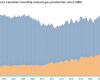

Canadian politicians have been spending tens of billions of public dollars to accelerate fossil fuel production. Along with oil and gas executives, they are collectively guilty of committing and plotting homicide.
Gwen and I raised three adult children in North Vancouver. Each lives in this community, as do our seven grandchildren. Before retirement, I worked in accounting and small business management. Since 2009, I have published commentary about public issues at IN-SIGHTS.CA.
Canadian politicians have been spending tens of billions of public dollars to accelerate fossil fuel production. Along with oil and gas executives, they are collectively guilty of committing and plotting homicide.
Before British Columbia’s 2017 general election, a person who would be appointed to a senior position in John Horgan’s cabinet indicated that Site C would not be cancelled. He asked, “Would you eliminate 3,000 jobs?” Months of political theatre followed, directed by Horgan et all, until December 2017 when BC NDP removed all pretense that the megaproject was under review. It turns out the answer to the politician’s question should have been, “Cancel Site C and create more jobs throughout the province.”
Provincial and federal politicians talk about Canada being carbon neutral at some distant time, but continue using direct and indirect subsidies to promote higher production of fossil fuels. They pretend that this country’s oil, gas, and coal may impact global climate if consumed here, but will not if burned elsewhere.
To avoid the worst impacts of climate change, we have to make two big transitions at once: First, we have to generate all of our electricity from clean sources, like wind turbines and solar panels, rather than power plants that run on coal and methane gas. Second, we have to retool nearly everything else that burns oil and gas — like cars, buses and furnaces that heat buildings — to run on that clean electricity.
A Bloomberg headline too consequential to ignore: European Power Prices Plunge Below Zero as Solar Output Booms. Had British Columbia committed to wind and solar power eight years ago, it could be experiencing the same low cost energy. . .
“It’s no coincidence that the cities we most associate with violence also have long and documented histories of police abuse. When people don’t trust law enforcement, they stop cooperating and resolve disputes in other ways. Instead of fighting to retain police officers who feel threatened by accountability and perpetuate that distrust, cities might consider just letting them leave.”
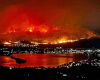
Areas burned by wildfires in British Columbia have been steadily increasing, and with months remaining in fire season, this year’s destruction by fire is already more than double the average of the ten preceding years.
Turns out that people are like governments that are willing to moderate climate risks, but only if actions are not painful. Seems that cartoonist Walt Kelly was correct when he wrote for Earth Day 1970, “We have met the enemy and he is us.”
According to analysis by Oxfam published in 2023, wealthy Group of Seven (G7) countries owe low- and middle-income countries $13.3 trillion in unpaid aid and funding for climate action.
If we choose to enrich our lives in the present at the cost of the quality of life of future generations, that is a choice of values that we rarely like to make explicitly. We have to be willing to look in the mirror and say that we are willing to live our lives selfishly, without regard to the lives of our children and grandchildren. And if we are not willing to own that selfish value, then we have to make a change in our behavior today.
British Columbia’s government searched the world for options before settling on a climate plan acceptable to the province’s oil and gas industry. A creative solution was found in a report by Australian satirical news source The Shovel. The original article is reproduced here.
I review an article by The Tyee’s senior editor Paul Willcocks, wherein he gave a failing grade to BC Conservatives after an obnoxious couple disrupted a schoolyard event involving 9-year-olds. That led me to think about why anti-democratic people support dominance and hierarchy and embrace the concept of superiority and inferiority among humans.
The Donnie Creek wildfire, having now scorched more than 1.3 million acres, is burning in one of the world’s biggest fossil gas deposits. The Narwhal reporter Sarah Cox believes this raises questions about potential dangers to human health. And, of course, we cannot forget the wood pellet industry is converting BC forests from carbon sinks to carbon emitters.
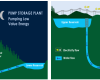
Arguments claiming impracticability of wind and solar power integration in British Columbia never passed scrutiny. Elsewhere in the world, it has been happening rapidly. Days ago, BC NDP announced a new call for clean power. No important details were provided but it seems government will replicate the insider-friendly private power program favoured by BC Liberals. That resulted in commitments for power that lasted as long as 70 years at prices that have been multiples of market price. The province should not go that way again.
A whistle blows and another train rumbles through White Rock, headed toward the Roberts Bank coal export dock. This one is carrying thermal coal from Montana, bound for a massive power plant, perhaps in Korea. As the train rolls through Delta, black clouds of coal dust billow from the open rail cars, irritating asthmatics and coating farmers’ crops. . .
Fiction and invention are handy tools for politicians. Legacy media often repeats lies with minimal or no fact checking, although perhaps with opposing comments added to suggest balance. That process gives the same standing to false or unsupported claims as it does to well-accepted facts. After Pierre Poilievre released a video taken in a Toronto subway station, Globe and Mail columnist Gary Mason wrote an incisive opinion piece that skewers the Convoy Party of Canada leader, a man who wants to be Prime Minister. Mason’s commentary is worth sharing widely. . .
Progressive punishment is not enough to regulate behaviour when an offender has extraordinary wealth. To a corporation like Teck Resources Ltd. — market capitalization $29 billion — inconsequential fines are minor costs of doing business. A $1 million penalty imposed on Teck corresponds to a fine of $11 levied on a household holding Canada’s median net worth, reported at $329,900 by Statistics Canada in 2019.
Robert Reich is an American economist, professor, author, and political commentator who has been quoted here before. His May 5 newsletter discusses why corporations have so much power and workers have so little. While specifically about the USA, Reich’s words apply similarly to Canada. Reich notes indisputable trends and, if these continue, they ensure growing inequality, which, taken to extremes, has led to civil unrest throughout history. . . .
The Professional Institute of the Public Service of Canada (PIPSC), an organization that represents about 12,000 tax professionals at Canada Revenue Agency says it clearly: “Wealthy corporations and the ultra-rich don’t pay their fair share.”
Canada’s largest newspaper chain promotes climate change denial and works to elect right-wing politicians, even Danielle Smith who a Postmedia columnist said was surrounded by “guaranteed chaos.”
Unfortunately, about 130 million Americans support Trump according to major polling organizations. That's particularly scary and reminds us of a…