In the Times Colonist, Les Leyne reacted to a recent BC Hydro report about Site C: B.C. Hydro has written the blandest, most blameless account possible. When it comes to burying a […]
Thanks to RanD Hadland at Facebook’s Say “NO” to Site “C” Dam! for drawing my attention to a recent Vaughn Palmer column. The Sun’s pundit mentions BC Hydro’s “pathetic” excuse making when justifying incompetent management of the Site C project…
Regarding Hydro boss Mr Clark’s odd and unsubstantiated assertions that geothermal is just “too expensive”? Says who? Where? In what scientific context? Enhanced geothermal systems: An underground tech surfaces as a serious […]
Always articulate and thoughtful reader Lew Edwardson left a comment on the IN-SIGHTS article THE HEAT BENEATH OUR FEET. I think it needs to be amplified. Drought in northeast BC continues to be a problem. If the situation of FY 2024 continues, Site C will produce about 3,350 GWh, not the promised 5,100. These numbers suggest the dam’s capital cost for each MWh of electricity produced would fall between $142 and $215. Of course, the utility incurs operating and overhead costs as well. Those would be around $30 per MWh. At the midpoint between those numbers, BC Hydro would be paying over 20 cents per KWh for Site C electricity, far more than the utility is willing to admit.
The cost of electricity produced with solar and wind technologies has been declining for 15 years. Because of corporate inertia, BC Hydro has been paying little attention. The company has focused on reliable delivery of energy but has been reluctant to alter its sources of electricity. The company even celebrates the fact, advertising, “We’re powered by water.” That line is still used even though water shortages have required the utility to import electricity from gas-fired generators in Alberta and the USA.
I was first introduced to now-retired economist Erik Andersen by lawyer / commentator / broadcaster Rafe Mair. Using his professional experience, Erik analyzes several economic subjects. His recent comment about BC Hydro caught my attention.
The 12 directors are drawn exclusively from the business sector. Resource extraction companies, including coal miners, are particularly well-represented. So too are large construction and engineering companies. This may explain BC Hydro’s resistance to the idea that conserving energy is better than making energy. Residential consumers provide more revenue to BC Hydro than any other group, but that is not reflected by board appointments. Perhaps the government thinks a person primarily concerned with ratepayers would have a conflict of interest. However, there appears to be no concern that directors involved with extractive industries in remote regions might have conflicting interests.
In a recent piece, I demonstrated that successive British Columbia governments have seriously reduced the public share of the value of natural gas produced in the province. Now, there is evidence of more hidden subsidies to fossil fuel producers and processors…
IEA says energy efficiency provides some of the quickest and most cost-effective CO2 mitigation options while lowering energy bills and strengthening energy security. Because the immediate benefits of efficiency go to individual consumers, vested interests that influence public policy discourage that approach. These groups know there are far more financial rewards gained from increasing energy supply than by conserving energy.
After the IN-SIGHTS article BC Hydro second quarter report, fiscal year 2025, retired economist Erik Andersen provided the following…
BC Hydro waited until the last days allowed by law to release the utility’s second-quarter report for the fiscal year ending March 2025. The utility’s financial reports show politicians consciously misinform the public about BC’s need for electricity…
So BC Hydro plans to spend $57 billion over the next decade to meet what CEO Chris O’Riley and NDP Minister Josie Osborne say is a rapidly growing demand for electricity. For years, the utility has claimed that electricity demand is increasing by 40 percent over 20 years. That rise is 1.8 percent annually compounded, equal to the rate of BC’s population growth in the last ten years. This month, BC Hydro raised its demand forecast growth by more than one-half. The actual sales numbers do not live up to the forecasts…
In 2001, BC’s party of big business was called Liberal; in 2024, it is labeled Conservative. Different names; same purposes. Some voters in the October election were not even born when the right-wing coalition took power in BC. As a result, I offer this reminder of the BC Rail scandal and explain how that affected BC Hydro.
Beware of what you read about BC Hydro in news sites operating to benefit those who aim to privatize billions of public dollars. One example is a Derrick Penner article published by Postmedia. The Vancouver Sun headline screams that BC Hydro cannot deliver the electricity this province needs. The source of that claim is a group funded by private industry, a group that promotes unregulated private business and works to undermine BC’s main public utility…
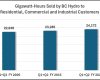
Three days after the final date allowed by law for making public its Annual Service Plan, BC Hydro made the document available on its website. Electricity sales to residential, commercial and industrial customers in fiscal year 2024 were 0.34% higher than in FY 2023, and 8.45% more than 20 years before. Observers may have noted that for many years, BC Hydro has been predicting 40% growth in 20 years.
There are many good journalists working in corporate media today. But, lack of resources stifles their work. At times, news people simply accept press releases as accurate and report the contents without close examination…
Many readers of IN-SIGHTS examine public issues with great care and email private comments to me along with links to worthwhile material. What follows comes from a paper sent to me by a long-time follower North Van’s Grumps, fellow blogger at Blog Borg Collective. The complete paper shown below is authored by the late Dr. Karen Bakker of UBC and Richard Hendriks from University of Toronto’s Civil and Mineral Engineering faculty…
This item, contributed by a reader, comments upon BC Hydro now offering a ten to fifteen billion dollar commitment to private power producers. This continues Gordon Campbell’s aim of twenty years ago: PRIVATIZATION BY STEALTH.
Tell The Dam Truth (TTDT) is a California based non-profit with initial funding from outdoor clothing retailer Patagonia. TTDT’s aim is to protect and restore free-flowing rivers by educating people about the impacts of river-destroying projects. The group promotes decommissioning of existing dams.
After forecasting 40 percent growth over 20 years, BC Hydro has been spending billions of dollars. But the utility’s sales to residential, commercial and industrial customers in calendar year 2023 were a mere one percent higher than in 2007.
A replay of 1939, I am afraid.