
Category: Power Generation

Record growth in European solar photovoltaic, but not in B.C.

The cost of electricity produced with solar and wind technologies has been declining for 15 years. Because of corporate inertia, BC Hydro has been paying little attention. The company has focused on reliable delivery of energy but has been reluctant to alter its sources of electricity. The company even celebrates the fact, advertising, “We’re powered by water.” That line is still used even though water shortages have required the utility to import electricity from gas-fired generators in Alberta and the USA.


We have a problem; we have the right solutions

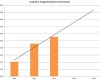
British Columbia has been reliant on hydroelectricity for generations. However, climate change is threatening that supply. Persistent dry conditions have become a reality. BC Hydro has spent tens of millions of dollars to add capacity and upgrade generating equipment at its hydroelectric dams. But this 28 year record reveals a problem. The output per MW of capacity was 54% higher in fiscal year 1997 than in FY 2024.

Dam lies

Mark Jaccard, recently appointed Chair and CEO of the BC Utilities Commission, argued in 2017 for Site C, when BC could have stopped the project and saved about $15 billion. Jaccard said that supporters of other renewables did not account for dispatchability, which he claimed was a key obstacle to using alternatives. People expecting their pockets to bulge from the Site C megaproject told us that less destructive energy sources were unworkable in British Columbia. The world has proven them wrong…

Carbon-free, non-destructive energy

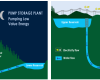
A pumped-storage hydroelectricity (PSH) facility moves water into a high-level reservoir during times of low demand, and then generates electricity by releasing water during times of high demand. Most storage occurs at night and most electricity is generated during the day. PSH is a proven method of energy storage with competitive round-trip efficiency and long life spans.

BC energy policies based on myths and misinformation

Arguments claiming impracticability of wind and solar power integration in British Columbia never passed scrutiny. Elsewhere in the world, it has been happening rapidly. Days ago, BC NDP announced a new call for clean power. No important details were provided but it seems government will replicate the insider-friendly private power program favoured by BC Liberals. That resulted in commitments for power that lasted as long as 70 years at prices that have been multiples of market price. The province should not go that way again.

Private profits but public risks – Updated

Commercialization of small-scale nuclear power has turned out to be far more difficult than investors expected a decade ago. Even one of the world’s richest entrepreneurs cannot finance a multi-billion-dollar program with an uncertain future. Nuclear may play a role in the 2030s but solar, wind and geothermal are viable power sources today…

Run of river, or ruin of river?

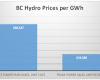
In the three months ended December 31, 2015, BC Hydro BOUGHT 3,719 GWh from private electricity producers at an average price of $91,422 per GWh (total $340 million). In the same quarter, BC Hydro SOLD 3,493 GWh to heavy industry at an average price of $54,394 per GWh (total $190 million). Liberals claim themselves to be wise managers of public finances.

Reward without risk for worthless surplus power

British Columbia’s government believes less in free enterprise than in assisted activities for approved associates. Entrepreneurs saw potential for a private power generation industry in the province but didn’t want to risk their own money. Instead, they arranged with the Liberal government for the public to accept all risks and guarantee substantial profits to the schemers…

Unparalleled, indeed

How fortunate (sarcasm alert) that British Columbia had a government determined to spend big dollars to increase exports to American markets for electricity. Lucky too that Liberals had the full support of business leaders and a courageous corporate press willing to stand with the government and call out naysayers who thought it was a mistake to commit tens of billions more to insure private power producers against business risks.