



Optimists assert that the benefits from technological innovation will be able to outpace the negative effects of climate change. This view of climate change may be a dangerous act of self deception…
Reward the wealthy, fail the needy
It is often said that we are unable to pay for healthcare (including dentistry and prescriptions) and other social programs. But, political leaders seldom say that business subsidies and corporate tax reductions are unaffordable. Why do the majority of Canadians tolerate a system that rewards the wealthy and fails to serve the needy?
Rhetoric subjugated reason
In British Columbia, the energy ministry is staffed by regulators who don’t believe in regulation. That is a BC Liberal philosophy sustained by NDP timidity because the Horgan Government is nervous about giving ammunition to opponents who accuse it of being anti-business, anti-development and anti-growth. As a result, cartelized, profit-seeking natural gas producers still exercise undue influence over the energy ministry…
Generational sellout
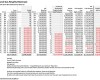
Green Party leader Andrew Weaver spoke to the BC Legislature March 26, 2019. He reported a former insider’s views of why BC natural gas royalty revenues have declined. These were in a letter written by a former civil servant who worked in the oil and gas provincial registry. NDP, Liberals, and corporate media paid almost no attention to Weaver’s speech. Natural resource taxation programs are complex and understanding is difficult because the NDP continues Liberal policies of less-than-transparent public-facing information.
Wacky world of minimum wages
Increasing income of the working poor ensures that extra dollars are spent in local communities on things like food, clothing, medical and dental care, and housing. According to a University of California report, higher minimum wages reduce poverty rates among households and children, without affecting employment levels. To most of us, that is an admirable outcome…
Empires expand, until they disintegrate

BC Hydro’s 2019 Annual Service Plan Report shows the quantity of electricity sold to residential, commercial and industrial customers in BC is still flat. The value of 2019 sales is increased by BC Hydro’s $1.2 billion purchase of Teck’s majority interest in the Waneta dam, a generating site on the Columbia River southeast of Trail. Power produced at Waneta still goes to Teck but, since the dam is now 100% publicly owned, all electricity produced there becomes a BC Hydro sale…
“We are profoundly ignorant about what is going on”
I question why we allow fracking while there are significant knowledge gaps about safety. Authorities will not approve anyone to command flight controls of a loaded aircraft without certainty that person is proven capable of flying safely. In the production of BC natural gas, authorities have been unwilling to discover and accept sscience that suggests fracking is dangerous to workers, residents in gas producing areas and to the earth itself…
New Era of Truthfulness at BC Hydro?
In BC Hydro’s most recent annual report, the company promised “one of the largest expansions of electrical infrastructure in British Columbia’s history.” To gain approval for massive spending, BC Hydro doctored load forecasts, issuing a steady stream of pronouncements about demand increases…
They won; we lost
Financial elites have waged a decades-long campaign of self-interest against Canadians. They won; we lost. The most important front has been action to control mass media and reduce the influence of progressive voices heard by the general public…
Privatizing public wealth
In July 2018, newly installed Premier Doug Ford announced that noted ex-con and former BC Premier Gordon Campbell would lead an “independent” inquiry into Ontario’s past spending and accounting practices. Six weeks later, the commission delivered a short report that was obviously not written or much influenced by Gordon Campbell. It recommended approaches that Campbell was loath to implement when he presided at his own cabinet table.
Natural gas revenues: going, going, almost gone
In 2008, British Columbia gained $3.2 billion from sale of petroleum and natural gas rights. If the second half of 2019 matches the first, revenue from right offerings for the year will amount to $5 million, less than 1/5 of one percent of 2008, despite substantially increased production of natural gas.
North Vancouver District Policy Proposal
THAT staff is directed to prepare a policy that will require members of Council to declare before voting on any development proposal, campaign contributions knowingly received from the applicant, or from individuals associated with the applicant, and that members of Council are encouraged to recuse themselves where such a declaration is made;
For the times they are a-changin’
Today, British Columbia is far richer than fifty years ago but that wealth is distributed much differently. As a result, despair is widespread, homelessness grows, thousands die each year from drug abuse, more than one hundred die by homicide. Uncounted humans are wasted. Our current provincial government is searching for answers but influential citizens in this province are more than satisfied with the status quo. As John Kenneth Galbraith said, they are searching “for a superior moral justification for selfishness.”
Liberal rebrand: Hypocrisy ‘R’ Us
For years, BC Liberals relied on millions of dollars contributed by a relative handful of wealthy donors, many based outside the province. Along with developers hungry to acquire public lands below market […]
Loyalty matters
Trust, communication and cooperation are vital elements in a workplace, particularly when staff is small, financial stakes high, and tasks important. But, what happens when trust is broken and wrongdoing discovered? Well, […]
Grand scale giveaway
Why the NDP has decided to fight teachers and not the fossil fuel industry is a mystery to me. The volume of BC natural gas production has increased substantially in the 21st century but public revenues have declined to almost immaterial amounts.
Vaughn Palmer, noted engineer and road-builder
Today, a poll from Mario Canseco’s Research Co. reported, “The governing New Democratic Party (NDP) is the top choice in British Columbia’s current political landscape…” This might explain why some scribblers in the Press Gallery are focused on rebuilding the BC Liberal brand.
Wrongdoing? Nevermind!
If your house is burglarized and cherished possessions stolen, don’t call police. Cost of an investigation is likely more than the cash value of items stolen. That’s might be the advice you’d receive from a Liberal member of the BC Press Gallery…
Hypocrisy
Until a 2017 statute deterred corporate contributions to politicians, BC Liberals took in millions from radical activists with deep pockets. These were the foreign shareholders and financiers of large corporations doing business in this province.
Path of destruction
I’ve argued on this website that BC Hydro’s ratepayers are victims of corporate inertia. The company continues to do what it properly did for its first 45 years. Unfortunately, now 58 years old, the company’s failure to adapt puts it on a path of destruction.


 in-sights.ca
[…] If David Eby’s government supported or acquired the Hecate Strait project planned by Oceanic Wind Energy Inc., power could…