



In 2014, the BC Government issued a press release titled Growing demand for electricity. The statement estimated provincial population would grow by 20 percent over 20 years. The assumption was that BC would need a similar increase in electricity supply.
The main purpose of the press release was to convince people that demand for electricity was growing significantly. Despite a promise to meet most new electricity needs through conservation and efficiency initiatives, public officials said their “conservative” estimate was for demand growth of about one percent per year. Later, BC Hydro doubled the growth estimate.
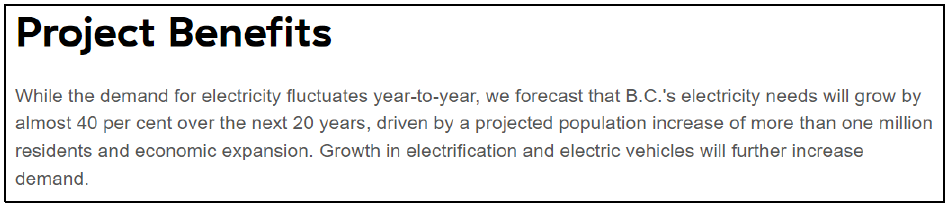
In fact, population grew by twice the expected 400,000. One might assume demand from BC Hydro would be even larger than predicted. But that is not true. Politicians offered unscientific justifications for expected increases:
As our population grows, we are also using more power than ever before because of devices like smartphones and big screen TVs, and emerging technologies like electric vehicles.
Officials forgot to account for huge reductions in power used by modern motors, appliances, and lighting. They seemed unaware that smartphones use very little electricity and large flat screen TVs consume about one-third the power of old CRT televisions. Forgotten was elasticity of demand. When a commodity price rises, consumers typically reduce purchases of that commodity.
With BC Hydro having just released its quarterly report to September 2023, we can compare consumption statistics for nine months of 2023 to the same nine months of 2014, the time when government’s referenced press release was issued.
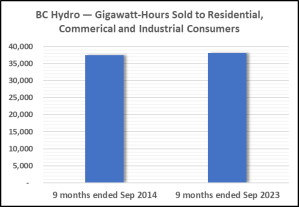
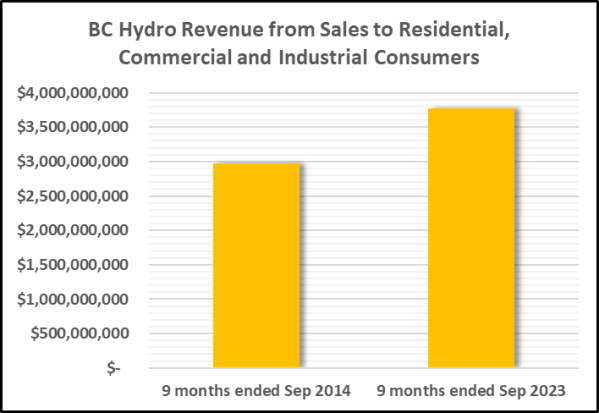
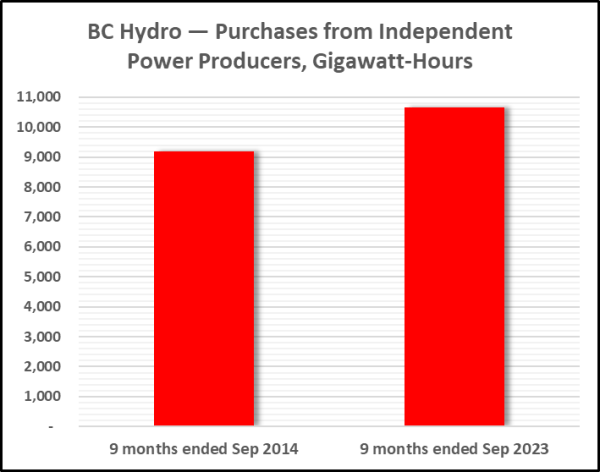
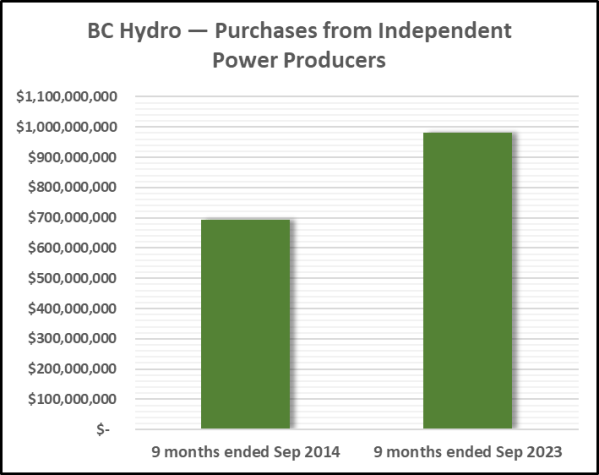
The increase in reported sales was 561 GWh, or 1.5 percent after nine years. However, purchases from Independent Power Producers increased 1,490 GWh, so BC Hydro needed less electricity from its own resources. IPP purchases cost far more than the utility’s self-generated power and more than the utility has earned by exporting surplus power.
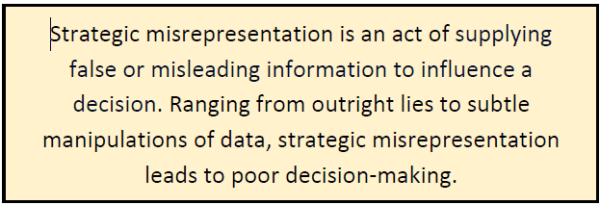
So, who has been responsible for strategic misrepresentations that damage BC Hydro?
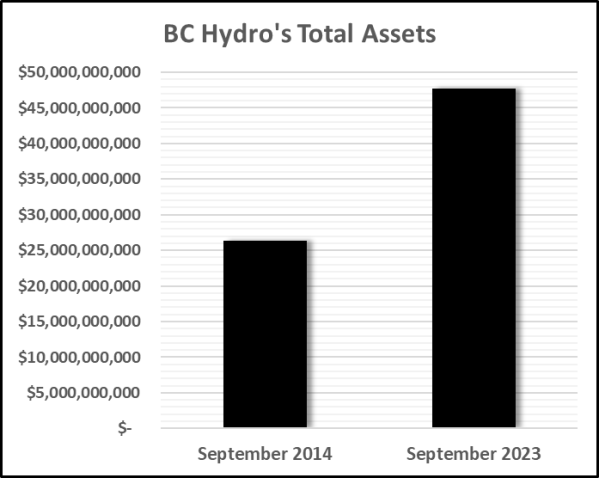
Government Ministers and MLAs are driven by love of megaprojects, but they may also have experienced the Dunning-Kruger effect. They were educated by deceptive executives and experts who expected to gain material sums from BC Hydro expansion. The latter group has been successful, perhaps beyond their own expectations.

As the public utility expanded wildly, this was given little attention because corporate media has avoided any real scrutiny of BC Hydro operations. Without oversight by competent journalists, public accountability suffers.
Note: The data reported here is taken from annual and quarterly reports issued by BC Hydro.
If you find value in posts and dialogue at IN-SIGHTS.CA, please consider financial support. It is a simple process explained HERE.
Categories: BC Hydro


 in-sights.ca
(Please correct me if I’ve misunderstood, Norm. I don’t have your exact numbers to work with… but I think I’m in the ballpark.)
Your charts say that BC IPPs produced 9,177 GWh of power for BC consumers in 3/4 of 2014 — and 10,667 GWh in the same timeframe of 2023. That rounds to a 16% increase.
Meanwhile, we saw 2014’s payments of $693 million grow to $980 million this year… a 41% increase. Take out the 16% that covers the increase in volume and they’ve gained 25% in inflation protection over nine years. Inflation cushions were built into the contracts.
The Bank of Canada says inflation rose by almost 26% over that time frame, so the IPPs’ loss protection has been rock solid… backed by BC Hydro ratepayers. https://www.bankofcanada.ca/rates/related/inflation-calculator/
Is it possible to separate out the $ per GWh that Hydro is producing by itself, to compare to the $ per GWh for the IPPs?
LikeLike
BC Hydro does not publish the direct costs of power from its various generating facilities. Since these were mostly constructed years ago, energy from “legacy” dams is low, probably in the range of one-quarter of IPP purchases. Both public and private power result in material distribution and administration expenses that add to direct costs.
In the fiscal year ended March 2023, BC Hydro reported energy from IPPs cost $92,220 per GWh and the company’s own power cost $7,900 per GWh. However, the internal amount excludes capital costs that would bring the price above $20,000 per GWh.
No doubt BC Hydro has more detailed cost accounting available. It chooses not to publish this information.
LikeLike
Does anyone know the unused capacity of current “independent” power producers in British Columbia?
LikeLike
Because BC Hydro’s contracts with IPPs remain secret, we don’t know the applicable terms. Is BCH required to take all power a private facility can generate? Who knows. I suspect they sell everything produced from the capacity agreed to with the public utility. But given the opaque nature of the contracts that lead to payments of close to $1.5 billion a year, we’re left ignorant.
Sunshine laws require transparency and disclosure in government and crown corporations. In BC, the sun does not always shine.
LikeLike
Why is everyone so surprised? It is how we built rapid transit form the past 40 years!
LikeLike
Why to people expect logic to prevail? The BCUC is beholden to the energy industry. Big money wants to own monopolies. BC Hydro is a monopoly. Create indebtedness is the operating plan of those who desire ownership. BC Hydro has obliged but the folks in Victoria have yet to figure this out.
Colonies were created to provide the mother nation with needed commodities at the lowest possible cost because that was what colonies are for. NERC is a relevant demonstration of this reality
LikeLike
The problem with your statement is that it was not the UK which benefited from BC, rather the USA. Fact is, most major investments in the province from the late 1800’s til now were/are from American interests.
LikeLike
All I can remember about the IPP run of the river projects was that B.C. Hydro were to buy electrcity at 12 cents a kw and then sell it to us for 3 cents. didn’t make sense then and doesn’t make sense then. about the only ones making money would be the IPPs and any one receiving kick backs.
Lets see if B.C. Hydro started this non reporting during the B.C. Lieberal era why are the NDP continuiing with it. Is there some law which says B.C. Hydro isn’t permitted to reveal what goes on at Hydro.
the chart certainly explains there is a lot of money floating around. When WAC expropriated B.C. Electric and re named it B.C. Hydro were there any documents which stipulated information could not be accessed by citizens orr did some one pull a B.c.Ferries with Hydro so we donn’t get to see much of anything.
LikeLike