



Many self-interested people told us that non-destructive alternatives to hydropower would not work in British Columbia. These, they said, were unreliable and could not always send power to the grid on demand. Dispatchability was key, according to pseudo experts. This despite BC Hydro having reservoirs that act like giant batteries.
Both Liberal and NDP MLAs believed the megaproject offered political benefits, and politics always outrank prudent financial management.
The Guardian described how Uruguay, led by particle physicist Ramón Méndez Galain, installed about 50 windfarms across his country, decarbonised the grid and bolstered its hydropower.
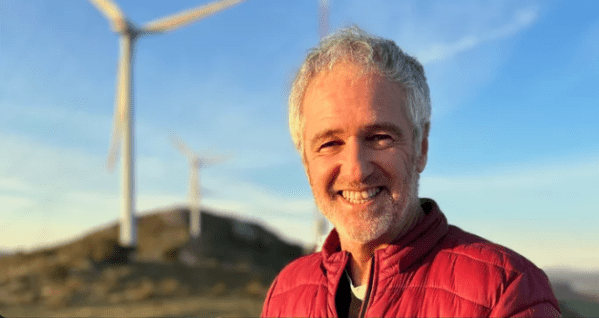
The biggest challenge, however, was to change the “narrative” about renewables. Back then, sustainable energies were still surrounded by many misconceptions, says Galain: they were too expensive, too intermittent or would raise unemployment – and changing these stories proved vital to getting buy-in from all levels of society.
“No one believed we could do it. We needed new solutions. We needed to do things differently,” he says. “Today, even members of that cabinet say to me: ‘When you were saying those things on TV in 2008, we were thinking, how are we going to explain this when we fail?“
Galain says there needed to be a “strong national narrative” to make it work. “I told people this was the best option even if they don’t believe climate change exists. It’s the cheapest [option available.]”
With that narrative, the government set about winning over a sceptical populace. One initial concern was that jobs would be lost in the energy sector. Instead, about 50,000 new jobs were created – a large number in a country with such a small population. The idea of a “just transition”, in which nobody was left behind, became central, and some workers were offered places on retraining schemes to adapt to the new normal.
The Guardian: Uruguay’s green power revolution: rapid shift to wind shows the world how it’s done
Méndez Galain used his scientific training to find a solution to Uruguay’s energy problem. A 2023 paper by Brazilian academics says:
Uruguay achieved something that at one point seemed “unimaginable”, in just over a decade it transformed itself from a country with a purely hydrothermal grid, which did not have any MW of wind power, to become a country with the highest proportion of electricity generated from wind sources in Latin America and one of the main in the world in percentage terms.
Uruguay’s per capita GDP is less than one-third of British Columbia’s so Méndez Galain could not spend billions of dollars building publicly owned windfarms. The country had to rely on private capital. It was forced into a position that British Columbia took voluntarily when BC Hydro contracted to buy private power.
However, the South American nation smartly relied on fixed-price contracts for 20 years. BC Hydro’s private power deals last as long as 75 years, each inflation-protected. Annual price escalators ensure that IPP profits and financial pain for BC consumers both grow steadily.
But we must remember that the $20 billion megaproject near Fort St. John was never about creating electricity for the least cost. It was about politics, corporate inertia, salaries and fees for executives and putative experts, but most of all, it was about privatizing public money.
If you find value in posts and dialogue at advertising-free IN-SIGHTS.CA, please consider financial support. Significant annual payments for site hosting and subscriptions for software and news sources are looming. Supporting this work is a straightforward process explained HERE.


 in-sights.ca
And you forgot, site C was about union jobs, the mantra of the current Vision Vancouver Provincial Party.
LikeLike
BC produces bullshit jobs for bullshit projects. TMX, Site C and Coastal Gaslink are all economically unviable. The problem with TMX and Site C is that citizens are on the hook for the losses.
LikeLike
is geothermal in BC banned?
LikeLike
The BC Government acknowledges geothermal as a potential energy source. It has chosen not to spend money to develop this technology, preferring instead to invest billions in fossil fuels. A provincial government website does provide a geothermal resource map but it was first published 32 years ago. I think that best illustrates the level of interest in the current NDP government.
I wrote about geothermal in October: Boundless, scalable, clean energy
LikeLike