



I write often about climate change and tend toward pessimism about humankind’s efforts to avoid disaster. But there are good stories that show progress. Will they be enough? Only if we have the will to go against powerful vested interests and take action to implement 21st century technologies.
Renew Economy, a site for clean energy news and analysis, reported today that South Australia averages 71 percent wind and solar and 82 percent over the last quarter. The biggest battery in the South Australia market was operating at full tilt on Wednesday night, and battery output overall hit a new peak. Contributions of coal and gas powered generating stations are in decline.
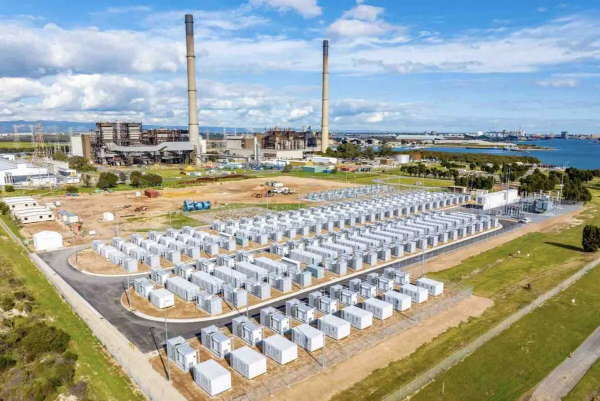
In South Australia, rooftop solar accounted for around 65 percent of demand. It has, on occasion, produced the equivalent of all local demand in the state, with surplus large-scale solar or wind being exported. Battery storage is playing a growing role in storing excess wind and solar and feeding that power back into the grid in the evening peak periods.
Another Australian website reported recently that the world’s largest battery storage maker will reduce the cost per kWh of its lithium iron phosphate (LFP) cells by a stunning 50 percent by mid 2024,
Tony Seba was laughed at when he predicted that low cost electric cars would disrupt the new car market by 2030. Seba also said that autonomous EVs will result in transport-as-a-service costing so little that people will choose not to own and operate their own vehicles.
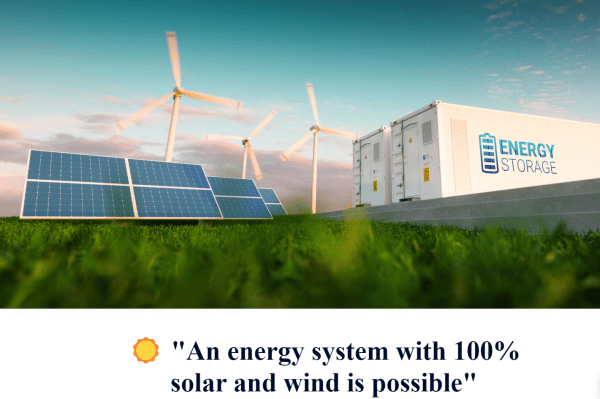
Seba stated that a 100 percent solar-wind-battery energy system is not only possible but is the cheapest possible energy system.
Portland General Electric, the utility serving Portland, Oregon, announced in April that it is putting in the second-largest battery storage installation in the United States, at 400 MW of power. The type of project solves the dispatchability problem presented by wind and solar power.
Vistra has completed the 350-megawatt/1,400-megawatt-hour Phase III expansion of its Moss Landing Energy Storage Facility in California, bringing its total capacity to 750 MW/3,000 MWh, the largest of its kind in the world.
Energy markets are working towards a zero-carbon future, and battery energy storage systems (BESS) have emerged as a pivotal technology that can be used across the energy landscape. This drives innovation and investment, with nearly 90% of all new battery patent activity focused on electricity storage.
A March 26 webinar will explore the lifecycle of a BESS (battery energy storage system) company from ideation to gigafactory. This is not science fiction; it can be done today.
British researchers have discovered a solid material that rapidly conducts lithium ions. Consisting of non-toxic earth-abundant elements, the new material has high enough Li ion conductivity to replace the liquid electrolytes in current Li ion battery technology, improving safety and energy capacity.
Korean researchers created a high-energy-density Li-ion battery system using micro silicon particles and gel polymer electrolytes. They believe EVs using these batteries will go 1,000 km on a single charge:
Researchers in California are working on lithium-sulfur batteries that could store five to 10 times more energy than current state-of-the-art lithium-ion batteries at much lower cost.
Oregon company ESS is developing long-duration energy storage that is sustainable, low-cost, flexible and available today. The company says that distributed generation using micro-grids and virtual power plants (VPPs) — a collection of small-scale energy resources aggregated together — are fundamental to a cleaner, safer, and more resilient grid.
Newly emerging rechargeable zinc-ion batteries offer advantages over lithium. These include cheaper material costs, increased safety and easier recycling options. Salient Energy in Nova Scotia is one of the companies working on the technology. McMaster University says zinc-ion batteries may solve our renewable energy storage problem. Widespread commercialization of zinc-ion batteries could be exactly what is needed to integrate renewables into energy infrastructure in Canada and other countries.
Only about one-third of the energy produced in a gasoline-powered car is used while the other two-thirds is lost as heat. That lost heat could be captured to power thermoelectric devices, which would dramatically improve fuel efficiency.
These advances are not ten or twenty years away. New technologies are either here now or in the pipeline. If we choose, we can avoid flooding lands that have great intrinsic value, and we could stop burning fossil fuels, wood products, and waste to create electricity. Nature has provided better and cheaper alternatives.
All we lack is the willingness to disrupt industries that exercise dangerous political influence.
Hat tip to David G for drawing my attention to the reports from Australia.
If you find value at IN-SIGHTS.CA, please consider financial support. Significant payments for site hosting and subscriptions for software and news sources are required and the site carries no advertising.
As Tony Stubblebine said, “It’s expensive to write about things that you don’t already know.”
Supporting this work is a straightforward process explained HERE.
Categories: Climate Change, Energy


 in-sights.ca
Those are very encouraging reports, Norm!
LikeLiked by 1 person
Indeed! I wonder if they’ll bare fruit in time to save the beautiful Peace Valley? I understand Ma Nature is doing Her best to hamper the filling of the reservoir. Maybe?
LikeLike
In a comment. a reader left a link to a YouTube video involving Putin’s useful idiot Tucker Carlson and Willy Soon, a climate change denier who has received much of his research funding from the oil and gas industry.
The link is removed because there is no room for either at IN-SIGHTS.
LikeLike