


Consumer Reports is not part of the anti-consumption movement. Instead, the organization advocates for corporate social responsibility (CSR) and fairness in the marketplace. CR asked global consulting firm ICF to examine the costs of climate change faced by future generations. The conclusion:
The cost of climate change to a baby born in 2024 in America could be around $500,000 [USD] over their lifetime. When more uncertain factors are included, the costs could reach about $1 million. For many Americans, this financial loss will require difficult decisions about how to pay for food, housing, and other daily expenses…
While the impacts of climate change in 2024 are relatively small, increases in the severity and frequency of heat waves, droughts, and floods in the years ahead are expected to lead to much more pronounced financial impacts…
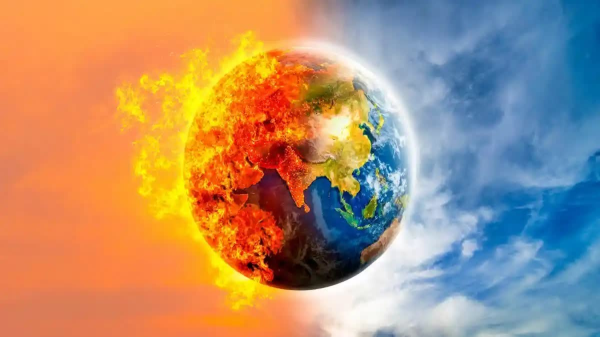
Findings of the ICF report include:
HOUSING: Extreme weather-related damage significantly increases the cost of repairing, maintaining, and insuring homes.
ENERGY: Climate change will alter the cost of heating and cooling homes and cleaning the air breathed by homeowners. Extreme weather conditions that damage energy infrastructure will lead to expenses that are passed onto customers.
FOOD: Climate change is disrupting food systems, reducing access to food, and leading to higher food prices,
HEALTHCARE: Climate-connected health issues including heat-related illnesses and respiratory problems increase lifetime healthcare costs.
TRANSPORTATION: Weather events cause flooding and other hazardous road conditions, resulting in higher costs to protect roadways and insure and maintain vehicles.
JOBS: Climate change may reduce working hours and productivity and lower job prospects, especially in outdoor jobs like construction. Building costs will rise as a result.
TAXES: Taxes will rise as governments fund disaster prevention and recovery and provide assistance to people living in regions where insurance companies refuse to provide affordable coverage.
The World Economic Forum agrees the global cost of climate change could reach trillions of dollars each year.
- This includes the cost of damage to infrastructure, property, agriculture, and human health.
- This cost is expected to increase over time as the impacts of climate change become more severe.
- The poorest countries in the world are at greatest risk from the economic impacts of climate change.
The Canadian Climate Institute believes Canadians are already paying billions of dollars each year because of climate change. CCI says damages and costs will continue to worsen. It published a series of reports exploring “the costs, impacts, and consequences of accelerating climate change.”
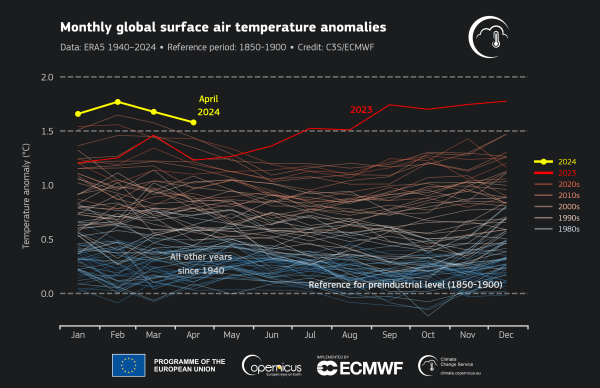
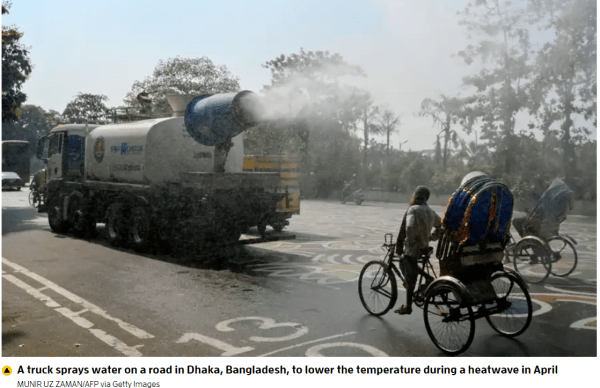
To people who examine science and mistrust industry-funded denialism, climate change is real. Temperature records are indisputable. April 2024 was the hottest on record, the 11th record-breaking month in a row.
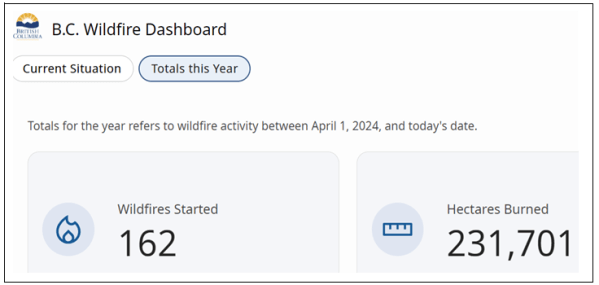
As early as the second week of May, British Columbia reported that more hectares had been burned by wildfires in 2024 than in eight of the preceding sixteen years.
Nevertheless, climate change denialism remains strong. It has been strongly linked to right-wing nationalism and to the anti-feminist far-right but it was built primarily with funds from oil companies. Academics not in step with climate scientists have accumulated wealth by promoting denial for the benefit of the profit-seeking fossil fuel industries.
According to ScienceAlert, these are among the forms of denial that cause people to reject the clear consensus formed by climate scientists:
- Science — “Climate change is just part of the natural cycle and climate models are uncertain and unreliable.”
- Economic — “Climate change is expensive to fix and following the science would decrease our economic resources.”
- Humanitarian — “Longer, warmer summers in the temperate zone will make farming more productive. Besides, more people die of cold than heat, so warmer winters will be a good thing.”
- Political — “We cannot take action because other countries are not taking action.”
- Crisis — “If we continue to grow our economies, we will be richer in the future and better able to afford to act if climate change ever proves to be a problem that affects us directly.”
However, as heatwaves, wildfires, and deadly floods linked to climate change mount, denialism not motivated by financial rewards becomes more difficult.
Will we act to avert disaster? For people paying attention, pessimism is inescapable.
Here at advertising-free IN-SIGHTS, followers are not asked to subscribe, but financial support from readers enables the site to continue. If you find value in the content here, please make a contribution. Methods are described HERE.
Categories: Climate Change


 in-sights.ca
We no longer trust science and instead believe in fairy tales. From climate change deniers to anti-vaxers, science has taken a back door to voodoo beliefs, ignorance and pure hate.
When we were not allowed to call out the stupid, stupid gained acceptance and now has paved the way to the ills we face today.
Politicians just love stupid people.
LikeLike
As an official old dog (I’ll turn 80 in the fall) I tend to rely more upon the rather vast body of evidence that stresses the obvious and highly negative aspects of climate change upon the all too near future. However, there are competitors that also cause me to pause and catch my breath. On the possible threats from Ai, the following youtube interview did raise my stress level: https://www.youtube.com/watch?v=bk-nQ7HF6k4.
On the other hand, there are some thoughtful techno optimists that predict rather interesting changes coming in the next twenty years or so: https://www.rethinkx.com/. Less big picture than Tony Seba and his entourage is my old favourite https://www.youtube.com/playlist?list=PL6pxfcZasn4bx6zreVMxgJYNMiwF1ESBL. Mark Sharman’s balance of hope and hard nosed realism fits more comfortably on my shoulders than most commentators.
In the meantime I enjoy the grand kids and hope that that as they take over that they will do a better job than my generation and their parents’ generation have done.
Thanks Norm for bringing hard nosed and thoughtful realism to our neck of the woods/world. BC is fortunate to have you!
LikeLike