



Pierre Poilievre and other conservatives promise to be tough on crime. “Jail, not bail,” says the man who aspires to be Canada’s next Prime Minister.

Boris Bytensky, a Toronto criminal defence attorney told CBC, “Presumably, we don’t actually sentence people until and unless they’ve been found guilty beyond a reasonable doubt.” Law school professor Danardo Jones doubts that draconian criminal measures will result in a society with no risk of crime.
The John Howard Society is a non-profit that offers a more balanced and less political view of crime than Poilievre. In 2023, the agency wrote about major media claims that violent crimes had increased to a level not seen since the days Stephen Harper’s Conservatives held power.
The latest salvo of comments are based on the report, Police-Reported Crime In Canada, 2022. (We also posted on the previous edition of this report. Although each edition reports similar data, the highlights identified can change significantly from one year to the next.) The glib conclusions by politicians and the media do not accurately represent the complex and fascinating data in this report.
In particular, the Globe editorial makes no mention of poverty or homelessness or Covid, identifying only one factor that ‘caused’ the change – the election of the Liberal in 2015. This even though the trend started in 2013, while the Conservatives were in power. If only government policy had that kind of power and influence!
…Crime rates remain relatively low by historical standards, and several kinds of crime have declined greatly – something that gets almost no coverage. Overall crime rates in Canada are still lower than they have been in nearly 50 years, and about 40% lower than they were at the peak in about 1990. But declines in crime are not widely reported, whereas increases are…
A more humane approach than filling prisons is to address social problems. Many believe that crime is an adaptive response to economic disadvantage. Our understanding and descriptions of crime have changed across cultures and across time. Biological causes were once blamed.
Today, according to the centrist Brookings Institute:
Rising inequality and related disparities and anxieties have been stoking social discontent and are a major driver of the increased political polarization and populist nationalism that are so evident today.
An increasingly unequal society can weaken trust in public institutions and undermine democratic governance. Mounting global disparities can imperil geopolitical stability. Rising inequality has emerged as an important topic of political debate and a major public policy concern..
Crime and delinquency co-occur with other social problems in communities, including poverty, dilapidated housing, and residential instability, among others.
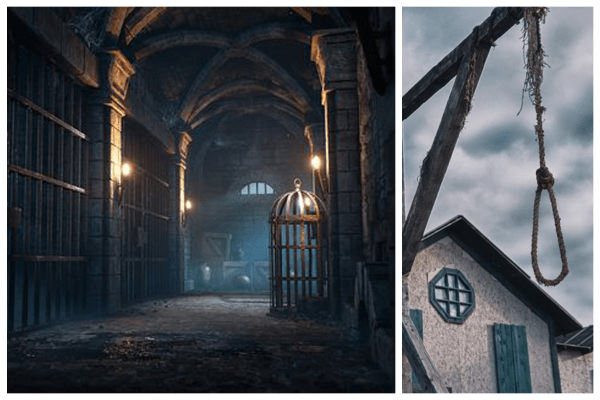
Will the Conservative Party’s tough-on-crime solution work? Well, severe punishment has been tried before.
In sixteenth century England, the population was roughly 2.5 million. It is estimated that 72,000 executions were carried out during the reign of Henry VIII. Capital offences included theft, arson, murder, criticizing the monarch, etc. Torture was common.
If Pierre Poilievre wants to return to those day, that would lead to one million executions in Canada and construction of many new torture chambers.
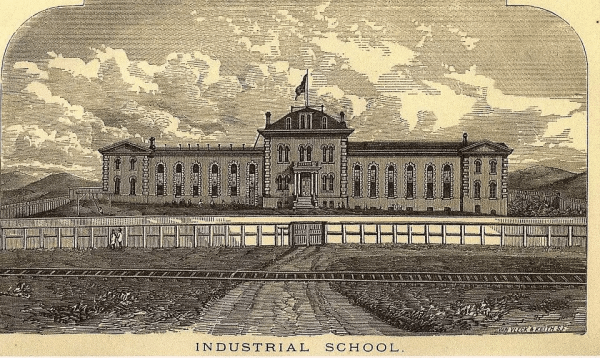
Of course, the Conservatives would not execute a million Canadians. But in recent history, the tough-on-crime crowd were quite prepared to be inhumane. As a child, I lived near the Industrial School for Girls on Cassiar Street in Vancouver. It was also known as a “house of horror, or “a deformatory, not a reformatory.” I recall young girls peering out from behind steel bars. I wrote about this place in a memory piece published in 2010.

Institutions such as these were common in the 19th and 20th centuries. San Francisco Chronicle reported on that city’s industrial school. It says, “Children as young as 2 were warehoused at this brutal and corrupt reform school.” Many of the inmates had committed petty crimes.
The journal Vital City offers a number of more intelligent policies that would address criminal behaviour:
- Help victims of crime.
- Reduce demand for law enforcement.
- Fix distressed spaces.
- Make crime attractors less appealing.
- Provide more scientific supports to law enforcement.
- Improve the job market and job training.
- Facilitate neighbourhood non-profits.
- Make jails and prison less likely to produce more crime.
- Better prepare people to return home from prison.
- Ffnd community-based violence interruption.
- Use technology to reduce crime.
- Tackle the causes and consequences of poverty.
- Fix long-standing problems, such as unhealthy homes and under-resourced foster care.
- Reduce financial burdens imposed on people with low risk to public safety and reduce poverty traps.
- Help those with substance abuse disorders.
- Provide support programs for high-risk youth and families.
- Reduce food insecurity and improve educational opportunities.
- Provide supportive and affordable housing.
- Target the overuse of criminogenic products like guns and alcohol.
- Stop proliferation of firearms and bladed weapons.
Most items on the list are difficult to accomplish. Far more difficult that shouting “Jail, not bail.”
Here at advertising-free IN-SIGHTS, followers are not asked to subscribe, but financial support from readers enables the site to continue. If you find value in the content here, please make a contribution. Methods are described HERE.
Categories: Justice


 in-sights.ca
For more on the San Francisco Industrial School, listen to Ridiculous Crime podcast. It’s always fun and informative.
Red, Happy Hooligan, and Little Dick: The Bad Kids of Old San Francisco
LikeLike
Pierre Poilievre and the Conservatives are MAGA Lite folks, they grasp on issues that the public believe that are true but are not.The current petty crime wave that engulfs Canada can be traced to insufficient help for the mentally ill and the lack of any sort of social housing. Combine the two and we get tent cites and petty crime. Throwing people in jail is not the answer.
Sadly in Canada, with a decaying middle class but a small but burgeoning “elite class”, have lost any sort of understanding of the country and let erroneous perceptions flourish.
Pierre Poilievre has grabbed onto these perceptions and with a compliant media and ran with it creating a narrative the uniformed believe.The problem is that those who truly belong in jail should stay there such as sexual predators contract murderers and alike, but the lesser crimes should be treated as a disease and those jails should more be like hospitals than jails. Until government gets real with mental illness and gets real with the massive incomes gap, the likes of MAGA Lite will survive simply because the uninformed wants to blame someone, anyone for the country’s ills.
LikeLiked by 1 person