



If David Eby’s government supported or acquired the Hecate Strait project proposed by Oceanic Wind Energy Inc., power could be flowing to the area to be served by the $10 billion North Coast Transmission Line (NCTL) by 2030, not 2034 or later, as predicted by BC Hydro.
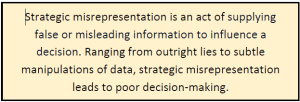
It is worth noting that the public utility is usually guilty of strategic misrepresentation. It routinely underestimates its megaproject budgets and the times needed for completion, so I adjusted the cost figure published by BC Hydro from six to ten billion dollars.
The government says, “BC Hydro currently has industrial projects in its connection queue for almost 6,800 megawatts (MW), more than six times the total capacity of the Site C hydroelectric project.”
That statement, if true, would indict the very group that has held power in British Columbia for nine years. But again, what underlies most megaproject proposals?

For people not familiar with BC geography, Hecate Strait is less than 200 kilometres from Terrace, which is to be served by the NCTL. The Peace River dams are about 500 kilometres away, as the crow flies. Transmitting electricity from the Peace River region, at the eastern edge of the province, to near the coast, will be difficult and much more costly than if power were delivered from Hecate Strait. Ongoing NCTL transmission losses will be greater than on lines delivering power from coastal waters.
What about wind intermittency, you say?
Well, the area near Haida Gwaii happens to be among the world’s best regions for wind power potential. And the huge resource projects the government dreams of could install energy storage devices, as those needing uninterruptible power will do regardless of where electricity originates. The batteries could be installed at their own cost.
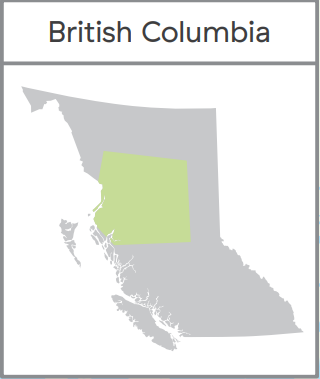
Area allegedly to be served by NCTL
Why is the highest-cost and most difficult-to-build proposal to deliver electricity to the North Coast preferred by the government? Perhaps because it offers the best long-term security and financial rewards to the decision makers from the groups at the other side of the revolving door between government and industry.

Categories: BC Hydro, Energy - Wind


 in-sights.ca
Nova Scotia has been moving towards an off-shore wind project that could provide 27% of Canada’s electricity requirements.
Offshore wind – Government of Nova Scotia, CanadaGovernment of Nova Scotiahttps://novascotia.ca › offshore-wind
One of my grandsons is an electrician who has been working for over a year in Nova Scotia on these battery storage systems:
https://www.cbc.ca/news/canada/nova-scotia/nova-scotia-in-the-market-for-more-grid-scale-batteries-9.7065198
British Columbia has similar potential. But dissimilar political will, it seems.
LikeLike
Can you tell us more about this? Is anyone working on this in a meaningful way? How can we get this government to do something, ANYTHING other than push this increasingly disastrous LNG project with its Trumpstein billionaire funders?
LikeLike
I suspect the reason BC Hydro is focused on NCTL is Site C.
The dam was was a boondoggle intended to distribute BC taxpayer funds to developers. The BC NDP had the opportunity to shut it down and save the Province a couple $B, but chose not to do so. Alberta has chosen to forego purchasing BC electricity into their all-private-free-for-all electricity market.
Not only was it insanely over-budget, it is now a stranded asset. And they do not want to tie it into the lower-mainland grid for some unknown reason(s).
So now they plan to hire the same (corrupt?) developers and contractors to build a transmission line to the liquifying methane projects BC citizens and Indigenous nations hate. And the liquifying methane groups have been sabotaging & delaying this because *of course* they want to use methane to operate highly-polluting (but cheap!) turbines to generate electricity, which they are contractually obligated to not do yet the BC NDP gave them permission to do it anyway.
As suspicions go, it matches the known facts.
LikeLike
Mr. Edwardson,
Not that there’s any reason to suspect that what appears in commercial print is “managed” but it’s a mystery why this story isn’t better known.
https://www.theguardian.com/us-news/2026/mar/30/hydropower-great-lakes-clean-energy
Submersible hydroelectric technology deployed across the Great Lakes could become a key cog in clean energy efforts, supporters say, amid surging electricity demand and costs.
Home to one of the largest deposits of freshwater on the planet, the Great Lakes region has on its shores some of the largest cities in North America in Chicago, Toronto, Montreal and Detroit, where electricity demand is growing. While none of the five Great Lakes have significant tides or currents to fuel hydropower, several of the waterways that link the lakes do.
Last month the Ocean Renewable Power Company (ORPC), an entity that has operated submersible hydroelectric projects in Alaska and Maine for years, announced its first urban venture on the St Lawrence River in Montreal, which is set to begin operating two hydroelectricity devices later this year.
“The St Lawrence River is one of the best opportunities in North America for our technology because it has consistent, high-velocity water for hundreds of miles. In the Montreal area, there’s 60-90 megawatts of resource potential alone,” says ORPC’s chief executive officer, Stuart Davies.
“The Niagara River, the St Lawrence River are big powerful rivers driven by the hydrology of the lakes draining out.”
The devices use turbines made from carbon fiber that look like the blades of an old-school push lawnmower and are turned by the flow of water.
Current- and tidal-powered hydroelectric generators have been growing in popularity and efficiency across the world. In Scotland, the world’s most powerful tidal hydro generator can power up to 2,000 homes. In Korea, the Sihwa Lake tidal power station generates about 550GWh (gigawatt-hours) of electricity annually, the equivalent of 862,000 barrels of oil.
But now North America is catching up.
Orbital Marine Power, the company running the Scotland project, announced in November that it plans to deploy up to three O2-X tidal devices in the Bay of Fundy’s Minas Passage in Nova Scotia.
ORPC is expected to begin a second Great Lakes project on a section of the Niagara River in Buffalo, New York, later this year.
The rise in marine power generation is happening at a time when, across the Great Lakes, electricity prices for residential and industrial consumers have surged.
LikeLike
There are examples worldwide of methods to produce electricity that provide us with solutions; some are tried and true and some are emerging technology. Various factors influence what has been developed in each locale, with geography playing a huge role. In British Columbia, we enjoy an embarrassment of riches in that regard. Virtually every method we observe elsewhere is viable here in one region or another due to our geography.
To date, we haven’t exploited that advantage for one simple reason. It hasn’t been necessary. One feature of our geography has provided us with ample hydroelectric power, and our hat has been hung securely on that hook. Those days are over. While our legacy source is relatively “clean”, and provides an excellent base, we must now diversify, and quickly integrate ever cleaner new sources to keep up with emerging demand and environmental realities.
Our provider model has thus far been a regulated monopoly system dominated by a publicly owned Crown corporation. That corporation has until recently been almost entirely and quite naturally focused on generation and transmission of hydroelectricity. It must now maintain the existing infrastructure while quickly identifying and employing new sources. Is it adequately resourced, directed and staffed for the task? Or is the mindset and skillset still dam-related? The choices to be made now are critical, and require wise foresight. How are these decisions being made, and who is making them?
Do we have strong, informed, and strategic direction from the provincial government to the Board at BC Hydro? If so, where is it coming from? Who is directing BC Hydro, and where do they get their information?
These questions must be asked by ratepayers, because old habits die hard, and if the corporation is de facto setting policy, the tail is wagging our dog. And that dog might be barking up the wrong tree.
LikeLike
There are examples worldwide of methods to produce electricity that provide us with solutions; some are tried and true and some are emerging technology. Various factors influence what has been developed in each locale, with geography playing a huge role. In British Columbia, we enjoy an embarrassment of riches in that regard. Virtually every method we observe elsewhere is viable here in one region or another due to our geography.
To date, we haven’t exploited that advantage for one simple reason. It hasn’t been necessary. One feature of our geography has provided us with ample hydroelectric power, and our hat has been hung securely on that hook. But those days are over. While our legacy source is relatively “clean”, and provides an excellent base, we must now diversify, and quickly integrate ever cleaner new sources to keep up with emerging demand and environmental realities.
Our provider model has thus far been a regulated monopoly system dominated by a publicly owned Crown corporation. That corporation has until recently been almost entirely and quite naturally focused on generation and transmission of hydroelectricity. It must now maintain and upgrade the existing infrastructure while quickly identifying and employing new sources. Is it adequately resourced, directed and staffed for the task? Is existing debt a roadblock to pursuit of bold initiatives like off-shore wind? Is the mindset and skillset still dam-related? The choices to be made now are critical, and require wise foresight. How are these decisions being made, and who is making them?
Do we have strong, informed, and strategic direction from the provincial government to the Board at BC Hydro? If so, where is it coming from? Who is directing BC Hydro, and where do they get their information? Who vets that information?
These questions must be asked by ratepayers, because old habits die hard, and if the corporation is de facto setting policy, the tail is wagging our dog. And that dog might be barking up the wrong tree.
LikeLike