



Most oil and natural gas resources beneath the ground in British Columbia belong to the provincial government. Private companies can develop those resources by signing agreements with the Province.
Revenue from these agreements was substantial when Gordon Campbell was premier. Governments that followed have sharply reduced the public share of natural gas values. In doing so, British Columbia has totally rejected the Norwegian approach to fossil fuel taxation — a model that helped Norway build a sovereign wealth fund now worth C$3 trillion, which is C$3 trillion more than BC has set aside for future generations.
The agreements give companies the right to explore for and produce oil and gas in specific areas for fixed periods. The Province issues those rights either through competitive auctions or administrative permits. Competitive bidding once occurred monthly, but since 2020, British Columbia has held only eight auctions, including two in 2026.
This shows bonus bid revenues for the past 35 years:
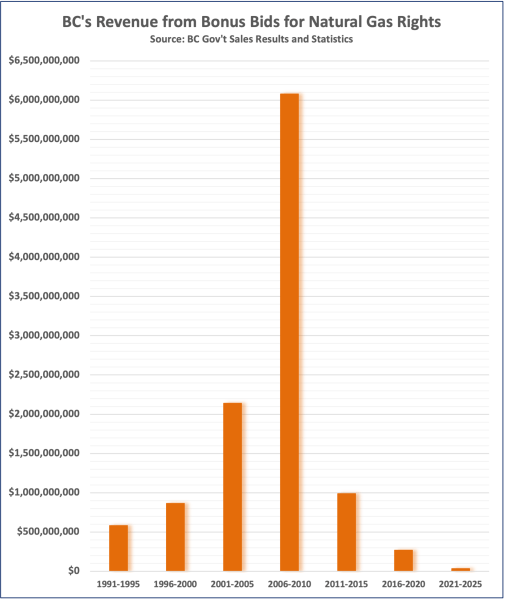
While revenue from bonus bids for natural gas rights has almost disappeared, natural gas production in British Columbia has increased dramatically
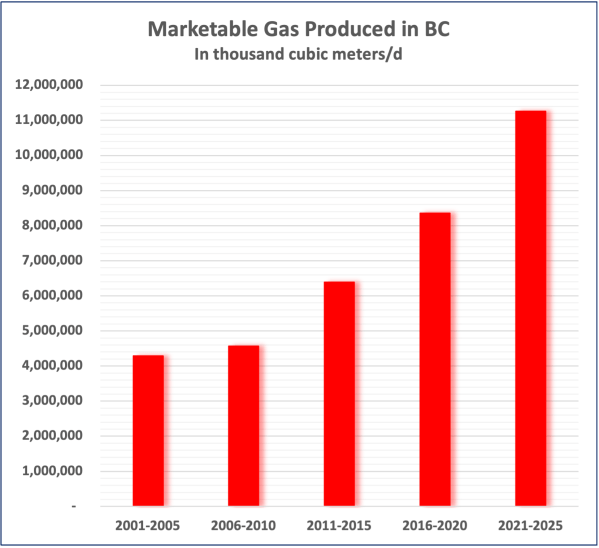
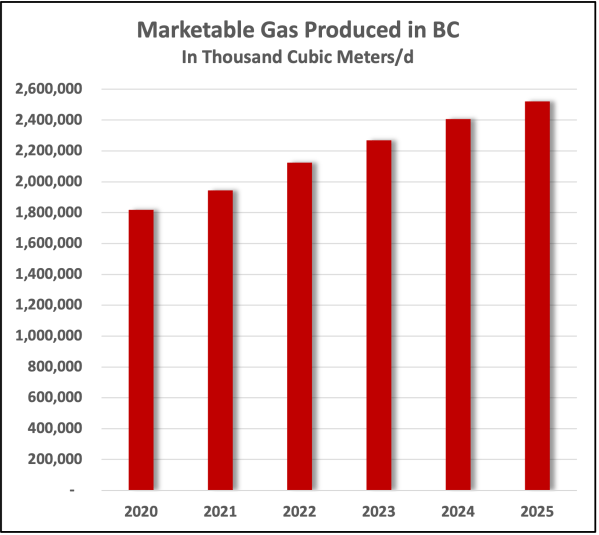
The charts above are based on data released by the Canada Energy Regulator.
While the BC NDP publicly promotes a comprehensive clean energy strategy, the government has in practice focused heavily on expanding fossil fuel production.
That approach may benefit the largely foreign-owned companies producing and processing natural gas, but it also moves the Earth further toward climate instability and environmental damage.
“The idea that coal is worse for the climate is mistaken – LNG has a larger greenhouse gas footprint than any other fuel,” said Robert Howarth, an environmental scientist at Cornell University and author of the new paper.
Exported gas produces far worse emissions than coal, major study finds
Categories: Natural Gas


 in-sights.ca
That looks bad, and I suspect that it is; I think I understand the meaning of “competitive auctions” and “administrative permits”, but when “bonus bids” is thrown into the mix, I’m not sure what’s going on. I really need an explanation of that term.
LikeLike
When a parcel is offered for auction, companies must pay a minimum amount to acquire the rights to explore for and produce natural gas there. Any amount bid above that minimum is known as a bonus bid. The more valuable a company believes the parcel is, the larger the bonus it is likely to offer.
Once companies obtain those rights, governments can extend them without requiring further competitive bidding.
LikeLike
I would like to see a calculation that subtracts all the government subsidies, tax breaks, environmental destruction, etc from the auction and royalty revenue. At the end of the day, does the province make any money???? Has it been worth it????
I’ve been watching Carney lately and it sure looks like he is about to open up the public purse to push major oil and gas projects over the finish line. Of course, these projects are in the National Interest!!!!
LikeLike
Jan 01 2027 new royalties schedule begins?
LikeLike