In British Columbia, where income and disability assistance rates went unchanged from 2007 to 2016, the Campbell and Clark Governments have bent over backward to provide corporate welfare to people who write large cheques to the BC Liberal Party.


Gwen and I raised three adult children in North Vancouver. Each lives in this community, as do our seven grandchildren. Before retirement, I worked in accounting and small business management. Since 2009, I have published commentary about public issues at IN-SIGHTS.CA.
In British Columbia, where income and disability assistance rates went unchanged from 2007 to 2016, the Campbell and Clark Governments have bent over backward to provide corporate welfare to people who write large cheques to the BC Liberal Party.

Christy Clark, 2011 edition: ” I think what British Columbians, and BC Liberals want from government now is not a leader who can grant access to people who already have a lot of access . . “
The Journalist’s Creed, written in 1814 by Walter Williams, the first dean of the Missouri School of Journalism, remains one of the clearest statements of the principles, values and standards of journalists throughout the world.

Palmer: “You managed to find $80 million for the ferries this week. Did Kevin Falcon turn over the couch cushions or something, and find some money? Where did this money come from?”
Truth?
There was no extra money.
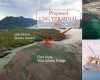
In an oversupplied market, many LNG projects will struggle to secure buyers. Even if heavily subsidized projects move forward, LNG supply would hit the market at a bad time. Research predicts that the market will remain oversupplied…
We talk about outlandish promises made and lies told by politicians to gain election. British Columbia’s LNG promises of 2013 may have turned to dust in 2016 but they served the purpose of helping a ruling party return to office. Some will recall a similar strategy in 2005 when Liberals promised 400,000 new jobs from energy creation. We didn’t get the jobs but we did get tens of billions of dollars worth of obligations to companies that are mostly located outside the province.

In 2001, BC voters were treated to a comprehensive set of lies. In 2005, promises were made for 400,000 new energy jobs. In 2013, Liberals claimed a trillion dollars of economic activity would result in as much as $260 billion of government revenues and a debt free province.

The decision to proceed on any run-of-river project should be made after the most stringent environmental assessments and cumulative impact studies that are possible, as well as an assessment of where there may be lower environmental footprint alternatives for producing power. All of the most stringent environmental assessment and forest practice standards that exist should be applied to any clearing of forested land connected with any activity, including run-of-river power projects.
In the three months ended December 31, 2015, BC Hydro BOUGHT 3,719 GWh from private electricity producers at an average price of $91,422 per GWh (total $340 million). In the same quarter, BC Hydro SOLD 3,493 GWh to heavy industry at an average price of $54,394 per GWh (total $190 million). Liberals claim themselves to be wise managers of public finances.

A few people are having fun with broadcaster Bill Good in the twitterverse following his response to a suggestion – after the Vancouver Sun finally allowed publication of a comprehensive criticism of Site C – that the mainstream media was trying to catch up to reporting done long ago by independent online journalists…

…easily-influenced voters in BC opted for Christy’s Clark more economically pleasing vision of the future. But it was phoney baloney, conjured up in a three-week period in a “rush assignment” given to Assistant Deputy Minister of Finance Doug Foster by Clark’s newly-hired communications director Ben Chin, formerly a CBC TV news anchor in Ontario and after running for the provincial Liberals there—and losing—he became VP of Communications with the Ontario Power Authority. In that job he infamously advised an OPA official—who was troubled by critical media reports—to “throw him some work” to get a particular journalist onside. “It would be a good score,” Chin said.

Inuit who lay claim to a third of Canada’s vast landmass, face shortened life expectancies, a high infant mortality rate, high rates of tuberculosis, widespread food insecurity, dangerously inadequate housing, and shockingly deficient local health care. But it was when Obed turned to the topic of suicide that the 750 people in the audience felt the full wintry force of his Arctic reproach…

The applicants do not need money or experience, they simply need political influence with BC Liberals. The energy purchase agreement provided by BC Hydro removes substantially all business risk and the favoured recipients take the project to money brokers who readily fund it because the creditworthiness of British Columbia stands behind each EPA. This would be like you and I buying a house we intend to rent to government through a 40 year lease at double or triple market rates, with payments escalating to protect against inflation, guaranteed by taxpayers of British Columbia….

Usually devoid of meaningful arguments and information, most articles on British Columbia politics take but a moment to read. This Martyn Brown piece is entirely different. It is superior to a month’s worth of commissioned articles and press release rewrites from members of the Legislative Press Gallery. It is written by a man who spent years at the heart of Gordon Campbell’s Liberal Governments and he knows the current players well…

British Columbia’s most informed political commentary comes not from people at rewrite desks in the Legislative Press Gallery but from a retired — but not retiring — newsman. I refer, of course, to Rafe Mair, whose recent work should not be missed. It includes an assertion that, while true, is seldom discussed in corporate media: Canadians are governed by a fraudulent charade called a “parliamentary democracy”…
Alex Tsakumis reported that Christy Clark and her backers orchestrated a virtual coup d’état, seizing control of the BC Liberal Party, sabotaging the leadership contest with phantom voters. Tsakumis also questioned her truthfulness about the relationship with would-be political assassin Jaspal Singh Atwal¹ and Tsakumis reported that she was “a person of interest” — thought to be leaking confidential information to friends — in the RCMP’s investigation of the BC Rail sale, until police management shut down examination of senior BC Liberals. Premier Photo-Op long ago went beyond stretching the truth and exaggerating. She grew accustomed to wilful and conscious lying and now relies on a continuous stream of falsehoods to promote herself and the government she leads. The corporate media assists by ignoring fabrications, even when they are readily apparent.

Mr. Baldrey wants people unfamiliar with online journalism to imagine the Internet largely provides “outrageous, libelous, threatening and inaccurate” commentary. One reason he might want to sell that false image is that he worries about mainstream media losing readers to the online world. Baldrey also may not like to be criticized and held accountable for his expositions. Keith, if you aim to be respected, don’t be an extension of vested interests, treat all sides with doubt and wariness and don’t only advance interests of the powerful. Be prepared to make them uncomfortable, if deserved. Be transparent about potential conflicts involving you or colleagues, be knowledgeable and impartial…

$90,000 paid to Senator Mike Duffy by a minion of Canada’s Prime Minister resulted in a diligent RCMP investigation and commanded national media attention for months. In British Columbia, a larger taxpayer funded amount — $150,000 plus thousands more for the Premier’s jet assisted photo op — was paid without following standard guidelines for public expenditures. In this case, there has been zero transparency and accountability and shamefully little attention paid by the marketing platforms that have replaced British Columbia once proud news media.¹ Citizens had to turn to social media commentators like Merv Adey, Laila Yuile and RossK, The Gazetteer to be informed. Premier Clark is accused of acting in this matter to provide advantage to her brother’s private business. Yet, the interest shown by BC’s leading political reporters has been zero.
Ian Jessop asked me about Premier Clark giving $150,000 in public funds to assist her brother’s associate in Haida Gwaii. It’s a subject that has been well covered by fellow bloggers Laila Yuile and Merv Adey. However, with the exception of Mark Hume at the Globe and Mail, it’s been of little interest to mainstream media, particularly the “Incurious Bastards”¹ of the BC press gallery. It may be a rewarding career move for a political pundit to serve plutocrats instead of readership but that’s a conscious choice that doesn’t offend some who once thought of themselves as journalists. Shannon Rupp, writing at The Tyee recently, delivered a pointed analysis of the 21st century press in our country: I think it’s fair to say that many if not most so-called newspapers are misnamed: they deliver less and less news (as defined by journalists) while filling their pages with ”content” — a word that could mean anything from listicles to infotainment to advertising written to masquerade as a news story. In short, most newspapers have morphed into marketing platforms.
Broad masses …more readily fall victims to the big lie than the small lie… they would not believe that others could have the impudence to distort the truth so infamously. ….For the grossly impudent lie always leaves traces behind it, even after it has been nailed down, a fact which is known to all expert liars in this world and to all who conspire together in the art of lying.


[…] In a June 2024 subcommittee hearing, U.S. Senator Josh Hawley questioned Boeing CEO Dave Calhoun on the company’s safety…

President Trump’s Iran [“Excursion”] was war-gamed in various ways for years in advance. The advice offered afterwards? Don’t. Why the…

There are examples worldwide of methods to produce electricity that provide us with solutions; some are tried and true and…
Trump declares USA is “stupid”. https://www.independent.co.uk/news/world/americas/us-politics/supreme-court-trump-birthright-citizenship-case-b2949973.html https://www.independent.co.uk/bulletin/news/trump-supreme-court-birthright-citizenship-debate-stupid-b2950293.html?utm_source=taboola&utm_medium=related&utm_campaign=embed1 President Donald Trump has branded the U.S. “stupid” after attending Supreme Court arguments over his administration's efforts…
 in-sights.ca
The last thing these guys think about is a healthy society. They live in a world where prestige and wealth…