
Earth is showing us the need for immediate action. Politicians and business leaders are ignoring these messages; citizens who want future generations to survive, should not…

Earth is showing us the need for immediate action. Politicians and business leaders are ignoring these messages; citizens who want future generations to survive, should not…

Moderation of climate change must be today’s priority. Governments that refuse to act ignore their duty to protect and safeguard the lives of citizens.

Peter McCartney wrote about government and industry turning northeast British Columbia into a sacrifice zone: If this destruction were happening in the Lower Mainland or the Capital Regional District, it would be unthinkable. But successive provincial governments have allowed an entire region to be sacrificed to gas development—and even given billions of dollars in tax breaks and subsidies to the companies responsible.
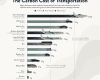
As concern about climate change has grown, individuals are becoming increasingly conscious of their impact on the environment…

Many people proceed in life as if no material changes are needed for humans to survive beyond the 21st century. But David Attenborough was correct when about ten years ago, he said…
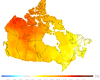
British Columbia could be in the sixth year of the PowerBC program had John Horgan been sincere when he announced it in 2015. Instead, the NDP government and public institutions are issuing press releases promising bold action… someday.

In 2020, young people went to Germany’s Constitutional Court to argue the country’s Federal Climate Protection Act (“Bundesklimaschutzgesetz” or “KSG”) was insufficient and therefore violated their constitutional rights. They succeeded.//

Part of the trillions of dollars in subsidies to fossil fuel producers reflects governments undercharging supply costs (rights and royalties), but most involve implicit subsidies, including undercharging for environmental costs. Eliminating gifts to fossil fuel producers would raise public revenues while reducing greenhouse gas emissions…
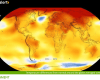
The government of British Columbia issues regular press releases portraying itself as active in fighting climate change. But if we ignore the press releases and examine the science, a more honest picture forms…
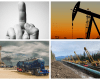
Governments have not done the things needed to address climate change. In Canada, particularly in the western provinces, politicians raised middle fingers to climate scientists. Tens of billions of taxpayers dollars have been committed to oil, gas and coal consumption, even though fossil fuels must stay underground.

Ancient Chinese employed a method of prolonged torture and execution known as lingchi. We also know it as Death by a Thousand Cuts. Humans are torturing the Earth by lingchi today…

Tenacious adherence to old methods of energy creation ensures substantial economic and environmental damage and a path to human extinction.
Hindered by the political power exercised by fossil fuel companies and financial institutions supporting those industries, Canada’s federal government has been little involved in development of non-destructive renewable energy sources. For the same reason, western provincial governments have been even less engaged. Values worth hundreds of billions of dollars flow from the public to private oil, gas and coal operators. Meanwhile, a pittance goes to energy technologies not firmly rooted in the 20th century…
A 2021 study published online by Cambridge University Press aimed to learn about “experts” promoting the claim that human impact on Earth’s climate is either non-existent or insignificant. Researchers examined multi-signatory documents opposed to the scientific consensus and judged the climate change contrarians…
Perhaps this year’s most important publication is by the UN’s Intergovernmental Panel on Climate Change (IPCC). Almost one hundred scientists from thirty-eight nations report that risks to long-term human survival are accelerating. Almost every legitimate climate scientist is alarmed. However, the developed world’s political and business leaders largely disclaim need for extensive action until vague points in the future. They remain detached from scientific reality and dedicated to the pursuit of endless economic growth.
Ben Rawlence’s new book, THE TREELINE, is a blend of reportage, nature, travel and science writing. Telling the story of our changing climate through six species of tree, it documents the devastating effects of human activity – and offers reasons for hope.

Methane, which the BC government has supported with billions of dollars in subsidies and tax relief, is a risk to public health. Methane emissions escaping from northeast BC gas fields are a topic that industry and government officials hesitate to acknowledge. Captured methane could be the basis of profitable fishfood manufacturing in a region where employment is now overly dependent on a fossil fuel industry that climate science says must decline immediately…

In this piece, I argue that political disdain for science endangers our lives. Evidence allows the inference that BC health policies known to be inadequate were followed to facilitate public gatherings, to continue spending on favoured megaprojects and to avoid spending on safer schools and public buildings. Not content with elevating short term dangers in the current pandemic, the BC government is a de facto climate change denier, elevating risks that threaten long term survival of humanity…
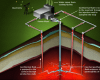
Humans need stable energy supplies that do not harm the Earth and an underutilized source lies beneath our feet. Geothermal is clean, limitless, predictable, and almost carbon free. But geothermal has no multi-trillion-dollar industry promoting it, nor support from Canadian politicians conditioned to follow established paths. Mostly that means subsidizing fossil fuels…
With unprecedented sea level rise forecast as a result of climate change, the Dutch government is racing against the clock to figure out how to keep one of the world’s richest countries from disappearing into the North Sea. As soon as this gets known, as soon as the shit hits the fan, there won’t be any investments anymore and local economies will collapse…


Trump declares USA is “stupid”. https://www.independent.co.uk/news/world/americas/us-politics/supreme-court-trump-birthright-citizenship-case-b2949973.html https://www.independent.co.uk/bulletin/news/trump-supreme-court-birthright-citizenship-debate-stupid-b2950293.html?utm_source=taboola&utm_medium=related&utm_campaign=embed1 President Donald Trump has branded the U.S. “stupid” after attending Supreme Court arguments over his administration's efforts…
Justice? More posts from Liz Oyer https://www.youtube.com/shorts/l3R3QUI1J-M?feature=share LIZ why Oyer was fired. https://www.youtube.com/shorts/xs9N_2W_6CU?feature=share LIZ explains the DOJ’s abnormaIity https://www.youtube.com/shorts/9tDcGMVW0HU?feature=share LIZ…
Who benefits most from Trump's DOJ? Trump’s Justice Department Dropped 23,000 Criminal Investigations in Shift to Immigration In the first…
There are examples worldwide of methods to produce electricity that provide us with solutions; some are tried and true and…
 in-sights.ca
There are examples worldwide of methods to produce electricity that provide us with solutions; some are tried and true and…