Category: Climate Change

Precarious times

If we paid more attention to impacts of climate change, we would demand our governments take immediate and effective action, not offer promises that solutions will somehow be in place by 2050. Warning signs are plentiful in 2023. NASA reports that current warming is happening at a rate not seen in the past 10,000 years. The scientific agency says evidence of rapid climate change is compelling…

Wildfires

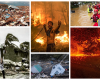
Wildfires are clearly a major problem for Canadians in 2023. Primary causes are known but solutions conflict with policies of governments. Canadian politicians prefer to promote fossil fuel production and eliminate forest diversity without regard for long-term costs to the planet. Failure to change forest management practices and moderate greenhouse gas emissions will result in greater fire disasters in the future.

Canada, land of vanishing wonders

Mike Hanafin, “Brilliant doesn’t do this justice. @thejuicemedia usually skewers Australian (Australien!) govts/politicians for kissing up to Big Oil, Fossil Fuel extractors, & monopolist billionaires. But they noticed it was happening here too. Great cameos from Galen Weston, Jimmy Pattison, and John Horgan.

Dangerous distraction

A key element of Canada’s future climate policy is carbon capture, utilization, and storage (CCUS). The federal government is spending hundreds of millions of dollars to advance the commercial viability of CCUS technologies. Despite what critics say about CCUS, it is working as intended for fossil fuel producers. CCUS is not a solution, it is a distraction. The aim is to justify ‘continued production of carbon rich energy.

Accelerating climate change

Eliminating methane emissions offers huge potential for quick, affordable climate action. Modern technology makes identification of leakage relatively simple, but industry and governments are dedicated to increased fossil fuel production. As a result, methane leakage is consciously underreported and methane abatement actions are not taken.

Fuelling the fires

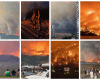
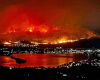
Premier David Eby and Ministers of British Columbia spent much time in August 18 news conferences. They talked about dealing with wildfires and assisting the tens of thousands of people affected by the province’s hottest ever time for burning. Politicians spent little time talking about factors that contributed to the current State of Emergency…

Collapse of modern society

University of Manchester’s Dr. Kevin Anderson is a visiting researcher in the Department of Earth Sciences at Sweden’s Uppsala University. Anderson warns that continuing on our current path will result in a catastrophic outcome due to climate change. He cautions against believing the political rhetoric about progress and says the concept of NET-ZERO really means NOT-ZERO. He believes the commonly used expression is cover for an unacceptable plan to kick the can down the road.

Every alarm bell is ringing, but political reporters aren’t listening

I looked at the writings of Vaughn Palmer, a person considered by many to be the Dean of the BC Press Gallery. The province’s production of fossil fuels is accelerating, and wildfires — with months to go in fire season — have consumed 450 percent of the average of the preceding 15 years, but Palmer is writing about any issue other than climate change. Not one of Palmer’s last 30 columns touches on the existential emergency.

Record setting wildfire burns – updated

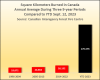
As of July 30, BC Wildfire Service is calling 2023 the worst year for land damaged by fire. In fact, with months to go in fire season, 15 percent more land has burned than in 2018, the second worst year BC has recorded. Three hundred and fifty-seven wildfires are burning on July 30, 188 of them out-of-control.

Methane, gas or liquid, is not clean energy

Governments responsible for regulation of fossil fuels are also promoters of its production and consumption. British Columbia has committed billions of dollars to encourage liquified fossil gas and has extended subsidies by way of royalty credits worth over $15 billion in today’s dollars. Government’s commitment to growing the fossil fuel industry is in direct conflict with its role as protector of the public and the environment using fair and neutral regulation of a dangerous industry. Measuring escaped emissions of methane would make it impossible to meet political promises of emissions reductions for the oil and gas industry. So, it is not a priority.

COP37

A Conference of the Parties (COP) is held regularly to assess the effects of the measures taken by Parties and the progress made in dealing with climate change. Dubai, most populated city of the world’s seventh largest oil producer, will host COP27 in December 2023. Leaders of the top five oil producers — USA, Saudi Arabia, Russia, Canada, Iraq — are already planning to speak at COP37.

Unextractables

Most Canadian politicians are blithe to climate science. The federal government is building or assisting construction of fossil fuel pipelines worth $45 billion. In the last few days, BC Premier David Eby joined Alberta Premier Danielle Smith at a Vancouver conference promoting production and consumption of fossil gas.

The new abnormal

As climate disasters become more common, motivations to address underlying causes will decline as the general public accepts them as normal. Add the normal inclination to diminish gradually deteriorating situations and we are unlikely to save humanity from extinction.

U.N. “climate change is out of control”

Regardless of science, the corporate world and governments in Canada remain determined to increase fossil fuel production and consumption. Under the NDP, British Columbia continues to provide direct and indirect subsidies to ensure increased output of products that threaten the survival of future generations. . .