
Many people are to blame for Site C, a facility that will produce electricity at a multiple of the cost of other clean power systems. No persons in positions of authority were willing to listen to cautionary tales, particularly reports that warned about megaproject madness.
BC Hydro customers paying for “doublespeak masterpiece”

In the Times Colonist, Les Leyne reacted to a recent BC Hydro report about Site C: B.C. Hydro has written the blandest, most blameless account possible. When it comes to burying a […]
Nincompoops ranting in their underpants just might have been right

Thanks to RanD Hadland at Facebook’s Say “NO” to Site “C” Dam! for drawing my attention to a recent Vaughn Palmer column. The Sun’s pundit mentions BC Hydro’s “pathetic” excuse making when justifying incompetent management of the Site C project…
Lew Edwardson on BC Hydro

Always articulate and thoughtful reader Lew Edwardson left a comment on the IN-SIGHTS article THE HEAT BENEATH OUR FEET. I think it needs to be amplified. Drought in northeast BC continues to be a problem. If the situation of FY 2024 continues, Site C will produce about 3,350 GWh, not the promised 5,100. These numbers suggest the dam’s capital cost for each MWh of electricity produced would fall between $142 and $215. Of course, the utility incurs operating and overhead costs as well. Those would be around $30 per MWh. At the midpoint between those numbers, BC Hydro would be paying over 20 cents per KWh for Site C electricity, far more than the utility is willing to admit.
20 year demand growth 1/5 of BC Hydro predictions

Three days after the final date allowed by law for making public its Annual Service Plan, BC Hydro made the document available on its website. Electricity sales to residential, commercial and industrial customers in fiscal year 2024 were 0.34% higher than in FY 2023, and 8.45% more than 20 years before. Observers may have noted that for many years, BC Hydro has been predicting 40% growth in 20 years.
Over budget, over time, over and over again. Quelle surprise!

The United Kingdom’s National Audit Office said about a nuclear energy megaproject that was to cost C$35 billion and now looks to be costing more than C$80 billion, years after initial completion: “[Government] has committed electricity consumers and taxpayers to a high cost and risky deal in a changing energy marketplace.” The NAO message is almost exactly the arguments raised about British Columbia’s Site C hydropower project her at IN-SIGHTS and by others demanding that public projects deliver value for money.
Manufactured ignorance

Many readers of IN-SIGHTS examine public issues with great care and email private comments to me along with links to worthwhile material. What follows comes from a paper sent to me by a long-time follower North Van’s Grumps, fellow blogger at Blog Borg Collective. The complete paper shown below is authored by the late Dr. Karen Bakker of UBC and Richard Hendriks from University of Toronto’s Civil and Mineral Engineering faculty…
Tell the dam truth

Tell The Dam Truth (TTDT) is a California based non-profit with initial funding from outdoor clothing retailer Patagonia. TTDT’s aim is to protect and restore free-flowing rivers by educating people about the impacts of river-destroying projects. The group promotes decommissioning of existing dams.
Clean energy solutions

In 2017, Site C proponents said the dam was required because British Columbia needed dispatchable electricity. According to those keen on the megaproject, low-cost wind and solar power could not be integrated into BC Hydro’s systems. At the time, 97.5 percent of the utility’s generating capacity was hydro. Like batteries, reservoirs store potential energy. When consumers use electricity from wind and solar sources, hydropower utilities keep water behind dams, ready for use when needed…
Renewables are the key to low emissions, but…
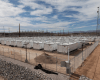
Proponents of hydroelectric dams love to talk about these as low-impact sources of clean energy. Many proponents expect to gain financially from construction of the megaprojects. To them, self-interest is always more important than public-interest. But many of the proponents expect to gain financially from construction of the megaprojects. To them, self-interest is always more important than public-interest. In British Columbia, the financial cost of electricity from Site C will be 4x to 6x that of wind and solar alternatives. Authorities choose to disregard human and environmental costs and leave them unmeasured.
Plug pulled on PowerBC

The item below the separator was published in March 2018. That was three years before the Site C budget doubled to $16 billion, and we’ve now entered the fourth year since the dam budget was publicly updated. While overall inflation in Canada has been about 16% during the past four years, the non-residential construction industry experienced historic levels of inflation in 2022 and 2023. No one should be surprised when after the October 2024 provincial election, the Site C budget is revealed to be above $20 billion.
Less costly Site C alternatives were ignored

Many self-interested people told us that non-destructive alternatives to hydropower would not work in British Columbia. These, they said, were unreliable and could not always send power to the grid on demand. Dispatchability was key, according to pseudo experts. This despite BC Hydro having reservoirs that act like giant batteries.
For Site C promoters and enthusiasts

Climate change is one of the most pressing global issue in contemporary times, and dams play a substantial role in aggravating it by becoming feeding grounds for methane-producing microbes. In addition, dams fragment rivers and disrupt their natural flow, threatening the survival of aquatic fauna, especially migratory species. Dams are also culpable for disrupting the biogeochemical cycles of river ecosystems, thereby impacting their function and structure. Taking all the environmental impacts of dams into account, the apparent economic gain from them may not be worth it…
Dam lies

Mark Jaccard, recently appointed Chair and CEO of the BC Utilities Commission, argued in 2017 for Site C, when BC could have stopped the project and saved about $15 billion. Jaccard said that supporters of other renewables did not account for dispatchability, which he claimed was a key obstacle to using alternatives. People expecting their pockets to bulge from the Site C megaproject told us that less destructive energy sources were unworkable in British Columbia. The world has proven them wrong…
A foundation of political and corporate lies

In 2017, construction of Site C could have been halted without wasting more than $10 billion. But influential promoters of the megaproject — including Marc Jaccard, the newly appointed head of the “independent” regulator of BC Hydro — were misinforming citizens about the viability of alternatives…
Strategic misrepresentation, aka lying
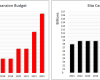
Bent Flyvbjerg of Oxford University is the world’s most cited scholar of megaproject management and mismangement. One of his studies included this: “Underestimation cannot be explained by error and is best explained by strategic misrepresentation, that is, lying. The policy implications are clear: legislators, administrators, investors, media representatives, and members of the public who value honest numbers should not trust cost estimates and cost-benefit analyses produced by project promoters and their analysts.
BC Hydro’s credibility gap

When BC Hydro said that growing demand required asset additions worth billions of dollars and contractual commitments of $50+ billion owed to independent power producers, should we have believed what they said? The record clearly states the answer was NO.
Efficiency of BC Hydro dams slowly dropping – Site C may produce 1/4 less than promised

Site C was conceived when output per MW of capacity was higher than it has been in recent years. BC Hydro has regularly claimed that 1,100 MW capacity at Site C will annually produce 5,100 gigawatt hours (GWh) of electricity. That would be 4.64 GWh per MW of capacity, almost a quarter more output than BC Hydro’s dams have collectively produced in the five fiscal years.
Low-impact renewables and energy efficiency = JOBS

Before British Columbia’s 2017 general election, a person who would be appointed to a senior position in John Horgan’s cabinet indicated that Site C would not be cancelled. He asked, “Would you eliminate 3,000 jobs?” Months of political theatre followed, directed by Horgan et all, until December 2017 when BC NDP removed all pretense that the megaproject was under review. It turns out the answer to the politician’s question should have been, “Cancel Site C and create more jobs throughout the province.”
Power alternatives

Public utility BC Hydro is now admitting that significant rate increases are coming because of Site C. Whatever happened to the “40 percent growth over 20 years” that BC Hydro had promised throughout a decade and a half of flat demand?


 in-sights.ca
[…] In a June 2024 subcommittee hearing, U.S. Senator Josh Hawley questioned Boeing CEO Dave Calhoun on the company’s safety…