



January 2025 beat the prior record set in January 2024 by a sizable margin… An unexpected record to start things off may presage higher temperatures this year than many of us thought.

January 2025 beat the prior record set in January 2024 by a sizable margin… An unexpected record to start things off may presage higher temperatures this year than many of us thought.
Previous generations have fought to protect our democracy and made sacrifices to build the Canada we inherited. This now our time.

PBS show This Old House had a segment involving an idle paper mill on Maine’s Kennebec River, a site now used to manufacture wood-based insulation. TimberHP is the first wood fibre insulation manufacturer in North America. I wish British Columbia had committed a few creative minds to sustaining jobs in communities that no longer prospered through forest products.

I have never liked the left-right, straight line concept of a political spectrum. I prefer to think of a u-shaped curve that moves from progressive to reactionary, with extremes of both sides sharing similar ideas. Canadian political parties are largely positioned on the same side of the horseshoe.

Who runs the Capital Regional District? Only 24 Board members. All politicians! Perfect! What could possibly go wrong?

This situation involving the collection industry amuses me, but there is a serious issue here. Some elderly citizens have their capacity for self-protection diminish as time passes. Extortionate collectors know this and threaten to begin impossible acts if payment is not made immediately. Those threats are usually accompanied by an offer to settle for some lesser amount. Victims not confident of their rights, or lacking judgment because of advancing age, may pay crippling amounts for which they have no legal obligation.

Rather than speaking truth to power, legacy media have become stenographers with amnesia, hiding the truth through the use of anodyne adjectives, convoluted phrasing and buried leads. In some cases, they have been explicitly muzzled by media owners.

A decade ago, the New York Times included American cartoonist Jen Sorensen on a short list of the “most gifted lifters of political veils and pretenses.” Her work might be more relevant in 2025 than it has ever been.

An interesting commentary about the next Liberal leader arrived in my inbox from David Graham, a former member of Parliament, political staffer and journalist. Mr. Graham says only two Liberal contenders matter: Carney and Freeland…
SCTV, Canada’s best ever comedy series? Of course!

I won’t post again on the platform owned by today’s leading promoter of fascism. Only psychopaths aim to revive a movement responsible for a conflict that left more than 50 million dead, mostly non-combatant civilians. Over a billion people were negatively affected by World War II…

Today, there is no uncertainty about the importance of preserving waters that have sustained inhabitants for millennia. However, profits are still prioritized above all else…

Canadian climate journalist Geoff Dembicki wrote an opinion piece published by the New York Times almost six years ago. Canada’s Perverse Climate Change Policy: Gas Up. It was subtitled: Pushing toward the worst scenario despite better options for the future of the environment.

Taxpayers fund subsidies to encourage BC residential consumers to burn less natural gas, while the same taxpayers fund subsidies to encourage people in other places to burn more natural gas. As Voltaire said, “Common sense is not so common.”

In a recent piece, I demonstrated that successive British Columbia governments have seriously reduced the public share of the value of natural gas produced in the province. Now, there is evidence of more hidden subsidies to fossil fuel producers and processors…
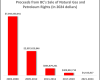
The BC NDP remains committed to expanding fossil fuel production. In BC, the industry paid millions of dollars to lobbyists and politicians. The rate of return on that investment was just a touch more than most of us get when we deposit a few dollars in a chartered bank or credit union.

Training in accountancy encourages my reliance on data to improve understanding of various issues. One valuable source of information is Our World in Data. It was founded by Max Roser, Professor of Practice in Global Data Analytics at the University of Oxford. Dr. Roser’s research has focused on large global problems, including poverty, disease, hunger, climate change, existential risks, and war.

Andrew Coyne says carbon tax critics who ignore rebates are dishonest. They are eager to damage the Earth and the Canadian economy if a political advantage can be gained. Duplicity may be a useful tool for politicians but it damages our democratic institutions. Beyond that, maligning the carbon tax impairs Canadian efforts to deal with climate change. That has real consequences.
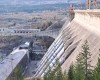
IEA says energy efficiency provides some of the quickest and most cost-effective CO2 mitigation options while lowering energy bills and strengthening energy security. Because the immediate benefits of efficiency go to individual consumers, vested interests that influence public policy discourage that approach. These groups know there are far more financial rewards gained from increasing energy supply than by conserving energy.

Several members of the party expected to form the next government in Ottawa are enthusiastic supporters of Donald Trump and his cohort. Canadian resistance to American hegemony may be negligible.


Lovely story Norm. My university summers were spent at the other end, figuratively and literally, of yours; pulling Douglas fir…

[…] When I was in high school, I spent time working for my uncles at Mahood Logging Ltd. That experience…

This is certainly a good news story. Indigenous nations take a multi generational approach to land use along with a…
If the question is how to bolster public support with new ideas maybe The UK needs some advice from Spain…
 in-sights.ca
Under the heading - Lessons From America. Emeritus Professor, Melania Trump – Who really doesn’t care. Do U? - stepped…