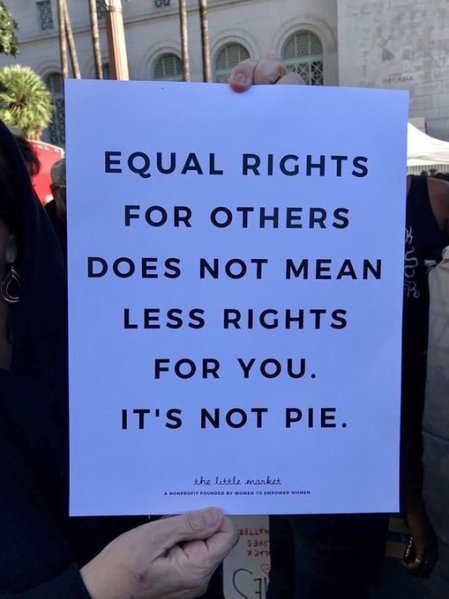



John F. Kennedy gave the commencement address at Yale University in 1962. Words Kennedy spoke more than 60 years ago are meaningful today…

John F. Kennedy gave the commencement address at Yale University in 1962. Words Kennedy spoke more than 60 years ago are meaningful today…

I have not been a fan of Trudeau’s Liberal Government. Nevertheless, all that I think is wrong with the Liberal government would be even worse if Donald Trump’s friend Pierre Poilievre moves into 24 Sussex Drive. I think Canadians need to organize today for the next federal election. The continued existence of our country may be at stake.

Marsh Family, six people from the UK have messages for the world.
All politics is about real estate. Postmodern politics is essentially a matter of land grabs, on a local as well as a global scale. Whether you think of the question of Palestine, the settlements and the camps, or of the politics of raw materials and extraction; whether you think of ecology (and the rainforests) or the problems of federalism, citizenship, and immigration, or whether it is a question of gentrification in the great cities as well as in the shanty towns and the townships and of course the movement of the landless today everything is about land…

When Paul Willcocks writes commentary, I pay attention. The Tyee’s Senior Editor recently asked, “Which Side Is John Rustad On? Following are a few of the points made in The Tyee article…

Neofascists in the 21st century care nothing about the consequences of tyranny, but they understand how tyrants gain power. They intend to control media, damage the economy, and cripple the justice system, expecting resulting chaos will bring an end to democracy.

World Central Kitchen, founded by Spanish-American chef Jose Andres, is an example of humanitarianism at work. WCK has become one of the world’s leading relief organizations since its 2010 launch following a devastating earthquake in Haiti. Food is essential to life and is vitally important in a crisis. Access to healthy meals during a disaster is a reminder that someone cares. But, of course, not everyone cares. Pierre Poilievre said a Conservative government would cut foreign aid funding. That mimics Trump’s policy of eliminating almost all development and humanitarian help abroad.
U.S. Representative Jasmine Crockett and Canadian comedian and actor, writer and producer Dave Foley will join as guests on this week’s episode of CNN’s Have I Got News For You, the American version of the long-running UK comedy series.

Dan Froomkin is an American journalist worth following. Andrew Coyne is not afraid to speak out, but Froomkin wondered why most people in legacy media don’t appear to believe the current threat to democracy is real.

A brilliant essay in The Globe and Mail. Andrew Coyne has spent decades observing and writing about Canada. He has interacted with politicians of all sorts, but none like the Russian agent in the White House. Coyne sees that democracy in North America is threatened and he presents a powerful warning…
Ad Fontes Media is a non-profit watchdog that rates media for bias and reliability. The name comes from Latin words meaning “to the sources.” The organization concluded its own output is biased, because all reports by humans are affected by personal judgments and preferences…
Professor Robert Reich discussed the connections between wealth and power. Oligarchs have used their wealth and power to gain control of legacy media and that control is being used to increase their wealth and power.

On February 24, Coquitlam-Maillardville MLA Jennifer Blatherwick made a motion in the BC Legislature asking the House to condemn U.S. President Trump’s proposed tariffs and endorse retaliatory action. Eighty-six MLAs voted YEA, five MLAs voted NAY. The five who oppose Canadians reacting to American provocations were BC Conservatives…

Even without his massive conflicts, Is Elon Musk qualified to restructure programs created by elected representatives of the people?

Audre Lorde was particularly focused on issues involving race and oppression, but her words are relevant to all of today’s critical issues. Individually, we may not affect material change, but working with others, that becomes a real possibility.
This report explores the involvement of the oil and gas industry in schools and climate-related education in Canada. Given that comprehensive, evidence-based climate education is essential to addressing climate change, and that youth will be the most affected by climate breakdown, it is imperative that the industry most responsible for driving the climate crisis be prevented from influencing the education young people receive on subjects related to climate, environment, or energy…

One of the less frequently noticed luxuries of the postwar liberal order was the licence to be a fool. For the better part of a century, prosperous, scientifically minded countries have tolerantly sustained an underbelly of madmen and extremists — medical sceptics, conspiracy types and anti-democratic fantasists who would quickly have come to grief in less congenial surroundings.

Who needs competition in politics when rules can be rigged to favour people who make the rules? Real democracy is inconvenient for those who wish to govern.

Build-grow-sell stories are repeated endlessly. It’s a result of our neighbour’s economic imperialism but also the lack of confidence in this country held by our corporate rulers. Sure, Canada beat the U.S.A. in a best-on-best hockey final, but in the national economy game, Americans are winners most of the time.


Lovely story Norm. My university summers were spent at the other end, figuratively and literally, of yours; pulling Douglas fir…

[…] When I was in high school, I spent time working for my uncles at Mahood Logging Ltd. That experience…

This is certainly a good news story. Indigenous nations take a multi generational approach to land use along with a…
If the question is how to bolster public support with new ideas maybe The UK needs some advice from Spain…
 in-sights.ca
Under the heading - Lessons From America. Emeritus Professor, Melania Trump – Who really doesn’t care. Do U? - stepped…