



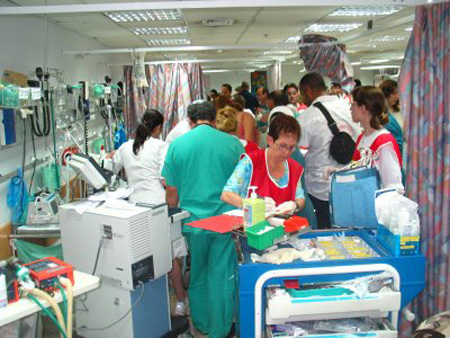
The effects of access block on acute hospital services are reflected by patients on stretchers lined up in emergency room corridors and by ambulances parked outside hospitals, waiting to deliver acutely ill patients.
This is an intelligent discussion of hospital problems. Overflowing emergency rooms are obvious symptoms of difficulties but causes relate to access issues throughout the healthcare system. That includes home, acute and extended care facilities. If access is blocked in one level, effects are experienced elsewhere. The emergency rooms crowd are the most obvious.
Dr. McEwan made the point that healthcare administrators often seem unwilling and incapable of addressing real problems. Emergency rooms might operate with third world conditions and bureaucrats would wring their hands and say nothing can be done, the problem is North America wide. Dr. Lund pointed out that media has had little interest in looking at the real problems and the possible solutions.
On a personal note, the two Vancouver doctors were at CBC’s Vancouver studios at 4:30 am this morning to record the segment for live broadcast in the Atlantic region.
Categories: Health


 in-sights.ca
Yes the health authorities are a hugely bloated bureaucracy. Time to pare it down and put the savings to patient care, not building new offices and ordering new furtniture.
LikeLike
According to Keynes, bureaucracy enables ten men to do the work of one.
This is particularly true in healthcare where bean counters make decisions they are unqualified to deal with.
LikeLike