



In a recent piece, I demonstrated that successive British Columbia governments have seriously reduced the public share of the value of natural gas produced in the province.
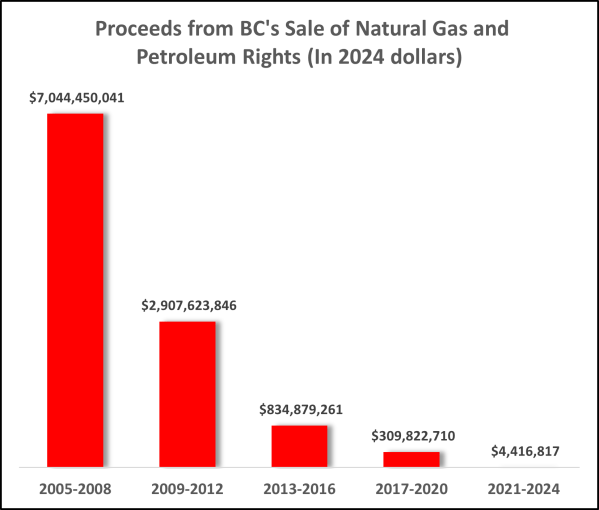
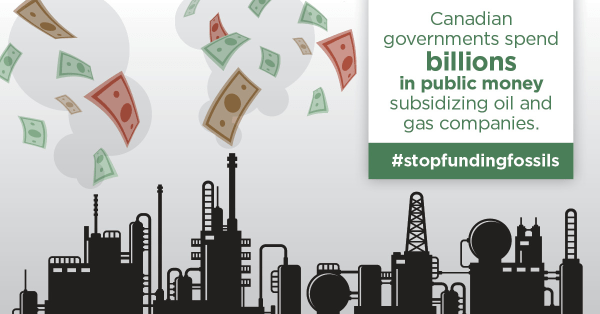
Now, there is evidence of more hidden subsidies to fossil fuel producers and processors. Worldwide, subsidies to fossil fuels were estimated at USD 7 trillion in 2023.
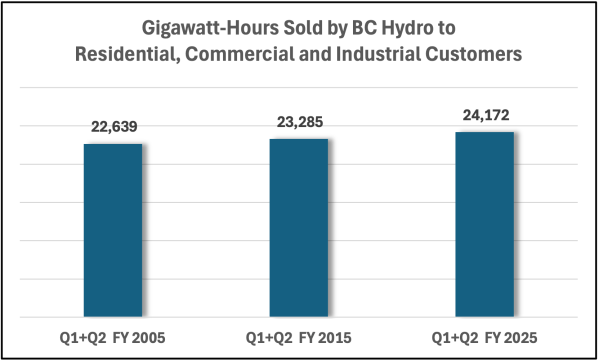
At the recent BC Natural Resources Forum in Prince George, Premier Eby announced BC Hydro’s new $36-billion spending plan. Eby talked about meeting the demand for electricity due to population growth, housing construction and consumers switching from fossil fuels to electricity.
As we’ve demonstrated here, rising demand is a questionable pitch used by the spendthrifts running BC Hydro. Empire building is a scheme used to increase the size and scope of an organization. Increased size and greater corporate complexity mean higher rewards for management but inevitably, customers pay higher prices.

Premier Eby mentioned several justifications for BC Hydro’s new and huge spending plan. However, the government’s January 16 press release said not a word about providing cheap power to natural gas producers and transporters. Nor was there a direct mention of the subsidized electricity promised to LNG processors.
Spending more than $50 billion on Site C and other capital plans, plus the tens of billions of dollars promised to the new round of private power producers, means one thing for the utility’s truly profitable customers. Residential, commercial and light industrial rates for electricity will rise dramatically.
The world’s carbon emissions will also rise as BC natural gas is exported to be burned elsewhere. Earth would be less harmed if we used BC natural gas in BC and didn’t export it through pipelines and diesel-powered ocean freighters. As The Guardian reported:
Exported gas emits far more greenhouse gas emissions than coal, despite fossil-fuel industry claims it is a cleaner alternative, according to a major new research paper that challenges the controversial yet rapid expansion of gas exports from the US to Europe and Asia.
STAND.earth was more forthright than the Premier:
David Eby announced plans to waive environmental assessments for major electrical transmission projects including two lines to the North Coast that would supply proposed Liquefied Natural Gas (LNG) terminals in Kitimat and Gitlaxt’aamiks. These transmission lines are part of a larger $4.7 billion investment in BC Hydro infrastructure in the North.
“The only logical reason these transmission lines are being built is to supply power to hungry LNG terminals. Which begs the question – who is picking up the multibillion dollar bill for this project?” said Sven Biggs, Oil and Gas Campaign Director at Stand.earth. “Unfortunately the answer is likely regular residential rate payers because the cost of this new infrastructure is going to be passed on to them in the form of higher electricity bills.”
“Premier Eby’s government is going to have to make some hard choices about how to use our limited supply of renewable electricity. Will they use it to power climate solutions like heat pumps, electric vehicles, and new mass transit projects that makes life more affordable? Or, will they choose to use it to power a massive expansion of LNG, fracking, and pipelines?” said Biggs. “Fast-tracking approval of these transmission lines sends a worrying message that the Premier is leaning towards siding with companies like Shell that are backing these terminals, and that the government is going to make British Columbians pay the costs.”
If you think reporting of this sort is worthwhile, please consider becoming a financial supporter of IN-SIGHTS. Click here for ways to contribute.
Categories: BC Hydro, Natural Gas


 in-sights.ca
I’m a longtime reader who seldom comments but I appreciate your work
I particularly liked one point made here. Our provincial government is encouraging people to switch from natural gas to electricity. That’s good policy by itself, but the reality is that less consumption of N.G. in B.C. allows greater exports of N.G.. The product is primarily shipped by methods that result in dangerous emissions. Transport is the world’s second highest contributor of greenhouse gases according to Our World in Data.
A highly regarded American University reported in 2024, “Liquefied natural gas leaves a greenhouse gas footprint that is 33% worse than coal, when processing and shipping are taken into account, according to a new Cornell study.
The gas saved in British Columbia by people converting to electricity is sent elsewhere to be consumed, with greenhouse gases going into Earth’s only atmoshpere.
The only way to truly reduce problematic emissions is to leave natural gas permanently underground. Then converting British Columbians gas users to electricity would be truly worthwhile.
LikeLike
The public should question why BCUC seems not as involved with BCHydro as NERC and FERC more so.? Not even from Canada.?
Public should be wary of internal numbers presented to public to spend more money. BCHydro has not a accurate record for demand forecasting.
LikeLiked by 1 person
“In 2023, British Columbia (BC) consumed an average of 0.62 billion cubic feet (Bcf) of natural gas per day. This was 5.2% of Canada’s total natural gas demand.
Breakdown of natural gas consumption in BC
* Industrial sector: Consumed 0.29 Bcf/d in 2023
* Residential sector: Consumed 0.19 Bcf/d in 2023
* Commercial sector: Consumed 0.14 Bcf/d in 2023”
CER – Provincial and Territorial Energy Profiles – British Columbia
“British Columbia’s (BC) projected liquefied natural gas (LNG) exports by 2028 are around 2.5 billion cubic feet per day (Bcf/d). This is based on the production capacity of several LNG projects currently under construction or approved.”
Market Snapshot: Exploring Canada’s Future in LNG ExportsRégie de l’énergie du Canadahttps://www.cer-rec.gc.ca › energy-markets › market-sn…
“The volume of natural gas in its liquid state is about 600 times smaller than its volume in its gaseous state.”
LNG – liquefied natural gas – Products – rag-gas-mobil.atrag-gas-mobil.athttps://www.rag-gas-mobil.at › lng-liquefied-natural-gas
The government of British Columbia aims to have us feeling smug and thinking we’re dealing with climate change by tinkering around the edges of our collective 0.19Bcf daily use, while ignoring our 1,500Bcf daily export to be burned elsewhere.
Also interesting that the same government waives environmental impact reviews in order to speed up the process of ruining the atmosphere.
LikeLike
Norm has pointed out an error in my comments. I read on the Canada Energy Regulator website that exports were expected to reach about 2.5 billion cubic feet per day of LNG by 2028. Since the conversion rate for liquid natural gas to natural gas is 615, I multiplied the amount of LNG by that amount.
In my defence, I believe the government website should not be expressing the output in billion cubic feet per day of liquid natural gas when the output they are forecasting is natural gas. The two states of the output are quite different (615 times different by volume). To my discredit, I should have noticed that discrepancy.
In any event, the amount we are exporting dwarfs what we are using, and although we should be looking for ways reduce our consumption, the real focus should be on the harm to the environment our export activities are creating.
The other lesson I’ve learned here is that no numbers get by Norm without being thoroughly crunched.
LikeLike
Norm does BC get more money if nat gas at 3 cdn vs 6 vs 9 dollars.?Thanks
LikeLike