
A 2022 article in Psychology Today is worth attention. The author is the late Charles M. Johnston, MD, psychiatrist, author, and futurist…


Gwen and I raised three adult children in North Vancouver. Each lives in this community, as do our seven grandchildren. Before retirement, I worked in accounting and small business management. Since 2009, I have published commentary about public issues at IN-SIGHTS.CA.
A 2022 article in Psychology Today is worth attention. The author is the late Charles M. Johnston, MD, psychiatrist, author, and futurist…
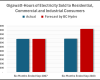
BC Hydro has often said that demand for electricity in this region is growing at a rate of 40 percent in 20 years. The company claims population increases result in greater consumption of electricity and vested interests tell us the utility must commit to major spending to serve the province. Self-serving messages are not meant to inform citizens of British Columbia. The intended purpose is to misinform. The strategy works. BC Hydro has been spending tens of billions of dollars because people pay little attention to underlying facts.

A Berkely Earth email today reminds us that serious actions to address climate change should not be delayed. But like most Canadian political leaders, Detective Frank Drebin is indifferent…

CBC is reporting that three aluminum ships built in British Columbia during the 1990s will be sold or sent to the ship-breakers. Constructed for about 800 million in today’s dollars, the three “fast ferries” are now worth little or nothing more than scrap value. North Vancouver business consultant Rob Arthurs, in collaboration with associates, hopes to resell these ferries and see them returned to use…

Writing in The Economist, former New York Times editor James Bennet commented about the state of his profession. He thinks today’s mainstream media too often fails to provide open and objective, truth-seeking journalism…

In 2018, BC Hydro began discouraging the production of solar power in British Columbia. The crown corporation had allowed customers with PV panels a two-way connection to the grid. When consumers fed surplus electricity to the utility, credits were recorded. If credits were not used to buy electricity from BC Hydro within a year, the utility would pay homeowners a price roughly equal to the average rate paid to independent power producers, or about one-half what Site C power will cost if it goes into service in 2025…

As 2024 dawns, warmongers, arms dealers, and defenders of genocide show us the depths of human malice. But looking elsewhere, we find street art displaying the heights of human tenderness and creativity.

In November 2023, I examined falsehoods about electrical demand growth that have been repeated for almost two decades. People running BC Hydro still feel no obligation for accuracy and transparency when conducting public business…
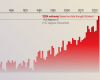
If greenwashing were an appropriate response, Canada would be a world leader in addressing climate change. One well-funded practitioner is Pathways Alliance, a consortium of big Canadian oil companies that Toronto Star says is preaching “industry knows best” when it comes to combating climate change…

Proponents of the Transmountain Pipeline Expansion (TMX) promise about 34 Aframax tankers will depart each month from the Westridge Marine Terminal on the Burnaby section of Burrard Inlet. After TMX comes on stream, the number of Aframax or Panamax oil tankers visiting Vancouver will rise from about 32 to an estimated 380 Panamax and Aframax tankers or just over one per day. But, can we trust anything Trans Mountain tells us?

In the 1960s, Gabor Mate was a brave young man standing up to bullies and stating unpopular ideas. Now Dr. Mate, he is still a man of conscience not afraid to speak hard truths.

Worldwide solar energy capacity has been growing rapidly. In 2022, it was 150 times higher than in 2006 and more than double the level of 2018 when BC Hydro moved to discourage solar power systems. A tiny proportion of the utility’s accounts was feeding solar power to the grid, but BC Hydro worried about added customers embracing solar, particularly large consumers of electricity…

Professor Robert Reich describes meeting with students to discuss tragic events in Gaza and Israel. It was a mixed group, some Jewish, some Palestinian, and some with other backgrounds. They sought common ground as they examined what basic moral principles were at stake. Conclusions the group determined…

This item was first published in 2010. It reappears with minor editing. I think it might stimulate memories of fellow seniors and alter the minds of people who think the good old days were actually good old days…

Given the ultimate consequences, reasonable people should be applying the precautionary principle on climate and environmental matters. I suppose that means our governments are not populated by reasonable people.

Responding to a mention of climate scientist Michael Mann (U of Pennsylvania), reader Tim Smith linked to an article by independent researcher Robert Chris and Hugh Hunt (Cambridge). It is titled: The […]
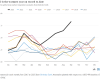
I spent time recently listening to and reading Chris Turner, a Calgary based journalist and author of numerous books. Turner has become a climate change optimist. In contrast, I lean toward climate pessimism, the belief that causes will not be fully addressed, at least until catastrophe severely affects powerful groups who today value wealth more than human survival.

So, who has been responsible for strategic misrepresentation that has damaged BC Hydro? Responsible Ministers and MLAs are driven by love of megaprojects, but they may also have experienced the Dunning-Kruger effect. They were educated by deceptive executives and experts who expected to earn material sums as BC Hydro expanded. The latter group has been successful, perhaps beyond their own expectations.

An excerpt from a newsletter published by a international non-governmental organization is worth attention. Toronto Star reports the Danielle Smith convoy that travelled to the 28th United Nations Climate Change conference in Dubai actually involved 150 government and petroleum industry representatives.,,

Auditor General Michael Pickup submitted a report to the BC Legislature titled Summary Financial Statements Audit: Supporting the Role of MLAs. It is to assist understanding of the province’s annual financial statements. This will seem like old news…


[…] In a June 2024 subcommittee hearing, U.S. Senator Josh Hawley questioned Boeing CEO Dave Calhoun on the company’s safety…

President Trump’s Iran [“Excursion”] was war-gamed in various ways for years in advance. The advice offered afterwards? Don’t. Why the…

There are examples worldwide of methods to produce electricity that provide us with solutions; some are tried and true and…
Trump declares USA is “stupid”. https://www.independent.co.uk/news/world/americas/us-politics/supreme-court-trump-birthright-citizenship-case-b2949973.html https://www.independent.co.uk/bulletin/news/trump-supreme-court-birthright-citizenship-debate-stupid-b2950293.html?utm_source=taboola&utm_medium=related&utm_campaign=embed1 President Donald Trump has branded the U.S. “stupid” after attending Supreme Court arguments over his administration's efforts…
 in-sights.ca
The last thing these guys think about is a healthy society. They live in a world where prestige and wealth…