
In a comment at an earlier article, Alison Creekside – a fine blogger you should read regularly – linked to this 2009 video of MLA Corky Evans. He talked about BC Liberals turning loose a private power gold rush but it was one that sluiced only half a billion a year. This year it will be closer to one and a half billion and the contracts BC Hydro has already signed total almost $60 billion. The number continues growing.
Damien Gillis wrote…

The mainstream media, as is to be expected, is largely parroting the government’s cover story and ignoring the real problem: BC Hydro and its ratepayers are in a world of hurt because of 12 years of very deliberate and disastrous BC Liberal Government policies, pushed on the public utility.
BC Hydro – destruction in progress
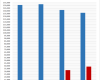
In 2001, for each dollar of assets, BC Hydro had 63¢ in electricity sales. In 2016, the number fell to 17¢. BC Hydro sold more electricity to residential, commercial and industrial customers in 2005 than the utility did in 2016. BC Hydro did that with assets worth 40% of today’s value. Shockingly, the company is embarked on a program of capital expenditure that will add about $15 billion to its list of assets. By any measure, the management of BC Hydro has been a colossal failure, incompetence made worse by chicanery and flawed policy objectives.
BC Liberals delivered $9 billion to IPPs

In the last five years, the delivery of cash to IPPs totaled $4.6 billion. If the established trend continues, the amount will be $8.3 billion in the next five years. Amounts flowing to IPPs and the necessary write-off of more than $6 billion in deferred costs means in the next five years, consumers will pay rates 60% higher than they’ve paid in the last five years. In addition, more than $10 billion dollars is committed to Site C and BC Hydro has been spending over $2 billion a year on capital expenditures. Without profitable new markets – none are anticipated – the 60% price rise for electricity could be 100% in the foreseeable future.
Critics of private power projects not silent

Devastation of many private power installations in BC wilderness involves:
blasting and tunnelling, clearcuts for the penstocks, clearcuts for the power lines to join clusters of powerhouses together, service roads larger than for logging, clusters of permanent powerhouses, diversion of waterfalls, drying of rivers…
How did we get into this IPP mess?

Politicians assumed that power demand would grow and prices rise so they readily agreed to BC Hydro purchase contracts that were decades long with annual price escalation tied to inflation. They carelessly assumed the arrangements would be beneficial to all. However, what private industry achieved was guaranteed sales with guaranteed profits. All of the financial risks were carried by the public.
BC Hydro gifts worth billions
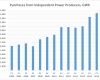
Had IPP’s sold their power for the same price that BC Hydro realized in trade markets, they would have realized:
In FY 2015, $591 million less;
In FY 2016, $782 million less.
The deals will get better for IPPs. BC Hydro’s website now announces that it has contracted for 19,290 GWh from these private producers. That is 35% more than purchases in the just completed fiscal year and follows an established trend.
A slow-motion financial disaster

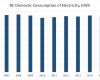
Comparing CY 2007 to CY 2015, domestic power consumption declined 4%. But, the amount paid IPPs increased $762 million or 167%. According to BC Hydro, the per gigawatt hour price paid IPPs in the quarter ended December 2015 was $91,422. In the same period, the average MidC wholesale price was $44,212 Canadian, well under half the amount paid IPPs in British Columbia.
No effective way of managing private power thieves

The decision to proceed on any run-of-river project should be made after the most stringent environmental assessments and cumulative impact studies that are possible, as well as an assessment of where there may be lower environmental footprint alternatives for producing power. All of the most stringent environmental assessment and forest practice standards that exist should be applied to any clearing of forested land connected with any activity, including run-of-river power projects.
Run of river, or ruin of river?
In the three months ended December 31, 2015, BC Hydro BOUGHT 3,719 GWh from private electricity producers at an average price of $91,422 per GWh (total $340 million). In the same quarter, BC Hydro SOLD 3,493 GWh to heavy industry at an average price of $54,394 per GWh (total $190 million). Liberals claim themselves to be wise managers of public finances.
Crime (still) in progress (a 2010 article repeated)

The applicants do not need money or experience, they simply need political influence with BC Liberals. The energy purchase agreement provided by BC Hydro removes substantially all business risk and the favoured recipients take the project to money brokers who readily fund it because the creditworthiness of British Columbia stands behind each EPA. This would be like you and I buying a house we intend to rent to government through a 40 year lease at double or triple market rates, with payments escalating to protect against inflation, guaranteed by taxpayers of British Columbia….
Back scratching

An old expression says, “You scratch my back and I’ll scratch yours.” The maxim doesn’t require rewards for scratching be equal and, often, they are not.
According to Elections BC, AltaGas Ltd. and associates contributed a little more than $70,000 to the BC Liberals. It’s been money well spent… At $110,000 per GWh, AltaGas’ revenue from BC Hydro would be worth $143 million in 2016…
IPPs received $672 million above market price in 2015

I’ve been reviewing more than 20 years of BC Hydro records and they show gradual growth in electrical demand until 2005. Subsequently, there has been no demand growth; in 2015, domestic power sales were lower than ten years before. What did grow were Hydro’s purchases of electricity from independent power producers. In calendar year 2006, 5,636 GWh supplied by IPPs cost $368 million (6.5¢/KWh); in 2015, 14,418 GWh cost Hydro $1,217 million (8.4¢/KWh).
A 155% increase in the volume of IPP purchases is alarming by itself given the lack of need for it but the average unit price has been rising steadily. In the 4th quarter of 2015, IPP unit prices were 9.2% higher than the preceding quarter. To accommodate power coming into the system, BC Hydro had to choose between shutting down their own capacity or dumping power in markets outside BC at well below cost…
Reward without risk for worthless surplus power

British Columbia’s government believes less in free enterprise than in assisted activities for approved associates. Entrepreneurs saw potential for a private power generation industry in the province but didn’t want to risk their own money. Instead, they arranged with the Liberal government for the public to accept all risks and guarantee substantial profits to the schemers…
Twitter bits

The final item may present a clue to the current state of British Columbia’s energy market. It’s hard to believe we came to this only through the sheer stupidity of our policy makers.
What’s good for the BC Liberals may not be good for BC Hydro

Energy and Mines Minister Bill Bennett announced a five-year, $300 million hydro bill deferment plan for 13 mines owned by six companies.Never mind that B.C. Hydro is already grappling with its own deferral problems to the tune of $5 billion. Make no mistake, there’s a price to pay when B.C. Hydro becomes a political arm of government. The intertwining of self-interests gets complicated, while the interests of ratepayers can take a backseat to political interests. Three of the six companies in Bennett’s deal were highlighted in a December Financial Post article, “Debt risks mount as Canada’s base metal miners sink deep in the hole.”
What’s wrong with this picture?
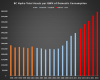
What’s really wrong is that BC Hydro has been spending billions on new capacity but producing less power. Demand has not grown since 2005 but purchases from IPPs, between FY 2005 and FY 2015, rose 108% from 6,444 GWh to 13,377. The purchasing is up again in 2016, by about 11%. The cost of IPP power was almost $500 million more in FY 2015 than in 2013.
When you’re determined to reward IPP friends but have too much power and no profitable export markets, you shut down your own low-cost operations…
Who does the Government of BC serve? UPDATED
The material below was published June 21, 2014. Since this was written the proponents sold to an Alberta company that is financed by the Ontario Teachers’ Pension Plan, not exactly the mom […]
March 23 with Jessop of CFAX1070
The audio file below is a recording of my time on CFAX1070 with Ian Jessop March 23, 2016. We talk of BC Hydro and deceitful government.
Twenty years ago…

In 1996, BC Hydro was a company with total assets of $12.1 billion, delivering 42,834 GWh of electricity to BC’s residential, commercial and industrial users. Ten years later, BC Hydro had total […]


 in-sights.ca
There are examples worldwide of methods to produce electricity that provide us with solutions; some are tried and true and…