
Our governments believe that resources belong to those who exploit them today and that future generations have no right to a share of the province’s asset values.

Our governments believe that resources belong to those who exploit them today and that future generations have no right to a share of the province’s asset values.

In the 1960’s, tax expert Kenneth Carter headed a Royal Commission that examined Canada’s income tax system. Among many other things, Carter’s group was asked to report on “changes that may be made to achieve greater clarity, simplicity and effectiveness in the tax laws and their administration.” When material changes were implemented in the Income Tax Act, I was a young person working in public accounting. We laughed at the idea that government and its consultants — typically lawyers and accountants — aimed to simplify tax laws. After changes made following the Carter Commission, many taxpayers needed professional accountants more than they ever did.
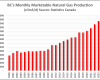
So BC taxpayers currently paying close to $3 billion a year in carbon tax must result in lower production of natural gas, right? Maybe not.

In theory, local governments assess property taxes at levels that allow accumulations of surpluses sufficient to fund replacements and major repairs of public infrastructure. My survey of local governments, representing about two-thirds of BC’s population, showed they held surpluses totalling $51 billion at the end of 2022. That suggests a total for all local government of $75 billion, or about $14,000 per person.
According to a study published by Nature Climate Change, governments of 51 countries spent C$940 billion subsidizing fossil fuels in 2021. The number is likely higher since there are many indirect subsidies, such […]
Metro Vancouver and 21 lower mainland municipalities reported total accumulated surpluses of $42 billion in 2021. That was seven times the annual expenses reported in 2021 by the same local governments…
A tweet written by Jeffrey Levin made sense to me. So, I produced a Canadian version.
Governments impose carbon taxes ostensibly to deal with climate change by reducing greenhouse gas emissions. But effectiveness is limited since the taxes are not applied broadly or at levels sufficient to reduce or compel reduction in fossil fuel production and consumption…
One might think British Columbia’s Auditor General would favour maximum information in financial disclosure. Apparently, not in this province.

Tax expenditures, represent a tax break that government offers people and corporations in support of policy objectives. It’s forgone revenue, or money that government doesn’t collect, but could if it didn’t offer that tax break. In 2016/17, tax expenditures in B.C. accounted for over $7 billion in foregone revenue.
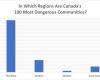
Shocking that almost 23 out of Canada’s 50 most dangerous communities are in British Columbia. Thank you BC Liberals, you may have enriched your friends, but you impoverished the rest of us.
Three months before the 2013 provincial election, Christy Clark’s government issued a Speech from the Throne that made a few grandiloquent asseverations. Today, the 2017 Speech from the Throne was presented to […]

People who are not profiting – or expecting to profit – from corruption in British Columbia’s political arena, should understand. We all pay. We pay dearly and inescapably. Tens of billions of dollars the Clark gang is gifting to private power producers and billions more paid and payable to foreign owned gas producers might provide for an effective court system, better public education, healthcare, small business support and other citizen priorities.
With only months until the 2017 BC election, Liberal deceivers are emerging from the lairs. Bob Mackin, the most feared journalist in BC, has a few of the details in his report […]

G20 country governments are providing $444 billion a year in subsidies for the production of fossil fuels. In Canada, at the federal level, this amounts to a minimum of $1.6 billion, mainly through tax expenditures. At the provincial level, tax breaks amount to a minimum of $979 million annually. In fact, the numbers are even larger. Fossil fuel companies recognize values gained when sympathetic politicians are there to determine financial policies so oil and gas producers spend extravagantly to sustain a synergetic relationship. In recent years, they’ve courted journalists and media companies whose financial comforts have been in decline. Many of those have turned out to be of easy virtue.

When a small but politically influential group advocates change to reduce their taxation by $2+ billion a year, they want the rest of us paying instead. With the potential reward so large, the province’s business leaders will remain persistent in demanding relief from sales taxes. Because they’ve invested millions of dollars in the BC Liberal Party, they expect success. Business benefits directly from infrastructure and services financed by taxpayers. They expect safe and orderly communities; they expect police and fire protection; they want educated workers, communication and transportation systems; and they want utilities to serve their offices, factories and warehouses. They want those things; they just want others to pay for them.
According to Statistics Canada, natural gas producers employ 1/4 of 1% of BC workers. Yet, they receives extraordinary financial assistance from government. That may result because the BC Liberal party receives extraordinary financial assistance from natural gas producers.
Since toll revenue at Port Mann has covered only 39% of operating costs, the BC Government needs to explain how it will finance existing and future shortfalls on Port Mann/Highway 1. These are growing by about $5 million a month and paying for an even more costly tunnel replacement will demand a solution. One possibility was proposed in the original Gateway Program. It contemplated: “…tolling of all bridges connecting to the Burrard Peninsula, including the Lions Gate, Ironworkers Memorial, Pitt River, Port Mann, Pattullo, Alex Fraser, Knight Street, Oak Street and Arthur Laing bridges…”
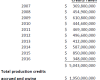
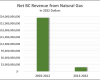
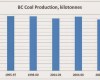
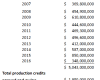
Natural gas production levels have increased (53% since 2007) yet net revenue to government from gas in the past year was negative. Instead of being paid for the right to extract this public resource, British Columbians are paying for its removal.
In 2012, Premier Christy Clark declared that coastal ferry subsidies would not grow under her government: “That is not a sustainable amount of money from taxpayers across the province. It’s just not. […]


Trump declares USA is “stupid”. https://www.independent.co.uk/news/world/americas/us-politics/supreme-court-trump-birthright-citizenship-case-b2949973.html https://www.independent.co.uk/bulletin/news/trump-supreme-court-birthright-citizenship-debate-stupid-b2950293.html?utm_source=taboola&utm_medium=related&utm_campaign=embed1 President Donald Trump has branded the U.S. “stupid” after attending Supreme Court arguments over his administration's efforts…
Justice? More posts from Liz Oyer https://www.youtube.com/shorts/l3R3QUI1J-M?feature=share LIZ why Oyer was fired. https://www.youtube.com/shorts/xs9N_2W_6CU?feature=share LIZ explains the DOJ’s abnormaIity https://www.youtube.com/shorts/9tDcGMVW0HU?feature=share LIZ…
Who benefits most from Trump's DOJ? Trump’s Justice Department Dropped 23,000 Criminal Investigations in Shift to Immigration In the first…
There are examples worldwide of methods to produce electricity that provide us with solutions; some are tried and true and…
 in-sights.ca
There are examples worldwide of methods to produce electricity that provide us with solutions; some are tried and true and…