
I’m disappointed in the provincial government’s decision to continue Site C. It is not the choice I would have made, were I in a position of influence. However, I understand it. Financial issues […]

I’m disappointed in the provincial government’s decision to continue Site C. It is not the choice I would have made, were I in a position of influence. However, I understand it. Financial issues […]

In private emails, a number of people with expert economic knowledge exchange ideas about energy in BC. I get copies of some. This example, written by respected and retired economist Erik Andersen, refers to electricity markets in BC…
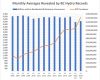
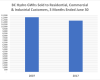
Since 2006, BC Hydro added $20 billion to its assets and paid an additional $12 billion to independent power producers (IPPs). Yet BC Hydro sold less power to BC’s residential and buiness consumers of electricity in fiscal year 2016-2017 than in fiscal year 2005-2006.

By any measure, BC Hydro was a success. So successful that pirates made plans to plunder. BC Hydro was a decades old operation that delivered power to British Columbia’s residential and business consumers at prices that ranked among the lowest anywhere. Additionally, a steady flow of money moved from the utility to public treasuries. Since 1989, the crown corporation contributed about $20 billion in dividends, water rentals and grants in lieu of property taxes. With assistance of 21st century Liberal governments, politically connected corporations began treating BC Hydro as a machine for dispensing cash.

• In fiscal year 2006, BC Hydro sold more power to BC’s residential and business consumers than it sold in 2017. Efficiencies in how we use power provide the explanation. • In […]
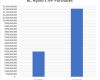
Access to years of BC Hydro’s financial reports provide me with an indisputable record of the utility’s financial destruction. Eleven years ago, one citizen didn’t have detailed evidence but he did have foresight…

Most readers will be familiar with Erik Andersen, an expert commentator about economic matters in BC. This is the original text he submitted to the Vancouver Sun after the newspaper published an […]

Disputing parties in arguments about Site C belong to either of two camps. One is populated by people wanting a share of the billions of dollars to be spent; the other by people who will be forced to pay the huge sums.

When you’re an activist for vested interests, complete and accurate reports are never offered. These might educate low-information voters that have supported BC Liberals for many years.
A recap of my Twitter comments about Site C.
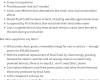
British Columbia Utilities Commission will release its second Site C report on November 1. I expect this will provide further information but not a definitive recommendation. But, of course, the buck stops at John Horgan’s cabinet table. Proceeding with Site C without independent review was a major Liberal blunder. If you are trying to get out of a hole, the first act is to stop digging. The economic and cultural factors say stop Site C now.

The utility loses money on every watt of private power it buys and resells. That is the single largest financial difficulty faced by the company. In the future, it is obliged to buy about $60 billion of electricity from IPPs at prices that will increase with inflation. There is no pressing need for most of the IPP production but the obligation for its purchase cripples BC Hydro.
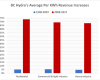
If you are paying attention to the affairs of BC Hydro, you know the utility in in financial trouble. However, it is electricity consumers that are feeling the pain. Unfortunately, with billions of dollars in phony assets to be written off, a growing power supply that outstrips static demand, payments to private power producers at three times market price and an an export market awash in surplus power, the economic agony dealt by BC Hydro will accelerate.
I assume that logic and fact will prevail and Site C, the most expensive public project in BC history, will be cancelled. It is a costly disaster but BC Hydro ratepayers are burdened even more by payments to independent power producers (IPPs). Much of the almost $100 million a month paid to IPPs leaves the province permanently because majority ownership is domiciled elsewhere. Private producers are paid a multiple of the wholesale value of the electricity they deliver.
According to BC’s Budget Transparency and Accountability Act, September 15 was the final day for BC Hydro to make public its quarterly report for the period ended June 30. It was released October 16, which was the first business day following the conclusion of the final technical presentation session regarding Site C before the BC Utilities Commission (BCUC). That meant people appearing at BCUC’s community input hearings in September and early October only had financial information for the utility that was six months out of date…

Corruption is particularly relevant for megaprojects because of their intrinsic characteristics. Megaprojects are projects characterized by: large investment commitment, vast complexity (especially in organizational terms), and long-lasting impact on the economy, the environment, and society…

We know the Premier vowed to get Site C dam past the “point of no return” before the May 2017 provincial election. Clark’s Liberals have their own reasons for Site C haste and these eventually will be revealed, perhaps by a postmortem report of an inquiry into the economic destruction of BC Hydro. However, we do know that incautiously pushing a project forward can be costly. Unfortunately, the cost of error will fall not on decision makers but on taxpayers not wealthy enough to hide their income elsewhere.

According to Financial Post writer Geoffrey Morgan, BC Hydro sent an October 3 communication to the BC Utilities Commission (BCUC). The letter explained why it continues to forecast a surge in electricity demand, despite a dozen years of flat sales to BC consumers…

When British Columbia’s new government took power In July, they quickly changed the CEO, the Board Chair and two other directors. That left in place most of the hierarchy that managed the utility into its current disastrous condition. More changes are needed. Immediately.

Clearly, Site C is not intended to meet the needs of existing BC Hydro customers. As noted, demand and supply are in balance for the next decade, even without aggressive efforts of conservation, the greenest solution to energy shortages.
There is another source of electricity readily available. It is Revelstoke Unit 6…


Carlin was special in the he made us laugh at things that aren't funny. Lots of Cassandras out there, going…
Too much? Too soon? For what? Lawn signs haven’t appeared yet but... https://www.kelownanow.com/watercooler/news/news/Provincial/Trio_of_David_Eby_s_ministers_will_not_seek_re_election_for_the_BC_NDP/ 93 seats in BC Legislature Safe NDP…

Hi Norm. I happened to see an NPR interview with, of all people, Tucker Carlson. I’m sure you can find…

Thanks Norm Good article. I have little doubt that addressing climate change will once again be pushed to the back…


Mr. King... That NPR interview is here. https://www.npr.org/2026/09/24/nx-s1-5903129/tucker-carlson-trump-iran-war-interview More recent news might send Tucker Carlson to seek consolation in exceptionally…